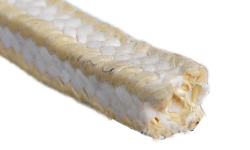
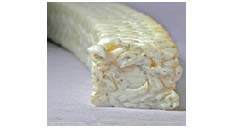
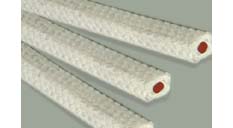
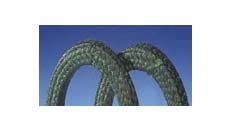
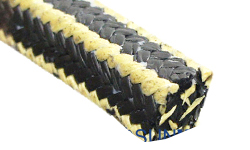
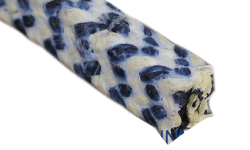
In the demanding world of industrial sealing, reliability and durability are not just desired—they are required. For over two decades, sealing professionals have turned to advanced materials to solve complex challenges in pumps, valves, and rotating equipment. Among these high-performance solutions, Aramid fiber packing stands out as a cornerstone technology. This engineered material, synthesized from long-chain synthetic polyamide, offers an exceptional combination of properties that traditional packings like asbestos or graphite simply cannot match. It represents a leap forward in sealing science, providing unmatched resistance to heat, wear, and chemical attack in some of the harshest operating environments. At Kaxite Sealing, we have dedicated years to refining the formulation and braiding techniques of our aramid fiber packing, ensuring it delivers consistent, leak-free performance and extends mean time between maintenance (MTBM) for critical assets. This deep industry experience allows us to provide not just a product, but a comprehensive sealing solution backed by expert technical support.
The selection of a packing material is a critical decision that impacts operational safety, efficiency, and cost. Aramid fiber packing is uniquely qualified for a vast array of applications due to its inherent molecular structure. The fibers exhibit extraordinary tensile strength—on par with steel wire—while remaining remarkably lightweight and flexible. This intrinsic strength translates directly into superior performance: it resists extrusion under high gland pressures, maintains its structural integrity under continuous flexing, and provides a reliable seal throughout its service life. Furthermore, its thermal stability allows it to function effectively in temperatures where many elastomers fail, and its inherent lubricity reduces shaft or sleeve wear. For engineers and maintenance managers seeking to eliminate frequent repacking downtime, reduce energy consumption from overtightened packings, and protect valuable equipment from damage, aramid fiber packing from a trusted manufacturer like Kaxite Sealing is the definitive choice.
Understanding the technical specifications is key to proper selection and application. Below are the core parameters that define the performance envelope of our premium aramid fiber packing. These values are derived from rigorous laboratory testing and validated in field applications across numerous industries.
| Parameter | Value / Rating | Test Standard |
|---|---|---|
| pH Range | 2 - 13 | ASTM D471 |
| Density | 1.44 g/cm³ | ASTM D792 |
| Compression Recovery | > 85% | API 622 / FSA |
| Coefficient of Friction | 0.15 - 0.25 (dynamic, lubricated) | In-house Sleeve Test |
| Maximum Shaft Speed | 25 m/s (5000 fpm) | FSA MROG |
| Pressure Capability | Up to 20.7 MPa (3000 psi) rotating; Up to 34.5 MPa (5000 psi) static | FSA / Industry Standard |
To meet diverse application needs, Kaxite Sealing offers aramid fiber packing in several specialized constructions:
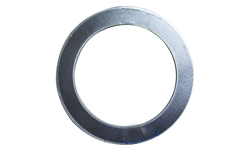
All styles are available in standard spool lengths and can be die-formed into rings upon request to simplify installation and ensure precise fit.
The versatility of Kaxite Sealing's aramid fiber packing makes it suitable for a broad spectrum of industries. Its primary function is to create a controllable leak path seal in equipment with reciprocating or rotating shafts.
Q: How does aramid fiber packing compare to traditional graphite packing?
A: While both are used for high-temperature service, they differ significantly. Aramid fiber packing has much higher tensile strength and resistance to radial wear, making it more durable in dynamic applications with shaft movement. Pure graphite packing is softer, more conformable, and has higher thermal conductivity, but it can be more susceptible to extrusion and requires very smooth shaft finishes. Kaxite Sealing's aramid styles often incorporate graphite for a balanced performance profile.
Q: Can aramid fiber packing be used on mixers with significant shaft run-out or deflection?
A: Yes, this is one of its key advantages. The exceptional strength and flexibility of aramid fibers allow the packing to absorb a degree of shaft movement and vibration without failing. Its high compression recovery helps it maintain seal contact even under variable conditions. For applications with severe run-out, we recommend our Style A2 or A4 for enhanced resilience and lubricity.
Q: What is the proper installation procedure for this type of packing?
A: Correct installation is critical. The shaft or sleeve should be clean and in good condition. Rings should be cut precisely using a mandrel or the shaft itself, staggered 90 degrees at the joints. Install rings one at a time, tamping each gently into place. Initial gland tightening should be just enough to prevent leakage at startup. After a short run-in period (30-60 minutes), the gland should be adjusted to allow a slight, controlled leakage for cooling and lubrication. Kaxite Sealing provides detailed installation guides with each order.
Q: Is this packing suitable for potable water applications?
A: Kaxite Sealing offers specific grades that are compliant with relevant standards for incidental contact with potable water (such as NSF/ANSI 61 where applicable). These grades use approved lubricants and processing aids. It is essential to specify the requirement for potable water service when ordering to receive the correct, certified product.
Q: How do I select the right style (A1, A2, A3, A4) for my specific pump?
A: Selection is based on the fluid media, temperature, pressure, shaft speed, and equipment type. As a general guide: Use Style A1 for general water and mild services. Choose Style A2 for aggressive chemicals and acids/alkalis. Opt for Style A3 for high-temperature water, steam, and heat transfer fluids. Select Style A4 for abrasive slurries or where extra lubrication is needed. The technical team at Kaxite Sealing is always available to provide a formal recommendation based on your complete operating parameters.
Q: What are the signs that my aramid packing needs to be replaced?
A: Indicators include a persistent increase in leakage that cannot be controlled by gland adjustment, a noticeable increase in power consumption or shaft temperature, visible physical degradation of the packing rings (fraying, hardening), or excessive wear on the shaft/sleeve. A planned replacement based on maintenance history is always preferable to a failure-based replacement.
Choosing Kaxite Sealing for your aramid fiber packing needs means more than purchasing a commodity. It signifies a partnership with a leader in sealing technology. Our products are manufactured under strict quality control protocols, ensuring every spool or ring set delivers consistent, reliable performance. We support our products with exhaustive technical data, application engineering expertise, and a global distribution network to ensure you get the right product where and when you need it. Our commitment is to provide sealing solutions that enhance your operational reliability, safety, and profitability.