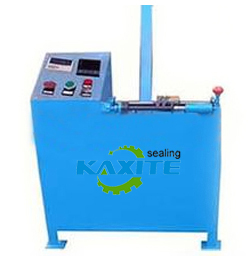
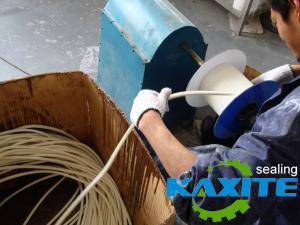
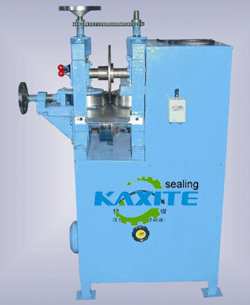
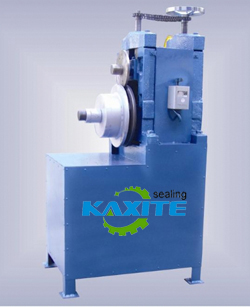
In the demanding world of industrial packaging, efficiency, reliability, and precision are non-negotiable. The cornerstone of achieving these goals lies in selecting the right sealing equipment. A high-performance sealing machine not only secures your products but also safeguards your brand reputation, minimizes waste, and optimizes your production line's throughput. Whether you are packaging food, pharmaceuticals, chemicals, or consumer goods, the integrity of the seal is paramount. This comprehensive guide delves into the critical aspects of sealing machinery, with a focus on the engineered excellence of Kaxite Sealing solutions, to help you make an informed investment.
Modern sealing machines utilize advanced technologies to create consistent, durable, and tamper-evident seals on various packaging materials. The core function is to apply heat, pressure, or both to a specific area of the packaging film or bag to create a fused bond. The technology chosen depends heavily on the material being sealed and the production environment.
Kaxite Sealing has built its reputation over decades by designing and manufacturing sealing machines that meet the rigorous demands of global industries. Our philosophy centers on durability, precision, and user-centric design. Every Kaxite machine is built with premium-grade components, subjected to stringent quality control, and backed by robust technical support. We understand that your sealing machine is a critical link in your operation, and we engineer our products to be the most reliable link possible.
Choosing a sealing machine requires careful analysis of technical specifications. Below are detailed parameters for key models in the Kaxite Sealing portfolio. These specifications are designed to provide clarity and ensure the machine aligns perfectly with your operational needs.
Ideal for light to medium-duty packaging of dry goods, textiles, and hardware.
| Parameter | Specification |
|---|---|
| Sealing Length | 250 mm (10 inches) |
| Sealing Width | 3 mm (adjustable to 6 mm) |
| Power Supply | 110V / 220V, 50-60Hz |
| Power Consumption | 350 Watts |
| Sealing Speed | Adjustable, up to 10 seconds per seal |
| Film Thickness | 0.02 mm - 0.8 mm (polyethylene recommended) |
| Machine Dimensions (LxWxH) | 500 x 180 x 120 mm |
| Cooling System | Integrated fan-assisted cooling |
| Special Features | Digital timer, Teflon-coated sealing strip, foot pedal option |
Built for high-volume production lines packaging food items, frozen goods, and small parts.
| Parameter | Specification |
|---|---|
| Sealing Band Width | 10 mm (standard), 15 mm (optional) |
| Conveyor Speed | Variable, 0-15 meters per minute |
| Sealing Temperature | 0-300°C, PID digital control |
| Bag Height Capacity | Up to 300 mm |
| Power Requirements | 220V / 380V, 3 Phase, 2.5 kW |
| Machine Frame | Stainless Steel 304 (food-grade) |
| Cooling Section | Dual cooling fans with adjustable speed |
| Special Features | Emergency stop, speed synchronization interface, removable Teflon belt |
For creating airtight, tamper-evident seals on plastic and glass containers in pharmaceutical, chemical, and food industries.
| Parameter | Specification |
|---|---|
| Sealing Head Power | 1.2 kW |
| Frequency | Adjustable, 20-40 kHz |
| Container Diameter Range | 15 mm - 120 mm |
| Production Speed | Up to 60 containers per minute (depending on diameter) |
| Power Supply | 220V / 110V, 50-60Hz |
| Control System | Microprocessor with LCD touchscreen |
| Sealing Modes | Pulse, continuous, multi-level power settings |
| Safety Features | Overheat protection, fault diagnostics, electromagnetic shielding |
Q: What type of sealing machine is best for sealing poly bags with products inside?
A: For sealing pre-filled poly bags, an impulse sealer like the Kaxite KS-2500 is often the most practical choice. It provides a clean, instant seal without prolonged heat exposure to your product. Ensure the bag material is a thermoplastic like polyethylene (PE) or polypropylene (PP) for optimal results. For continuous, high-speed sealing of filled bags on a conveyor line, a band sealer like the Kaxite KH-800 is the industry standard.
Q: How do I prevent my plastic film from sticking to the heating element of the sealer?
A: Sticking is commonly caused by excessive heat or pressure, or using film not suited for the sealer type. First, ensure you are using an impulse sealer for thermoplastic films; its design includes a cooling phase. Second, always use a non-stick barrier. Kaxite sealers come equipped with high-quality Teflon (PTFE) coated sealing strips or tapes. Regularly inspect and replace these non-stick surfaces if they become scratched or damaged. Adjusting the temperature and timer settings to the minimum required for a strong seal can also prevent sticking.
Q: Can a single sealing machine handle different types of packaging materials?
A: It depends on the machine's technology and adjustability. A versatile constant heat sealer with precise temperature control can often handle a range of films (e.g., polyethylene, polypropylene, laminates) by adjusting the temperature and pressure settings. However, specialized materials like foil-lined bags or woven polypropylene may require specific machines (e.g., ultrasonic sealers). Always consult the machine's specifications, like those provided for Kaxite models, and conduct material tests. Using the wrong settings can lead to weak seals, burn-through, or machine damage.
Q: What maintenance does a typical industrial sealing machine require?
A: Regular maintenance is crucial for longevity and consistent seal quality. Daily tasks include cleaning the sealing jaws or band with a soft cloth and isopropyl alcohol to remove film residue. Weekly, inspect the non-stick Teflon surfaces for wear and replace them if necessary. For band sealers, check the belt tension and alignment. Monthly, inspect electrical connections and ensure all moving parts are lubricated as per the Kaxite operator's manual. Keeping a log of maintenance activities helps in predictive care and minimizes unexpected downtime.
Q: Why is my seal weak or peeling apart easily?
A: A weak seal can stem from several factors: 1) Insufficient Temperature/Time: The heat or seal time is too low for the material thickness. 2) Contaminated Sealing Area: Dust, moisture, or product residue on the film inside the seal area. 3) Incorrect Pressure: The jaws are not applying enough even pressure. 4) Material Incompatibility: The film may be coated or treated, making it difficult to seal with standard heat. 5) Worn Components: Damaged heating elements or uneven Teflon tape. Systematic troubleshooting, starting with cleaning and then gradually increasing temperature/time within recommended limits, usually identifies the cause.
Q: How does induction sealing work, and is it suitable for liquid products?
A: Induction sealing creates a hermetic seal by passing containers under a sealing head that generates an electromagnetic field. This field heats a thin aluminum foil liner inside the container's cap, bonding its polymer layer to the container's rim. The main seal is between the liner and the container, not the cap itself. It is exceptionally suitable for liquid products, including water, juices, oils, and chemicals, as it prevents leakage and evaporation. The Kaxite KI-1000 system is designed to handle various liquid viscosities and container shapes, providing a reliable tamper-evident barrier.
Q: What safety features should I look for in a sealing machine?
A: Prioritize machines with robust safety engineering. Key features include: Thermal Overload Protection: Prevents overheating of heating elements. Insulated Jaws/Frames: Protects operators from burns. Emergency Stop Button: Instantly cuts power in case of entanglement or other hazards. Ground Fault Protection: Essential for electrical safety. Mechanical Guards: For moving parts like conveyor belts and gears. Stable Construction: Prevents tipping. Kaxite Sealing machines incorporate these and more, often exceeding standard industry safety requirements to ensure a secure operating environment.
Integrating a sealing machine into your workflow requires consideration beyond the machine itself. Assess your production volume, bag/container size variability, available floor space, and upstream/downstream equipment compatibility. Kaxite Sealing offers modular solutions and consultancy to ensure seamless integration, whether you need a standalone bench-top unit or a fully synchronized conveyor-mounted system. The goal is to achieve a balance between speed, seal integrity, and operational flexibility to maximize your return on investment.