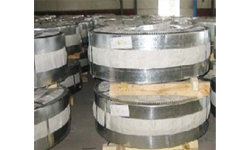
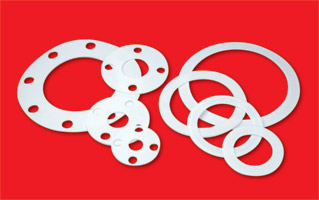
In the intricate world of industrial sealing, the integrity of a system hinges on the smallest, yet most critical component: the gasket. As a foundational element in preventing leaks, managing pressure, and ensuring operational safety, the selection of the correct gasket material is not a choice—it's a strategic engineering decision. With over two decades of expertise in fluid sealing solutions, Kaxite Sealing understands that the material is the very soul of the gasket, defining its capabilities, limitations, and ultimate success in the field. This comprehensive guide delves into the core materials that form the backbone of modern sealing technology, providing the detailed parameters and professional insights necessary for specifying the ideal seal for your unique application.
Core Gasket Materials: Properties & Selection Criteria
The performance of a gasket is directly dictated by the physical, chemical, and thermal properties of its base material. Below is a detailed breakdown of the most common and high-performance gasket materials, including key parameters essential for engineers and procurement specialists.
1. Non-Metallic Materials
Ideal for a wide range of general industrial applications, these materials offer excellent compressibility and sealing at lower pressures and temperatures.
- Compressed Non-Asbestos (CNA) / Aramid Fiber
- Base Composition: Aramid fibers (e.g., Kevlar™), nitrile rubber (NBR) binder, fillers.
- Temperature Range: -40°C to +290°C (-40°F to +554°F).
- Pressure Rating: Suitable for medium pressure applications.
- Media Resistance: Excellent resistance to oils, fuels, steam, and many chemicals. Not recommended for strong acids and bases.
- Key Applications: General purpose sealing in pumps, flanges, engines, and pipework for water, oil, and steam services.
- Expanded Graphite (Flexible Graphite)
- Base Composition: Pure exfoliated graphite, often with stainless steel foil insert (CG-4500) for handling.
- Temperature Range: Inert atmosphere: -200°C to +3000°C; Oxidizing atmosphere: up to 450°C continuously (with anti-oxidant coatings available).
- Pressure Rating: High. Conforms exceptionally well to flange imperfections.
- Media Resistance: Outstanding chemical inertness, resistant to most chemicals, solvents, and acids. Susceptible to oxidation in strong oxidizing agents.
- Key Applications: Heat exchangers, exhaust systems, chemical processing, high-temperature flanges, and aggressive media.
- Polytetrafluoroethylene (PTFE)
- Base Composition: Virgin PTFE, filled PTFE (with glass, carbon, graphite).
- Temperature Range: -260°C to +260°C (-436°F to +500°F).
- Pressure Rating: Low to medium. Has cold flow characteristics.
- Media Resistance: The ultimate in chemical resistance, virtually inert. Resistant to all commercial chemicals and solvents.
- Key Applications: Aggressive chemical processing, pharmaceutical, food and beverage, and applications requiring ultra-pure media.
2. Semi-Metallic Materials
These composite materials combine the sealing resilience of non-metallics with the strength and temperature resistance of metal, offering robust solutions for demanding conditions.
- Spiral Wound Gaskets (SWG)
- Base Composition: Alternating spiral winds of pre-formed metal strip (304/316 SS, Inconel, etc.) and a soft filler material (Graphite, PTFE, Mica).
- Temperature Range: Dependent on metal and filler choice, typically from -250°C to +1000°C+.
- Pressure Rating: Very high. Standard for ASME B16.5, B16.47, and API 6A flanges.
- Media Resistance: Determined by the combination of metal and filler material selected for the specific media.
- Key Applications: Refinery and petrochemical pipelines, high-pressure/temperature steam, oil & gas production (wellhead equipment).
- Metal Jacketed Gaskets
- Base Composition: A soft filler core (asbestos-free, graphite) fully enclosed in a metal jacket (soft iron, SS, Monel). Temperature Range: Up to 600°C depending on jacket and filler.
- Pressure Rating: High. Excellent for heat exchanger channels and aggressive services.
- Media Resistance: The metal jacket protects the filler from corrosive and erosive media.
- Key Applications: Heat exchanger channel covers, reactor flanges, and severe service conditions.
3. Metallic Materials
Used for the most extreme pressures and temperatures, metallic gaskets rely on the yield strength of the metal to create a seal.
- Ring Type Joint (RTJ) Gaskets
- Base Composition: Solid metal rings (Soft Iron, 316 SS, Inconel 600/625, Duplex). Octagonal or oval cross-section.
- Temperature Range: Suited for cryogenic to very high temperatures, based on metal grade.
- Pressure Rating: Extremely high. Standard for API 6A and ASME B16.5 pressure classes.
- Media Resistance: Excellent, dependent on the corrosion resistance of the selected alloy.
- Key Applications: Offshore platforms, high-pressure valves, Christmas tree fittings, and critical pipeline flanges in oil & gas.
- Solid Metal Gaskets (Flat, Corrugated)
- Base Composition: Aluminum, Copper, Soft Iron, Stainless Steel, Titanium.
- Temperature Range: Varies widely with material; copper up to 400°C, stainless steels much higher.
- Pressure Rating: High, but require high bolt load and very flat flange surfaces.
- Key Applications: High-integrity static seals in turbines, reactors, and vacuum systems.
Technical Parameter Comparison Table
The following table provides a quick-reference comparison of key technical parameters for primary gasket material categories offered by Kaxite Sealing. This data is typical; specific grades may have enhanced properties.
| Material Type | Example Material (Kaxite Grade) | Max Temp. (°C) | Max Pressure (Bar) | pH Range | Compression Set | Primary Advantage |
|---|---|---|---|---|---|---|
| Compressed Non-Asbestos | KX-NAF1100 | 290 | 150 | 4 - 10 | Good | Cost-effective, versatile |
| Expanded Graphite | KX-GRAPH5000 | 450 (air) | 200+ | 0 - 14 (excluding oxidizers) | Excellent | Superior conformability & high temp |
| PTFE Sheet | KX-PTFE-V01 | 260 | 100 | 0 - 14 (universal) | Poor (cold flow) | Ultimate chemical inertness |
| Spiral Wound (SS316/Graphite) | KX-SWG-316G | 650 | Class 900+ | Dependent on filler | N/A (spring-like) | Reliability in cyclic service |
| RTJ Gasket (Inconel 625) | KX-RTJ-IN625 | 1100 | Class 2500+ | N/A | N/A | Extreme pressure & temperature |
Critical Material Selection Factors
Choosing the right gasket material extends beyond a simple temperature or pressure match. A systematic evaluation ensures long-term sealing integrity and safety.
- Fluid Media: The chemical compatibility of the gasket material with the process fluid is paramount. Consider concentration, phase (liquid/vapor), and potential for absorption/swelling.
- Temperature & Pressure Profile: Account for both operating and transient conditions (start-up, shutdown, surges). The material must retain its sealing force and not degrade.
- Flange Conditions: Surface finish, flatness, and bolt load capacity determine how well a material can conform and seal. Softer materials compensate for rough finishes; harder materials require precise machining.
- Regulatory & Industry Standards: Compliance with standards like FDA, USP Class VI, NSF, ATEX, NORSOK, or specific customer specifications may dictate material choices.
- Lifecycle Cost: Consider total cost of ownership, including installation frequency, maintenance downtime, and risk of failure, not just the initial purchase price.
Gasket Materials: Frequently Asked Questions (FAQ)
Q: What is the single most important factor when selecting a gasket material?
A: While temperature and pressure are critical, chemical compatibility with the sealed media is often the most crucial factor. An incompatible material will degrade, swell, or corrode, leading to rapid failure regardless of other suitable properties. Always cross-reference the chemical resistance chart for the specific Kaxite Sealing material grade with your process fluid.
Q: Can I use a PTFE gasket for high-pressure steam service?
A: Generally, no. While PTFE has excellent chemical resistance and can handle the temperature of many steam services, it is prone to "cold flow" or creep under sustained high compressive loads. For high-pressure steam, a reinforced PTFE composite or, more commonly, a spiral wound gasket with a graphite filler is the standard and more reliable choice.
Q: What's the difference between Compressed Non-Asbestos (CNA) and Expanded Graphite sheets?
A: CNA sheets are fibrous composites with good mechanical strength and resilience, ideal for general industrial flanges. Expanded Graphite is a pure graphite sheet with superior thermal conductivity, conformability, and higher temperature limits in oxidizing environments, making it better for heat exchangers and services with thermal cycling. Graphite is also more chemically inert but requires careful handling due to its softness.
Q: How do I know if I need a semi-metallic or metallic gasket instead of a non-metallic one?
A: The transition is typically driven by application severity. Consider semi-metallic (like spiral wound) or metallic gaskets when facing: 1) Pressures above 150-200 bar, 2) Temperatures exceeding 450°C, 3) High levels of thermal or pressure cycling, 4) Applications governed by strict industry standards like ASME B16.20 or API 6A, or 5) When the consequences of a leak are severe (safety, environmental, cost).
Q: Why do spiral wound gaskets have different colors on the outer ring?
A: The color-coded outer centering ring (or guide ring) on a standard spiral wound gasket helps in quick visual identification of the material grade according to industry norms (e.g., yellow for 304SS, blue for 316SS). This is a critical quality control and safety feature to prevent material mix-ups during installation in complex plants.
Q: How does Kaxite Sealing ensure the quality and consistency of its gasket materials?
A: Kaxite Sealing implements a rigorous quality management system from raw material sourcing to final shipment. Our materials are batch-tested for key properties like density, tensile strength, compressibility, recovery, and chemical resistance per ASTM, DIN, and ISO standards. Traceability is maintained for all high-integrity products, and our technical team provides support for material validation and selection.