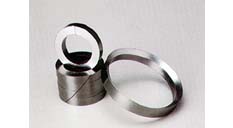
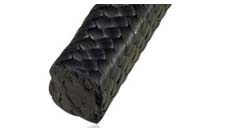
In the demanding world of industrial sealing, where performance, reliability, and longevity are non-negotiable, the Die-formed Graphite Ring stands as a cornerstone technology. This advanced sealing solution, engineered for precision and durability, addresses the most challenging conditions in rotating equipment, pumps, and valves across diverse sectors including oil & gas, chemical processing, power generation, and refining. Unlike conventional packing methods, die-formed rings offer a superior seal with enhanced stability and predictable performance.
At Kaxite Sealing, our expertise in advanced material science and precision manufacturing culminates in our high-performance die-formed graphite rings. We understand that a seal is more than just a component; it's a critical barrier that ensures operational safety, efficiency, and environmental compliance. Our rings are meticulously crafted from high-purity, flexible graphite, which is then precisely die-formed under controlled pressure and temperature. This process creates a product with exceptional dimensional accuracy, consistent density, and inherent lubricity, ready to perform in extreme temperatures and corrosive environments.
Selecting the correct die-formed graphite ring requires careful consideration of key parameters. Kaxite Sealing provides a comprehensive range of standard sizes and can manufacture custom rings to meet exact specifications. Below are the critical technical details of our standard product line.
| Grade Code | Graphite Purity | Density Range (g/cm³) | Max Operating Temp (Oxidizing) | Key Application |
|---|---|---|---|---|
| KX-DFG-HP | >99.9% Carbon | 1.5 - 1.8 | 750°F / 400°C | High-purity chemical, pharmaceutical |
| KX-DFG-IM | >99% Carbon | 1.6 - 1.9 | 750°F / 400°C | General industrial, pumps, valves |
| KX-DFG-AS | Impregnated (Anti-Oxidant) | 1.7 - 2.0 | 1000°F / 540°C | High-temp oxidizing environments |
| KX-DFG-MI | Metal-Inlaid (SS304/316) | 1.8 - 2.2 | 1200°F / 650°C | High-pressure steam, aggressive abrasion |
| Dimension | Standard Tolerance | Precision Tolerance (On Request) |
|---|---|---|
| Inside Diameter (ID) | ±0.005 in (±0.13 mm) | ±0.002 in (±0.05 mm) |
| Outside Diameter (OD) | ±0.005 in (±0.13 mm) | ±0.002 in (±0.05 mm) |
| Cross-Section (Width) | ±0.003 in (±0.08 mm) | ±0.0015 in (±0.04 mm) |
| Concentricity (OD to ID) | 0.010 in TIR max | 0.005 in TIR max |
Q: What is the primary difference between die-formed graphite rings and spiral-wound gaskets or braided packing?
A: The primary difference lies in the manufacturing process and structural integrity. Die-formed rings are pressed from flexible graphite foil into a precise, homogeneous ring in a single, controlled process. This results in uniform density and consistent mechanical properties throughout the entire ring. Spiral-wound gaskets combine graphite and metal, while braided packing is woven. Die-formed rings offer better dimensional consistency, higher purity (no filler materials), and often provide a more reliable, leak-tight seal in static and dynamic applications with less gland adjustment required.
Q: Can Kaxite Sealing die-formed graphite rings be used in both static flange seals and dynamic pump/valve stem seals?
A: Yes, absolutely. Kaxite Sealing die-formed rings are versatile and engineered for both applications. For static flange sealing, they function as robust gaskets, conforming to flange faces to create a tight seal. For dynamic sealing on rotating or reciprocating shafts, their self-lubricating nature and compressibility allow them to maintain contact and seal effectively with minimal wear. It is crucial to select the appropriate grade and size for the specific application's pressure, temperature, and media.
Q: How do I determine the correct size and grade for my application?
A: Selecting the correct size requires knowing the gland or stuffing box dimensions: shaft/stem diameter, housing bore diameter, and gland depth. The cross-section of the ring is typically (Bore ID - Shaft OD)/2. For the grade, consider the operating temperature (oxidizing vs. inert atmosphere), chemical compatibility with the process fluid, required pressure rating, and presence of abrasives. Our KX-DFG-HP grade is for high-purity services, KX-DFG-IM for general use, KX-DFG-AS for higher temps with oxygen present, and KX-DFG-MI for extreme pressure/abrasion. Consulting with Kaxite Sealing technical support is always recommended for critical applications.
Q: What are the installation best practices for a die-formed graphite ring?
A: Proper installation is key to performance. Ensure the shaft/stem and housing are clean, smooth, and free of burrs. For multiple rings, stagger the radial joints (usually 90 or 120 degrees apart). For pump packing, follow the manufacturer's gland tightening procedure—typically hand-tighten the gland follower, then operate the pump and make incremental adjustments (1/4 turn of nuts) during warm-up until a slight leakage is observed for lubrication, which should minimize after run-in. Avoid over-tightening, as this can generate excessive heat and wear. For static gasketing, ensure flanges are aligned and bolts are torqued in a star pattern to the specified value.
Q: Do graphite rings require a break-in period, and how do I handle minor leakage initially?
A: Yes, a short break-in period is normal, especially for dynamic seals. The graphite needs to thermally align and seat itself against the mating surfaces. It is common to see minimal, controlled leakage (a few drops per minute) during the initial run-in. This leakage cools and lubricates the assembly. The packing gland should be adjusted gradually as described above until this leakage reduces to an acceptable level, usually within a few hours of operation. Persistent heavy leakage indicates incorrect installation, sizing, or potential damage to the ring or equipment.
Q: Are there any media or conditions where die-formed graphite rings are not recommended?
A: While highly resistant, pure graphite has a few limitations. It is not recommended for use with strongly oxidizing acids (e.g., nitric acid, concentrated sulfuric acid above certain temperatures) or in environments with high-velocity oxygen or chlorine gas at elevated temperatures, as accelerated oxidation can occur. In such cases, our specially impregnated or metal-inlaid grades (KX-DFG-AS, KX-DFG-MI) may provide a solution. Applications with molten alkali metals or certain fluoride compounds also require careful evaluation. Always consult our chemical compatibility charts.
Q: How does the performance and cost compare to PTFE (Teflon) or other high-performance polymer seals?
A: Die-formed graphite rings excel in temperature and fire safety where PTFE has limits (PTFE typically maxes out around 500°F/260°C and can emit toxic fumes when overheated). Graphite maintains its sealing capability up to much higher temperatures without melting or degrading. It also has superior thermal conductivity, helping to dissipate heat from the friction zone. While the initial unit cost of a high-quality graphite ring may be higher than some polymer options, its vastly longer service life in extreme conditions, reduced downtime, and lower maintenance requirements often result in a significantly lower total cost of ownership.
Beyond our extensive standard catalog, Kaxite Sealing specializes in engineering custom die-formed graphite sealing solutions. We can manufacture rings in non-standard sizes, with special cross-sectional shapes (square, rectangular, keystone), and combine graphite with various inlays or inserts (stainless steel, Inconel, Monel) for enhanced structural strength and performance in unique applications. Our technical team provides comprehensive support, from material selection and design consultation to failure analysis and on-site training, ensuring your sealing challenges are met with reliable, innovative solutions.
```