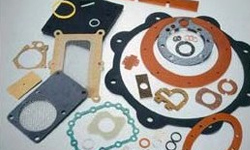
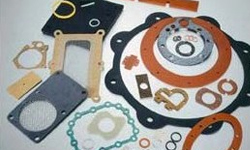
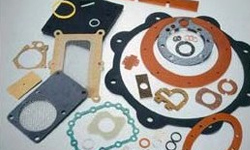
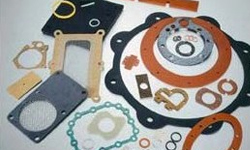
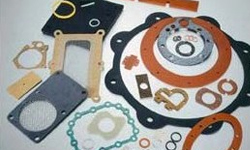
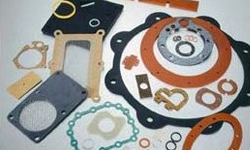
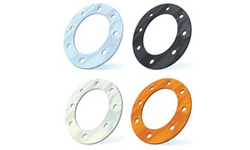
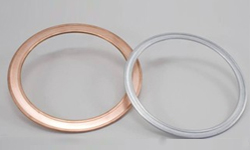
In the world of industrial machinery, automotive systems, plumbing, and countless other applications, creating a reliable seal between two mating surfaces is paramount to prevent leaks, contain pressure, and exclude contaminants. This is where Rubber gaskets come into play. A rubber gasket is a mechanical seal, typically ring-shaped, crafted from elastomeric materials. It is designed to be sandwiched between two or more components, filling the microscopic irregularities on their surfaces to create a tight, impervious barrier.
The primary function of a gasket is to prevent the escape or ingress of fluids (liquids and gases) under a variety of operational conditions, including fluctuating temperatures and pressures. Failure of a gasket can lead to system downtime, product loss, safety hazards, and significant environmental concerns. Therefore, selecting the correct rubber gasket is not a trivial task—it is a critical engineering decision that impacts efficiency, safety, and cost.
At Kaxite Sealing, with decades of expertise in sealing solutions, we understand that the "perfect seal" depends on a precise alignment of material properties with application demands. This guide delves deep into the technical specifications, material science, and application considerations that define high-performance rubber gaskets.
Choosing a gasket involves evaluating several key parameters. These specifications determine how the gasket will perform under stress, temperature, chemical exposure, and over time.
The base polymer defines the gasket's fundamental characteristics. Here are the most common types:
These measurable properties are derived from standardized tests (ASTM, ISO).
| Property | Description | Why It Matters | Typical Range (Varies by Material) |
|---|---|---|---|
| Hardness (Shore A Durometer) | Resistance to indentation. Measured on a scale from 0 (soft) to 100 (rigid). | Determines conformability to surface irregularities. Softer gaskets seal better on rough surfaces; harder gaskets resist extrusion. | 40 Shore A (Soft) to 90 Shore A (Hard) |
| Tensile Strength | The maximum stress the material can withstand while being stretched before breaking. | Indicates mechanical durability and resistance to tearing during installation or pressure spikes. | 10 MPa to 25 MPa |
| Elongation at Break | The percentage increase in length before the material ruptures under tension. | Measures flexibility and ability to stretch during installation without damage. | 100% to 600% |
| Compression Set | The permanent deformation of the gasket after being compressed for a set time and temperature. | Critical for long-term sealing performance. A low compression set means the gasket maintains its sealing force over time. | 10% to 40% (Lower is better) | Temperature Range | The minimum and maximum continuous operating temperatures the material can endure without significant degradation. | Ensures the gasket remains functional, elastic, and does not become brittle or melt in its operating environment. | -60°C to +225°C (Material Dependent) |
| Pressure Rating | The maximum system pressure the gasket design can contain. | Dictates suitability for hydraulic systems, pressurized vessels, or low-pressure applications. | Vacuum to 10,000+ PSI (Depends on design & material) |
Standard designs include sheets, cords, O-rings, and custom-molded shapes. Critical dimensions include:
At Kaxite Sealing, we transform raw elastomers into reliable sealing components through a controlled, multi-step process:
Q: How do I choose the right rubber material for my gasket application?
A: Material selection is a three-step process. First, identify the media being sealed (e.g., water, oil, acid, steam). Consult a chemical compatibility chart. Second, determine the operational temperature range, both continuous and peak. Third, consider secondary factors like pressure, exposure to sunlight/ozone, and any regulatory requirements (e.g., FDA, NSF). When in doubt, consult with the application engineers at Kaxite Sealing, who can match your conditions with the optimal elastomer.
Q: What is the difference between a gasket and an O-ring?
A: Both are seals, but their design and application differ. A gasket is typically used for static seals between flat or flanged faces (e.g., pipe flanges, gearbox covers). It is often cut from a sheet and can be non-round. An O-ring is a torus-shaped (doughnut-shaped) seal designed to sit in a gland (a machined groove), creating a seal primarily through radial compression. O-rings are used in both static and dynamic (moving) applications like pistons and rotating shafts.
Q: How important is surface finish on the flanges where the gasket will be installed?
A: Extremely important. The sealing surfaces must be clean, flat, and have an appropriate finish. A rough surface (e.g., coarse machining marks) requires a softer gasket that can flow into the imperfections. A finish that is too smooth might not provide enough "bite" for the gasket. A common recommended range is 125 to 250 microinches Ra. Proper surface preparation prevents leaks and premature gasket failure.
Q: How do I calculate the correct bolt torque for a flanged gasket connection?
A: Correct bolt torque is critical to achieve sufficient compression on the gasket to create a seal without crushing it or damaging the flanges. The calculation involves the gasket material's compressive stress (yield value), the gasket's contact area, the number of bolts, and the bolt's coefficient of friction. Manufacturers like Kaxite Sealing provide gasket-specific compression stress recommendations. It is also standard practice to follow a cross-pattern tightening sequence and to re-torque bolts after an initial heat cycle in hot applications.
Q: Can I reuse a rubber gasket?
A: It is generally not recommended to reuse rubber gaskets. During initial installation, the gasket undergoes permanent compression set as it conforms to the flange surfaces. Upon disassembly, it does not fully recover to its original shape. Reusing it will likely result in an inadequate seal because it cannot fill the micro-gaps effectively. For reliable performance and leak prevention, always install a new, high-quality gasket from a trusted supplier like Kaxite Sealing.
Q: What causes a rubber gasket to fail prematurely?
A: Premature failure can stem from multiple factors: Chemical Attack: Incompatibility with the sealed fluid causing swelling, softening, or cracking. Thermal Degradation: Operating outside the material's temperature range leads to hardening/brittleness or melting. Compression Set: Poor-quality material losing its elasticity and sealing force. Improper Installation: Under or over-torquing bolts, misalignment, dirty sealing surfaces, or cutting/pinching the gasket. Extrusion: Excessive system pressure forcing the gasket material into the gap between flanges.
Q: What are the advantages of custom-molded gaskets over die-cut gaskets?
A: Die-cutting from sheet stock is cost-effective for simple 2D shapes and prototypes. Custom molding is superior for complex 3D geometries, parts requiring precise dimensional control on all faces, and for incorporating features like molded-in lips, ribs, or metal inserts. Molding also ensures uniform density and material orientation throughout the part, which can enhance performance consistency and longevity in demanding applications. Kaxite Sealing's mold-making and injection molding capabilities provide this advanced solution.