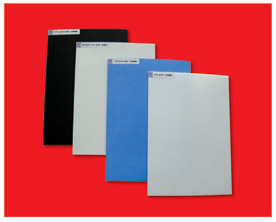
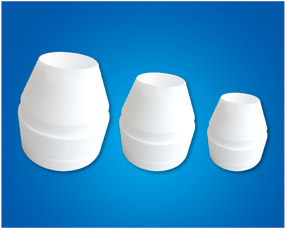
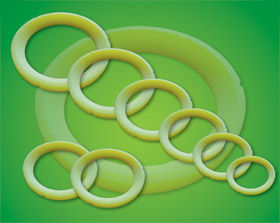
PTFE parts, also known as Teflon® parts, are critical components engineered from Polytetrafluoroethylene, a high-performance fluoropolymer. At Kaxite Sealing, we specialize in the precision manufacturing of these components, which are indispensable across industries demanding exceptional chemical resistance, wide temperature tolerance, minimal friction, and superior electrical insulation. The unique molecular structure of PTFE provides an almost universal inertness, making it the material of choice for sealing, insulating, and lining applications in the most challenging environments.
### The Unmatched Properties of PTFE for Industrial Components
The widespread adoption of PTFE for machined parts is driven by a suite of outstanding properties:
* **Extreme Chemical Resistance:** PTFE is virtually unaffected by most industrial chemicals, solvents, and acids, including aggressive ones like aqua regia and hot sulfuric acid. This makes it perfect for seals and gaskets in chemical processing equipment.
* **Exceptional Temperature Range:** PTFE parts retain their functionality across a broad spectrum, from cryogenic temperatures as low as -200°C (-328°F) up to a continuous service temperature of +260°C (+500°F). This stability is crucial for applications in aerospace, automotive, and thermal processing.
* **Lowest Coefficient of Friction:** PTFE possesses the lowest coefficient of friction of any known solid material. This property is essential for non-stick applications, bearings, and slide plates, reducing wear and energy consumption.
* **Excellent Dielectric Properties:** As a superb electrical insulator with a high dielectric strength, PTFE is widely used in wire insulation, coil forms, and semiconductor manufacturing components.
* **Non-Stick & Non-Wetting:** Its hydrophobic and oleophobic nature ensures that almost no substances adhere to it, enabling easy-clean surfaces and preventing clogging in fluid handling systems.
* **High Purity & Biocompatibility:** Certain grades of PTFE are USP Class VI compliant and are used in food, beverage, and pharmaceutical applications due to their purity and inertness.
### In-Depth Technical Specifications of Kaxite Sealing PTFE Parts
Kaxite Sealing manufactures parts from various PTFE formulations to meet specific application needs. Below is a detailed breakdown of our standard and enhanced material grades.
#### Common PTFE (Virgin PTFE)
This is the base polymer, offering the full range of PTFE's classic properties—excellent chemical resistance, electrical properties, and temperature range.
**Key Parameters:**
* **Density:** 2.1 - 2.3 g/cm³
* **Tensile Strength:** 20 - 35 MPa
* **Elongation at Break:** 200 - 400%
* **Continuous Service Temperature:** -200°C to +260°C
* **Dielectric Strength:** > 60 kV/mm
* **Coefficient of Friction:** ~0.05 - 0.10
#### Filled PTFE Compounds
To improve mechanical properties, wear resistance, and dimensional stability, PTFE is compounded with various fillers. Kaxite Sealing offers a range of filled grades.
| Filler Type | Typical Composition | Key Enhanced Properties | Ideal Applications |
| :--- | :--- | :--- | :--- |
| **Glass Fiber** | 15% - 25% Glass | Improved compressive strength, reduced creep, better wear resistance. | Thrust washers, bushings, bearing pads, heavy-load seals. |
| **Carbon/Graphite** | 15% - 25% Carbon | Enhanced thermal conductivity, lower friction, improved wear resistance. | Compressor rings, piston rings, dynamic seals in dry or low-lubrication environments. |
| **Bronze** | 40% - 60% Bronze | Greatly improved thermal conductivity, high compressive strength, excellent wear resistance. | Bearings, wear plates, bushings subjected to high loads and speeds. |
| **Molybdenum Disulfide (MoS2)** | 5% - 15% MoS2 | Reduced initial friction, improved break-away characteristics. | Seals and bearings for slow, oscillating movements under high load. |
| **Stainless Steel** | 40% - 50% Steel | Maximum hardness, excellent abrasion resistance, good thermal conductivity. | Severe service wear parts, scraper rings, seal rings in abrasive media. |
| **Polyimide (PI)** | 15% - 20% PI | Superior wear resistance and PV limit, very low creep. | High-performance dynamic seals, valve seats, bushings in demanding conditions. |
### Our Manufacturing Capabilities and Product Range
Kaxite Sealing utilizes advanced CNC machining, molding, and skiving techniques to produce high-tolerance parts from PTFE rods, tubes, and sheets. Our product portfolio includes, but is not limited to:
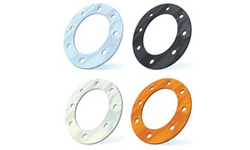
* **Seals & Gaskets:** V-Rings, U-Cups, Diaphragms, Envelope Gaskets, Sheet Gaskets.
* **Bearings & Bushings:** Sleeve Bearings, Flange Bearings, Thrust Washers, Spherical Bushings.
* **Industrial Components:** Piston Rings, Wear Strips, Slide Plates, Insulating Strips, Bellows.
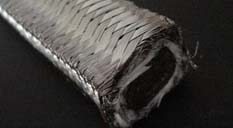
* **Valve Components:** Ball Valve Seats, Butterfly Valve Liners, Stem Packing, Chevron Seals.
* **Custom Machined Parts:** Any complex geometry tailored to your specific drawing requirements.
We adhere to stringent quality control measures throughout the production process, ensuring every part meets precise dimensional accuracy and material specifications.
### PTFE Parts: Frequently Asked Questions (FAQ)
**Q: What is the main difference between PTFE and Teflon®?**
A: PTFE is the generic name for the polymer Polytetrafluoroethylene. Teflon® is a registered brand name for PTFE owned by Chemours (formerly DuPont). All Teflon® is PTFE, but not all PTFE is branded as Teflon®. Kaxite Sealing uses high-quality PTFE resins that meet or exceed the performance standards associated with the Teflon® brand.
**Q: Can PTFE parts be used for food contact applications?**
A: Yes, specific grades of PTFE are compliant with FDA (USA) and EU regulations for food contact. These are often white, virgin PTFE materials that meet purity requirements. It is crucial to specify your need for food-grade or USP Class VI compliant PTFE when ordering from Kaxite Sealing.
**Q: How does filled PTFE differ from virgin PTFE?**
A: Virgin PTFE offers the best chemical resistance and electrical properties but can exhibit cold flow (creep) under sustained load. Filled PTFE incorporates materials like glass, carbon, or bronze to combat this creep, significantly improving wear resistance, compressive strength, and thermal conductivity, making it suitable for dynamic mechanical applications.
**Q: What are the limitations of PTFE as a material?**
A: While PTFE has many strengths, it has limitations: it has relatively low mechanical strength compared to metals, can creep or deform under continuous heavy load (mitigated with fillers), has poor radiation resistance, and can be difficult to bond without specialized surface treatment (e.g., sodium etching).
**Q: How do I select the right PTFE grade for my application?**
A: Selection depends on key operating conditions. Consider the chemical environment, temperature range, type of motion (static, dynamic, rotary), pressure (PV value), presence of abrasives, and regulatory requirements. For example, a static seal in a chemical bath may use virgin PTFE, while a rotating bearing in a pump would require a glass or carbon-filled compound. The engineering team at Kaxite Sealing can assist with material selection.
**Q: What tolerances can Kaxite Sealing achieve on machined PTFE parts?**
A: PTFE is a soft material but can be machined to precise tolerances. Standard machining tolerances are typically within ±0.05mm (±0.002"), and with specialized processes, even tighter tolerances can be achieved for critical dimensions. It's important to discuss tolerance requirements during the design phase.
**Q: Are there any special handling or installation requirements for PTFE seals?**
A: PTFE seals, especially ones like spring-energized seals, often require careful handling to avoid damaging the sealing lip. Installation surfaces should be free of sharp edges and burrs. While PTFE is generally lubricant-compatible, some applications run dry. Always follow the manufacturer's installation guidelines for optimal performance and longevity.
**Q: Can Kaxite Sealing provide custom PTFE parts from my drawings?**
A: Absolutely. Custom machining is a core competency at Kaxite Sealing. We can produce complex, non-standard PTFE components directly from your 2D drawings or 3D CAD models (STEP, IGES, etc.), offering full support from material selection advice to prototype development and final production.
**Q: How does the price of PTFE compare to other sealing materials like NBR or FKM?**
A: PTFE is generally more expensive on a per-kilogram basis than common elastomers like Nitrile (NBR) or Fluoroelastomer (FKM). However, its vastly longer service life in extreme conditions, reduced maintenance downtime, and reliability often result in a lower total cost of ownership, justifying the initial investment.
**Q: What industries most commonly use your PTFE parts?**
A: Kaxite Sealing components are integral to numerous industries, including Chemical & Pharmaceutical Processing, Oil & Gas, Food & Beverage, Semiconductor Manufacturing, Aerospace, Automotive (especially in fuel and transmission systems), and General Industrial Machinery for hydraulic and pneumatic systems.