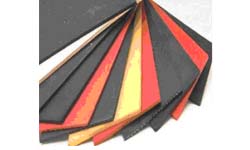
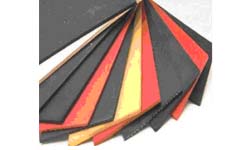
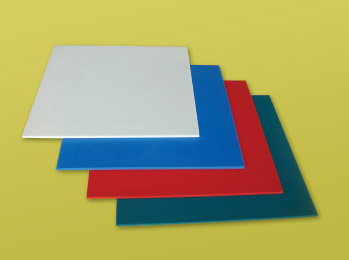
Rubber sheets are fundamental industrial components, offering versatility, durability, and reliable sealing or protection across countless applications. At Kaxite Sealing, we specialize in engineering high-performance rubber sheets that meet the rigorous demands of modern industry, from heavy machinery and automotive manufacturing to food processing and construction. Unlike generic off-the-shelf options, our sheets are developed with precise formulations and stringent quality controls, ensuring optimal performance for your specific environmental and mechanical challenges. This guide provides a detailed overview of our product specifications, material properties, and answers to common technical questions, empowering you to make an informed selection.
Technical Specifications of Kaxite Sealing Rubber Sheets
Our rubber sheets are defined by a set of critical parameters that determine their suitability for different tasks. Below is a comprehensive breakdown of our standard and custom specifications.
Primary Material Grades & Properties
- Nitrile Rubber (NBR): Excellent resistance to oils, fuels, and hydrocarbons. Ideal for automotive and machinery gaskets.
- Ethylene Propylene Diene Monomer (EPDM): Superior weathering, ozone, and steam resistance. Perfect for outdoor applications and HVAC systems.
- Silicone Rubber: Exceptional high and low-temperature performance (-60°C to 230°C). Used in food-grade, medical, and extreme thermal environments.
- Neoprene (CR): Good all-purpose resistance to weather, ozone, and moderate oils. Common in marine and industrial settings.
- Natural Rubber (NR): High tensile strength and elasticity. Suitable for applications requiring high mechanical strength.
- Fluoroelastomer (FKM/Viton®): Outstanding resistance to high temperatures, fuels, oils, and aggressive chemicals.
Standard Physical & Performance Metrics
- Hardness (Shore A): Available from 30° (soft) to 90° (hard) to match compression and load-bearing needs.
- Tensile Strength: Ranges from 10 MPa to 25 MPa, ensuring integrity under stress.
- Elongation at Break: Typically between 200% and 600%, indicating flexibility and stretch resistance.
- Temperature Range: Standard grades perform from -40°C to +100°C; special formulations (e.g., Silicone, FKM) extend from -60°C to +230°C+.
- Thickness Tolerance: Precision-manufactured with tolerances as tight as ±0.2mm for critical sealing applications.
- Standard Sheet Dimensions: Rolls or sheets available in widths up to 1500mm and lengths up to 30 meters.
Comparative Material Selection Table
| Material Type | Key Strengths | Typical Applications | Kaxite Grade Code |
|---|---|---|---|
| NBR (Nitrile) | Oil & Fuel Resistance, Good Mechanical Properties | Fuel Systems, Oil Seals, Gaskets in Machinery | KS-NBR70 |
| EPDM | Weather/Ozone/Steam Resistance, Waterproof | Outdoor Seals, Roofing Membranes, Automotive Weatherstripping | KS-EPDM60 |
| Silicone | Extreme Temperature Range, Hygienic, Non-Toxic | Food Processing Belts, Medical Equipment, High-Temp Gaskets | KS-SI50 |
| Neoprene (CR) | Flame Retardant, Moderate Chemical & Weather Resistance | Marine Fittings, Protective Linings, Mounts | KS-CR65 |
| FKM (Fluoroelastomer) | Excellent Chemical & High-Temp Resistance | Aerospace, Chemical Processing, Aggressive Fluid Seals | KS-FKM80 |
Frequently Asked Questions (FAQ) About Rubber Sheets
Q: How do I choose the right rubber sheet material for my application?
A: The selection depends on the operating environment. Identify the primary challenges: exposure to oils or chemicals (choose NBR or FKM), extreme temperatures (Silicone or FKM), outdoor weathering (EPDM), or need for food contact (FDA-approved Silicone). Consider mechanical factors like required hardness and compression. Our Kaxite Sealing technical team can provide a free material recommendation based on your specific parameters.
Q: What thickness of rubber sheet should I use for a gasket?
A: Gasket thickness is critical for effective sealing. For standard flange connections with low to medium pressure, 1.5mm to 3mm sheets are common. High-pressure systems or uneven surfaces may require thicker sheets (3mm-6mm) to ensure sufficient compression and fill gaps. The required compression set of the material also influences this choice. Thinner sheets (0.5mm-1mm) are often used as lining or protective layers.
Q: Can Kaxite Sealing rubber sheets be customized?
A: Absolutely. Beyond our standard range, we offer extensive customization. This includes specific dimensions (cut-to-size sheets, strips, or complex die-cut shapes), custom hardness (durometer), color compounding for coding or aesthetics, and special compound formulations to resist unique chemical mixtures or achieve specific regulatory certifications (e.g., NSF, UL, MIL-SPEC).
Q: What is the difference between a rubber sheet and a sponge rubber sheet?
A: A solid rubber sheet is dense and non-porous, designed primarily for creating impermeable seals, gaskets, and abrasion-resistant linings. A sponge or foam rubber sheet contains a cellular structure, making it compressible and lightweight. It is used for insulation, vibration damping, padding, and low-pressure sealing where conformation to irregular surfaces is needed. Kaxite Sealing produces both solid and closed-cell/open-cell sponge rubber variants.
Q: How do I ensure a long service life for my installed rubber sheet?
A: Service life depends on correct installation and environmental limits. Ensure the surface is clean, dry, and free of sharp edges before installation. Use appropriate adhesives if bonding is required. Do not stretch the sheet beyond its elongation limit. Most importantly, operate within the material's rated temperature and chemical resistance ranges. Periodic inspection for signs of hardening, cracking, or swelling will indicate if the material is degrading.
Q: Does Kaxite Sealing provide material test certificates?
A: Yes. We provide full traceability and quality assurance. For every batch of rubber sheet, especially for critical applications, we can supply Material Test Certificates (MTCs) or Certificates of Conformance (CoCs). These documents verify key properties like hardness, tensile strength, elongation, and specific gravity against international standards (ASTM, ISO, SAE).
Industrial Applications of Our High-Performance Sheets
The versatility of engineered rubber sheets makes them indispensable. Kaxite Sealing products are trusted in sectors where failure is not an option.
- Automotive & Transportation: Gaskets for engines and transmissions, vibration damping mounts, weather seals for doors and windows, and lining for truck beds.
- Manufacturing & Heavy Industry: Conveyor belt linings, anti-vibration pads for machinery, protective liners for chemical tanks, and seals for hydraulic and pneumatic systems.
- Construction & Architecture: Expansion joint seals, waterproofing membranes for roofs and foundations, and soundproofing/insulation layers.
- Food & Beverage Processing: FDA-compliant sanitary gaskets for piping and vessels, conveyor belts for food handling, and seals for processing equipment.
- Energy & Utilities: Seals for pumps and valves in water treatment, insulating mats for electrical components, and gaskets in oil and gas pipelines.