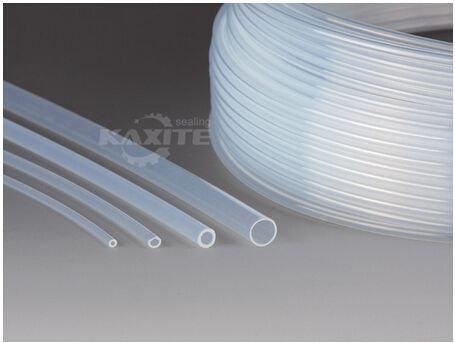
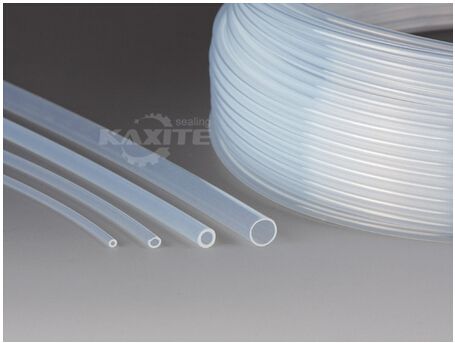
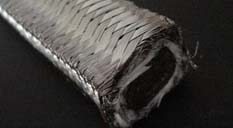
PTFE Tube, or Polytetrafluoroethylene tubing, represents the pinnacle of performance in fluid and gas transfer applications where chemical resistance, thermal stability, and purity are non-negotiable. At Kaxite Sealing, our precision-engineered PTFE tubing is manufactured to meet the most stringent requirements across industries such as pharmaceutical processing, semiconductor manufacturing, food and beverage, chemical analysis, and automotive systems. This guide delves into the technical specifications, applications, and key considerations for selecting the ideal PTFE tubing for your specific operational needs, establishing why Kaxite Sealing is your trusted partner for high-performance sealing and conveyance solutions.
### Core Characteristics and Advantages of Kaxite PTFE Tubing
PTFE is a synthetic fluoropolymer renowned for its unique set of properties, making tubing made from this material exceptionally versatile and reliable.
* **Exceptional Chemical Resistance:** PTFE is virtually inert, resisting attack by nearly all industrial chemicals, solvents, and aggressive acids and bases. This makes it ideal for conveying corrosive fluids.
* **Wide Temperature Range:** Kaxite PTFE tubing maintains its integrity and flexibility across a broad temperature spectrum, typically from -200°F (-130°C) to +500°F (+260°C), with short-term tolerance even higher.
* **High Purity and Low Contamination:** The material is non-toxic, FDA-compliant for food contact, and USP Class VI certified for medical applications. Its non-stick, low-adhesion surface minimizes residue buildup and prevents contamination of sensitive fluids.
* **Excellent Dielectric Properties:** PTFE is an outstanding electrical insulator, making the tubing suitable for wire sleeving and applications involving electrical components.
* **Low Coefficient of Friction:** This property ensures minimal flow resistance, reduces particulate generation, and allows for easy cleaning.
* **Flexibility and Durability:** Despite its toughness, PTFE tubing offers good flexibility, which simplifies installation in complex routing scenarios.
### Detailed Product Parameters of Kaxite Sealing PTFE Tubes
To ensure you select the correct tubing, here are the critical technical parameters. Our standard offerings can be customized to meet specific OEM requirements.
#### **Material Grades & Specifications**
| Property | Standard Grade | Reinforced Grade (Glass/Braided) | High-Purity Pharmaceutical Grade |
| :--- | :--- | :--- | :--- |
| **Primary Material** | 100% Virgin PTFE | PTFE core with external reinforcement | 100% Virgin PTFE, certified resin |
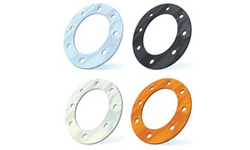
| **Color** | Natural White, Black | Natural White, Black, Custom | Natural White |
| **Operating Temp. Range** | -200°F to +500°F (-130°C to +260°C) | -200°F to +450°F (-130°C to +232°C) | -200°F to +500°F (-130°C to +260°C) |
| **Max. Working Pressure** | Varies with ID/ID; typically up to 150 PSI | Significantly higher; up to 1500 PSI+ | Varies with ID/ID; typically up to 150 PSI |
| **Surface Finish** | Smooth, non-porous | Textured from reinforcement | Ultra-smooth, electropolished options |
| **Key Certification** | FDA, RoHS, REACH | FDA, RoHS, REACH | FDA, USP Class VI, ISO 10993, cGMP compliant |
#### **Standard Dimensional Data (SDR - Standard Dimension Ratio)**
We manufacture tubing based on precise Inside Diameter (ID) and Outside Diameter (OD) controls.
**Commonly Available Sizes (Inch & Metric):**
* **Inside Diameter (ID):** 1/16", 1/8", 1/4", 3/8", 1/2", 3/4", 1" and metric equivalents (2mm, 4mm, 6mm, 8mm, 10mm, 12mm, etc.)
* **Outside Diameter (OD):** Available in multiple wall thicknesses (SDR). Common ODs range from 1/8" to over 1.25".
* **Standard Wall Thickness (SWT):** Available in "Thin Wall," "Standard Wall," and "Heavy Wall" configurations to balance flexibility and pressure rating.
* **Tolerance:** Standard tolerance on ID and OD is typically ±0.005 inches (±0.127mm), with tighter tolerances available upon request.
**Dimensional Table for Select Sizes:**
| Nominal Size (ID) | Typical OD | Wall Thickness | Approx. Burst Pressure (Std. Grade) |
| :--- | :--- | :--- | :--- |
| 1/8 inch (3.2 mm) | 1/4 inch (6.4 mm) | 1/16 inch (1.6 mm) | ~400 PSI |
| 1/4 inch (6.4 mm) | 3/8 inch (9.5 mm) | 1/16 inch (1.6 mm) | ~250 PSI |
| 3/8 inch (9.5 mm) | 1/2 inch (12.7 mm) | 1/16 inch (1.6 mm) | ~200 PSI |
| 1/2 inch (12.7 mm) | 5/8 inch (15.9 mm) | 1/16 inch (1.6 mm) | ~150 PSI |
*Note: Burst pressure is for reference only and decreases with increasing temperature. Always consult Kaxite Sealing engineers for pressure ratings at your specific operating temperature.*
### Key Application Areas for Kaxite PTFE Tubing
* **Chemical & Industrial Processing:** Transfer lines for acids, alkalis, solvents, and aggressive chemicals. Used in pump lines, analyzer sampling lines, and corrosion-resistant umbilical.
* **Semiconductor & Electronics:** Ultra-clean tubing for high-purity chemical delivery (CMP, etch, plating), gas lines, and wire insulation for sensitive equipment.
* **Pharmaceutical & Biotech:** Process lines for drug formulation, WFI (Water for Injection) transfer, sterile fluid paths, and connections in bioreactors and fillers.
* **Food & Beverage:** Lines for flavors, colors, oils, and dairy products. Compliant with sanitary standards and easy to clean.
* **Automotive & Aerospace:** Fuel lines, air lines, hydraulic lines (for certain fluids), and protective sleeving for wires and cables in high-temperature engine compartments.
* **Laboratory & Analytical:** Used in HPLC, ICP-MS, and other analytical instrument plumbing where inertness and purity are critical to prevent sample adsorption or system contamination.
### Frequently Asked Questions (FAQ) About PTFE Tube
**Q: What is the main difference between PTFE, FEP, and PFA tubing?**
A: PTFE, FEP, and PFA are all fluoropolymers with similar chemical resistance. PTFE has the highest continuous use temperature (260°C) but is opaque and more difficult to melt-process. FEP is transparent and melt-processable but has a lower temp rating (200°C). PFA shares PTFE's high temp rating (260°C) and is melt-processable with excellent clarity, often used for极高纯度的applications. Kaxite Sealing offers tubing in all these materials.
**Q: Can Kaxite PTFE tubing be used for steam applications?**
A: While PTFE can withstand the temperatures of low-pressure steam for short periods, it is generally not recommended for continuous, high-pressure steam service. The material can soften under prolonged heat and pressure. For steam, specialized metallic or other high-temperature polymer solutions should be considered.
**Q: How do I connect PTFE tubing? Can it be flared or threaded?**
A: Pure PTFE tubing is not typically flared or threaded like metal tubing due to its "creep" or cold-flow characteristics. Standard connection methods include using compression fittings (e.g., flareless bite-type fittings), push-to-connect fittings, or flanged connections with back-up rings. For a permanent, leak-free system, flanging or heat-bonding/welding of the PTFE tube ends is performed by specialists.
**Q: Does PTFE tubing have any permeability issues?**
A: Yes, PTFE is slightly permeable to gases and vapors. While it is an excellent barrier to liquids, its gas permeability is higher than some other plastics. For applications involving highly volatile or toxic gases where zero permeation is critical, this factor must be evaluated. Multi-layer or barrier-lined tubing options may be explored.
**Q: What does "SDR" mean in PTFE tubing specifications?**
A: SDR stands for Standard Dimension Ratio. It is defined as the ratio of the tube's Outside Diameter (OD) to its minimum Wall Thickness (WT): SDR = OD / WT. A lower SDR number indicates a thicker wall for a given OD, generally resulting in a higher pressure rating. Common SDRs for压力tubing are 11, 13.5, and 17.
**Q: How should I store and handle PTFE tubing?**
A: Store tubing in a cool, dry, dark place away from direct sunlight and heat sources. Coil large lengths with a diameter no less than 20 times the tubing's OD to avoid kinking or permanent deformation. Avoid dragging or abrading the tubing surface. Use clean, sharp tubing cutters for a square cut to ensure proper fitting seal.
**Q: Can Kaxite Sealing provide custom-colored or printed PTFE tubing?**
A: Yes. We offer custom coloring for identification purposes. We can also provide continuous stripe marking or custom printing (hot stamp, ink) with part numbers, logos, or directional arrows directly onto the tubing surface for easy traceability and system assembly.
**Q: What are the advantages of choosing Kaxite Sealing for my PTFE tubing needs?**
A: Kaxite Sealing combines decades of material science expertise with precision manufacturing. We provide not just a commodity product but a engineered solution. Our advantages include rigorous quality control from raw material to finished product, comprehensive technical support for material selection and system design, the ability to supply both standard and fully custom dimensions, and a global supply chain ensuring reliable delivery.