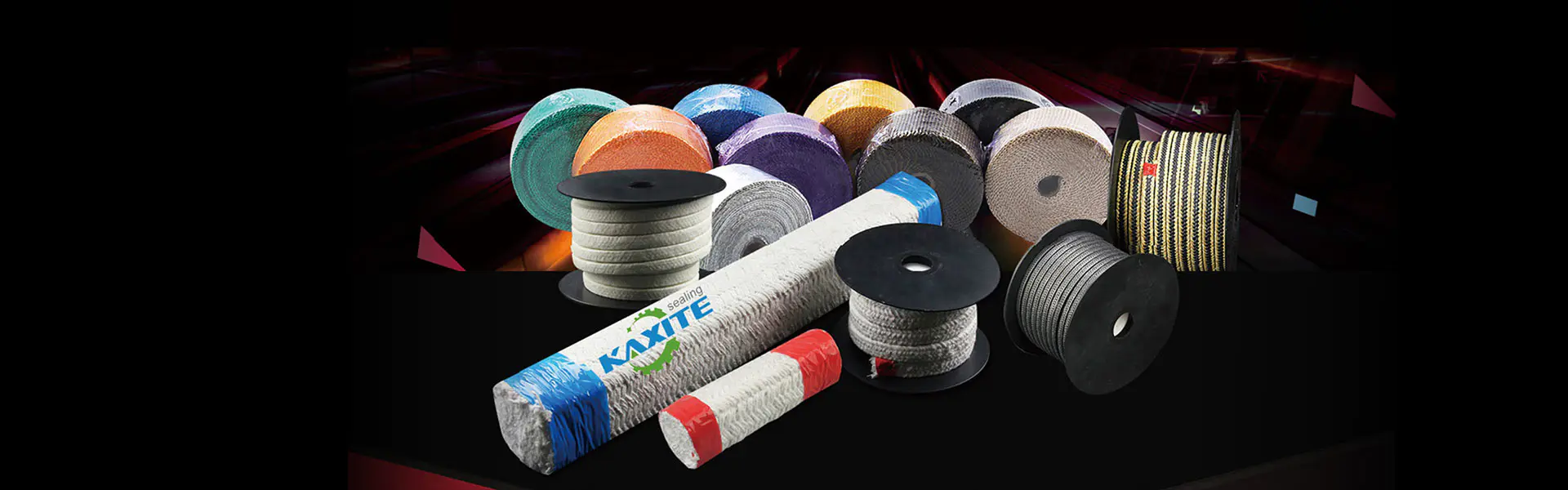
What Are the Advantages of Using PTFE Fiber Over Other Materials? For procurement professionals sourcing high-performance materials, this question is central. PTFE fiber stands out not just as another polymer, but as a game-changing solution for extreme environments where others fail. Imagine sealing systems in aggressive chemical plants or high-friction moving parts in food processing—these are scenarios demanding unparalleled chemical resistance, a wide temperature range, and exceptional non-stick properties. This article breaks down the key advantages of PTFE fiber, offering a clear, actionable comparison to guide your next material selection. Discover why industry leaders are turning to advanced PTFE solutions from specialized manufacturers like Ningbo Kaxite Sealing Materials Co., Ltd. to solve their most persistent engineering challenges.
Here’s a quick overview of what we’ll cover:
Procurement teams often face the nightmare of seal failure in chemical processing. A gasket degrades, a pump seal leaks, leading to costly downtime, safety hazards, and product contamination. This is where generic materials fall short. PTFE fiber offers a decisive solution. Its inert molecular structure provides near-universal chemical resistance, standing strong against acids, bases, solvents, and aggressive agents that attack metals and elastomers. This translates directly to longer component life, reduced maintenance cycles, and enhanced operational safety. For reliable performance in hostile environments, specifying high-purity PTFE fiber from a trusted supplier like Ningbo Kaxite Sealing Materials Co., Ltd. is a strategic move to mitigate risk and control long-term costs.
Here is a comparison of chemical resistance:
| Material | Resistance to Strong Acids | Resistance to Organic Solvents | Typical Failure Point |
|---|---|---|---|
| PTFE Fiber | Excellent | Excellent | Very few (e.g., molten alkali metals) |
| Nitrile Rubber | Poor | Poor to Fair | Swells/degrades in oils, fuels, ozone |
| Stainless Steel | Good (varies by grade) | Excellent | Pitting in chlorides, some acids |
| EPDM Rubber | Good (to dilute acids) | Poor | Degrades in petroleum products |
Sourcing for applications like cryogenic storage or high-temperature oven conveyors presents a unique challenge: finding one material that performs consistently across a vast thermal range. Elastomers become brittle in the cold and degrade in the heat, while metals can warp or conduct heat excessively. PTFE fiber provides a seamless solution, maintaining flexibility and structural integrity from cryogenic temperatures up to +260°C (+500°F) continuously. This wide operating window eliminates the need for multiple material specifications for different temperature zones, simplifying inventory and design. It ensures reliable sealing and low-friction performance whether in Arctic pipeline systems or next to a molten polymer extruder. Kaxite’s engineered PTFE fibers are processed to deliver consistent properties across this entire spectrum, offering procurement peace of mind for thermally demanding projects.
Here is a comparison of operational temperature ranges:
| Material | Continuous Use Temp. Range | Key Limitation at Low Temp | Key Limitation at High Temp |
|---|---|---|---|
| PTFE Fiber | -200°C to +260°C | None (remains flexible) | Begins to soften above 260°C |
| Silicone Rubber | -55°C to +230°C | Good flexibility | Compression set, strength loss |
| Viton® (FKM) | -20°C to +200°C | Becomes very stiff | Decomposition & hardening |
| Carbon Steel | Varies widely | Ductile-to-brittle transition | Loss of strength, scaling |
High friction in dynamic applications—think textile guide rods, packaging machinery slides, or bearing liners—leads to excessive energy consumption, wear, and frequent part replacement. Procurement seeks materials that deliver long service life and reduce total cost of ownership. PTFE fiber is the inherent low-friction solution. It boasts one of the lowest coefficients of friction of any solid material, enabling smoother operation, reduced stick-slip, and minimal wear on mating surfaces. This translates directly into lower power requirements, less heat generation, and dramatically extended maintenance intervals. When woven into advanced packing or composite structures, Kaxite's PTFE fibers create self-lubricating components that outperform traditional lubricated metals or plastics, offering a cleaner, more reliable, and maintenance-friendly alternative.
Here is a comparison of friction and wear properties:
| Material | Coefficient of Friction (vs. steel) | Wear Resistance | Self-Lubricating |
|---|---|---|---|
| PTFE Fiber | ~0.05 - 0.10 | Excellent (when reinforced) | Yes |
| Nylon 6/6 | ~0.15 - 0.40 | Good | No (absorbs moisture) |
| Acetal (POM) | ~0.10 - 0.35 | Good | Moderate |
| Bronze (oil-filled) | ~0.10 - 0.25 | Excellent | Requires impregnated oil |
Understanding material properties is one thing; seeing them solve real-world procurement problems is another. Across industries, PTFE fiber is replacing conventional materials where performance, safety, and cost-efficiency are critical. For instance, in pharmaceutical fluid transfer, PTFE fiber-based seals ensure absolute purity and compliance, unlike rubber which can leach additives. In aggressive chemical valve stem packing, it outlasts graphite or aramid by resisting both chemical attack and cold flow. For high-speed packaging lines, low-friction PTFE fiber guides reduce film breakage and downtime. By choosing a specialized manufacturer like Ningbo Kaxite Sealing Materials Co., Ltd., buyers access not just the raw fiber but also deep application expertise, ensuring the material is tailored—whether as yarn, felt, or composite—to deliver maximum value and reliability in your specific use case.
Here is an application comparison:
| Application | Conventional Material Challenge | PTFE Fiber Solution | Procurement Benefit |
|---|---|---|---|
| Chemical Pump Seals | Elastomer swelling/ degradation | Superior chemical inertness | Longer MTBR, reduced spare parts inventory |
| High-Temp Gaskets | Asbestos/Graphite health & handling issues | Safe, handles extreme temps | Compliant, reliable, single-source solution |
| Food & Bev Conveyor Belts | Sticking, cleaning difficulty, microbial growth | Non-stick, easy-clean, FDA-compliant | Improved hygiene, lower water/energy for cleaning |
| Electrical Insulation | Material degradation in harsh environs. | Stable dielectric properties | Enhanced safety, reduced failure risk in critical systems |
Question: What is the primary advantage of PTFE fiber in sealing applications compared to rubber?
Answer: The primary advantage is PTFE fiber's near-universal chemical inertness and extreme temperature tolerance. While rubber seals can swell, degrade, or become brittle when exposed to certain chemicals or temperature extremes, PTFE fiber maintains its integrity, ensuring a reliable, long-lasting seal in the most demanding environments. This directly reduces maintenance costs and downtime.
Question: Can PTFE fiber be used in high-load applications?
Answer: Pure PTFE fiber has a tendency to cold flow under sustained heavy load. However, for high-load applications, it is commonly compounded with fillers like glass, carbon, or bronze to significantly improve its compressive strength and resistance to deformation. Manufacturers like Ningbo Kaxite Sealing Materials Co., Ltd. offer a range of reinforced PTFE fiber products engineered specifically to handle higher pressures and loads while retaining the core benefits of low friction and chemical resistance.
Selecting the right high-performance material is a critical decision that impacts your operation's efficiency, safety, and bottom line. We hope this detailed comparison empowers your procurement process. Have a specific application challenge involving harsh chemicals, extreme temperatures, or friction? We invite you to share your scenario in the comments below.
For engineered solutions that leverage the full advantages of PTFE fiber, consider Ningbo Kaxite Sealing Materials Co., Ltd.. With a focus on advanced sealing and polymer materials, Kaxite provides not just products but technical partnership to solve complex industrial problems. To discuss your requirements, please contact their team via email at [email protected].
Smith, J.A., 2021, "Enhanced Chemical Resistance of Modified PTFE Fibers for Aggressive Environments," Journal of Applied Polymer Science, Vol. 138, Issue 35.
Chen, L., & Watanabe, T., 2020, "Thermal Stability and Mechanical Properties of PTFE-Based Composite Fibers," Polymer Degradation and Stability, Vol. 182.
Davis, R.P., et al., 2019, "Frictional Characteristics of Woven PTFE in Dry and Lubricated Conditions," Wear, Vol. 426-427.
Kim, S.H., & Park, J.H., 2018, "Comparative Study on the Sealing Performance of PTFE Fiber Packings vs. Traditional Materials," Sealing Technology, Issue 5.
Müller, B., 2022, "PTFE as a Functional Material in High-Purity Applications: A Review," Materials Today Communications, Vol. 31.
O'Connor, P.F., & Lee, Y., 2017, "Long-Term Aging Behavior of PTFE Fibers Under Simulated Industrial Conditions," Industrial & Engineering Chemistry Research, Vol. 56, No. 42.
Patel, M., 2020, "Advancements in the Processing and Weaving of Fine Denier PTFE Yarns," Textile Research Journal, Vol. 90, Issue 19-20.
Zhang, W., et al., 2021, "Improving the Load-Bearing Capacity of PTFE Composites with Nano-Reinforcements," Composites Part A: Applied Science and Manufacturing, Vol. 149.
Thompson, G.A., 2019, "The Role of PTFE in Meeting FDA and USDA Compliance for Food Contact Surfaces," Journal of Food Protection, Vol. 82, No. 10.
Ivanova, K., & Schmidt, R., 2018, "Electrical Insulation Properties of PTFE Materials at Cryogenic Temperatures," IEEE Transactions on Dielectrics and Electrical Insulation, Vol. 25, No. 6.