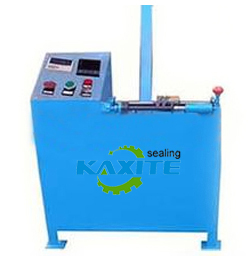
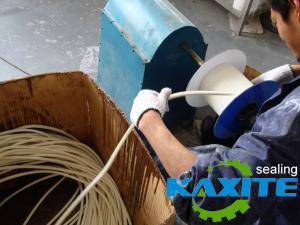
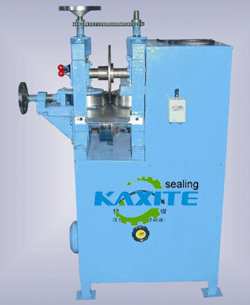
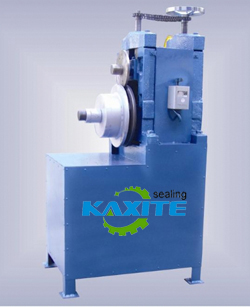
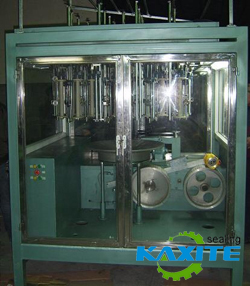
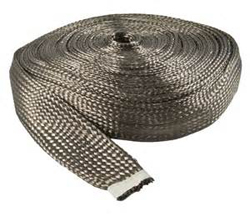
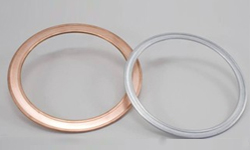
In the exacting world of industrial sealing solutions, the quality of braided packing is paramount. This foundational component, used to prevent leakage in pumps, valves, and rotating equipment across countless industries, owes its reliability and performance to the machinery that creates it. For over two decades, Kaxite Sealing has been at the forefront of this precision engineering, designing and manufacturing advanced braiding machines that set the global standard for consistency, durability, and efficiency. This comprehensive guide delves into the technical heart of braiding packing production, exploring the machinery that makes superior sealing possible.
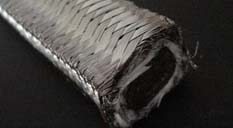
A braiding packing machine is not merely a tool for interlacing yarns; it is a sophisticated system that directly influences the packing's density, structural integrity, and final performance characteristics. The precision of the braid angle, the consistency of tension, and the uniformity of the weave are all controlled by the machine's design and operation. Kaxite Sealing's engineers have dedicated years to refining this process, resulting in machines that produce packing with optimal scalability, flexibility, and resistance to extrusion under pressure.
Understanding the specifications is crucial for selecting the right machine for your production needs. Below are the critical parameters that define our machinery's capability.
| Model Series | KX-BM16/24 | KX-BM32/48 | KX-BM64-HD | KX-BM-CF (Custom) |
|---|---|---|---|---|
| Primary Application | Standard & General Purpose Packing | High-Density Industrial Packing | Ultra-HD & Specialty Packing | Carbon Fiber & Advanced Composites |
| Number of Carriers | 16 or 24 | 32 or 48 | 64 | 24 to 64 (Configurable) |
| Max. Braid Diameter | 3 mm - 25 mm | 8 mm - 50 mm | 15 mm - 80 mm | 3 mm - 40 mm |
| Take-up Speed Range | 5 - 30 mpm | 4 - 25 mpm | 3 - 18 mpm | 5 - 22 mpm |
| Drive System | AC Motor + Gearbox | Servo Motor (Standard) | Dual Servo Motor | Precision Servo with Feedback |
| Control System | Basic PLC + HMI | Advanced PLC with Touchscreen HMI | Industrial PC with Recipe Management | Fully Digital, IoT-Ready Interface |
| Core Feeder | Optional | Standard (Single Core) | Standard (Dual Core) | Programmable Multi-Core |
| Kaxite Sealing Design Feature | Durable Cast Frame, Easy Threading | Automatic Lubrication, Quick-Change Carriers | Hydrodynamic Brake Carriers, Climate Control | Ceramic Yarn Guides, Clean Room Compatibility |
Our machines are built not just to meet specifications, but to exceed operational expectations in real-world manufacturing environments. Key engineering advantages include our patented carrier tension management system, which virtually eliminates sloughing and ensures perfect tension from the first to the last meter of yarn. The modular design allows for easy upgrades and maintenance, minimizing downtime. Furthermore, our intuitive human-machine interface (HMI) allows operators to store and recall hundreds of braiding recipes, ensuring repeatability and reducing setup time between production runs.
What is the primary difference between a 16-carrier and a 32-carrier machine?
The number of carriers directly correlates to the number of yarn ends being braided. A 32-carrier machine produces a denser, tighter, and stronger braid compared to a 16-carrier machine using the same yarn size. It is used for higher-pressure applications where packing extrusion resistance and volumetric stability are critical. The choice depends on the required packing density and the operational pressure of the final application.
Can one machine braid different types of materials, like switching from PTFE to carbon fiber?
Yes, Kaxite Sealing machines are designed for material versatility. However, a changeover requires proper cleaning to prevent contamination, and adjustments to tension settings, braiding speed, and possibly the yarn guides. Our advanced models with recipe management automate most of these adjustments, making changeovers faster and more reliable.
How important is the tension control system, and what types are available?
Tension control is arguably the most critical subsystem. Uneven tension leads to loose or tight spots in the braid, causing inconsistent density and potential leakage paths in the final packing. Kaxite Sealing offers three levels: mechanical spring-based (economical), magnetic particle (offering good control), and full servo-electric tensioners (providing the highest precision, programmability, and consistency for premium materials).
What does "core feeding" mean, and why is it important for packing?
Core feeding is the process of inserting a continuous lubricant or flexible material into the center of the braid as it is formed. This core, often made of graphite, PTFE, or rubber, becomes an integral part of the packing. It provides essential self-lubricating properties, reduces shaft wear, improves sealing effectiveness, and enhances the packing's ability to conform to the sealing surface. Machines without this capability produce "all-fiber" braids, which are then typically impregnated in a secondary process.
How does the braiding angle affect the performance of the finished packing?
The braiding angle, typically between 30 and 60 degrees, is a key design parameter. A lower angle (e.g., 30-40°) creates a longer, more flexible braid with higher axial strength and better conformability. A higher angle (e.g., 45-60°) produces a denser, more radially stable braid with greater resistance to extrusion under high pressure. Kaxite Sealing machines allow precise, repeatable angle adjustment to tailor the packing for specific service conditions.
What maintenance does a braiding packing machine typically require?
Regular maintenance is essential for longevity and consistent output. Daily tasks include cleaning of yarn paths and checking for debris. Weekly lubrication of specific points (guided by our manuals) and inspection of carriers and tensioners are recommended. Annually, a thorough inspection of gears, bearings, and the drive system should be performed. Kaxite Sealing provides comprehensive maintenance schedules and offers remote diagnostics support for our connected machines.
Can your machines be integrated into a fully automated production line?
Absolutely. Kaxite Sealing designs its modern machines with Industry 4.0 connectivity in mind. Standard features often include PLC interfaces for data exchange (OEE, production meters), and options for automated doffing (package changing), in-line diameter monitoring, and integration with upstream (yarn creeling) and downstream (impregnation tanks, curing ovens, spooling/cutting) equipment are available to create a seamless, automated manufacturing cell.
Choosing the optimal braiding machine involves a careful analysis of your target market's needs. Consider the primary material you will process, the required range of packing sizes and densities, your desired production volume, and the level of automation you aim to achieve. A machine for producing small-diameter, high-volume PTFE string packing has different requirements than one designed for large-diameter, high-density graphite packing for refinery valves. Kaxite Sealing's technical consultants work directly with clients to perform this analysis, ensuring the selected machinery becomes a cornerstone of their quality and profitability.