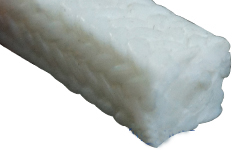
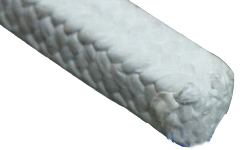
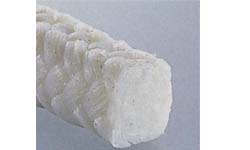
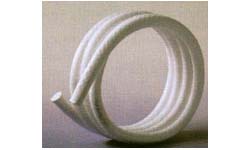
For engineers, maintenance professionals, and procurement specialists navigating the demanding world of fluid sealing, selecting the right packing material is a critical decision impacting safety, efficiency, and operational cost. Among the myriad of options, PTFE Packing stands out as a premier solution for a vast array of challenging applications. Its unique combination of chemical inertness, broad temperature tolerance, and low friction has made it an industry standard. At Kaxite Sealing, with decades of expertise in advanced sealing solutions, we engineer our PTFE packing to deliver uncompromising reliability and longevity. This comprehensive guide delves into the technical specifications, application guidelines, and key advantages of high-performance PTFE packing.
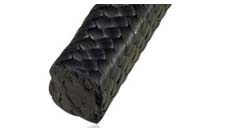
PTFE, or Polytetrafluoroethylene, is a synthetic fluoropolymer renowned for its exceptional properties. When processed into packing—a braided, filament, or molded seal used in pumps, valves, and agitators—it creates a dynamic seal that prevents leakage of fluids along a moving shaft or stem. Unlike traditional materials, PTFE packing offers a near-universal chemical compatibility, making it suitable for handling everything from aggressive acids and strong caustics to ultra-pure solvents and pharmaceuticals. Its inherent lubricity reduces friction and wear on equipment shafts, leading to lower energy consumption and extended maintenance intervals. Kaxite Sealing utilizes premium-grade PTFE resins and advanced manufacturing techniques to ensure our packing delivers consistent, leak-free performance.
Understanding the technical parameters is essential for proper selection. Below are the core specifications for Kaxite Sealing's standard PTFE filament packing.
| Product Code | Style | Filament Type | Density (g/cm³) | Pressure (psi / bar) | Speed (m/s / fpm) | Primary Applications |
|---|---|---|---|---|---|---|
| KX-PTFE-F101 | Braided Filament | Virgin White | 1.5 - 1.7 | Up to 1500 / 103 | Up to 15 / 3000 | General chemical service, pumps, valves |
| KX-PTFE-F201 | Braided Filament | Impregnated (Food Grade) | 1.6 - 1.8 | Up to 1200 / 83 | Up to 12 / 2400 | Food & Beverage, Pharmaceuticals, USDA approved |
| KX-PTFE-M301 | Molded/Die-Formed Rings | Virgin PTFE Paste | 1.8 - 2.0 | Up to 2500 / 172 | Low Speed / Static | Flanges, expansion joints, severe chemical service |
| KX-PTFE-F401 | Braided with Inconel Wire | PTFE with Inconel 600 | 2.0 - 2.2 | Up to 2000 / 138 | Up to 10 / 2000 | High-temperature steam, aggressive oxidizers |
Q: What are the main advantages of PTFE packing over traditional graphite or aramid fiber packing?
A: PTFE packing offers superior chemical resistance across the entire pH scale, which graphite cannot match, especially in strong oxidizing environments. It has a lower coefficient of friction than aramid, leading to less shaft wear and lower breakout torque. It is also inherently clean and non-contaminating, making it ideal for food, pharmaceutical, and semiconductor applications where purity is critical.
Q: How do I properly install PTFE filament packing to ensure optimal performance?
A: Correct installation is crucial. Ensure the stuffing box is clean and free of old packing and damage. Rings should be cut using a mandrel or the shaft itself for a precise butt joint; staggered joints are recommended. Use a purpose-made installation tool to seat each ring firmly and evenly. Follow the manufacturer's recommended torque sequence for the gland follower, typically tightening in 1/4 turn increments after initial warm-up and run-in.
Q: Can PTFE packing be used for high-speed rotary applications?
A: While excellent for general rotary service, pure PTFE filament packing has thermal conductivity limitations. For very high-speed applications (above 15 m/s), a composite packing incorporating PTFE with cooling/lubricating filaments or engineered graphite may be recommended. Kaxite Sealing offers specialized grades, like our wire-reinforced series, designed to withstand higher peripheral speeds and temperatures.
Q: Is PTFE packing suitable for abrasive services?
A: Standard virgin PTFE has limited resistance to abrasive slurries. For such services, Kaxite Sealing recommends our composite packings that combine PTFE's chemical resistance with integrated lubricants and additives designed to handle particulate-laden fluids, significantly extending packing and shaft life.
Q: How does temperature affect the selection of PTFE packing?
A: PTFE maintains excellent properties across a wide range. For cryogenic services, it remains flexible and effective. At continuous high temperatures approaching 288°C (550°F), virgin PTFE performs well, but for temperatures exceeding this, specially engineered PTFE compounds or alternative materials like flexible graphite should be evaluated. Always consult the specific product data sheet for the exact temperature limits.
Q: What maintenance practices extend the life of PTFE packing?
A: Allow for a proper run-in period with slight leakage to lubricate and cool the packing set. Establish a routine for checking and adjusting gland follower tightness—a small amount of controlled leakage is often preferable to an overtightened, dry-running packing which generates excessive heat. For critical services, consider a planned replacement schedule based on operational hours rather than waiting for failure.
The versatility of PTFE packing makes it indispensable across numerous sectors. In the Chemical Processing Industry (CPI), it seals pumps and valves handling corrosive acids, caustics, and solvents. Pharmaceutical and Bio-tech manufacturers rely on its purity and compliance with FDA regulations for product contact. Food and Beverage plants use food-grade PTFE packing to prevent contamination. In Water and Wastewater Treatment, it resists chlorine and other treatment chemicals. Power Generation facilities apply it in auxiliary chemical feed systems. Furthermore, its use in Shipbuilding (seawater systems) and Pulp & Paper (bleach plants) underscores its robust, all-purpose nature. Kaxite Sealing provides tailored solutions for each of these demanding environments.