The Ultimate Guide to High-Performance Graphite Sheet
For over two decades, engineers and designers have relied on advanced graphite-based materials to solve complex thermal and sealing challenges. At the forefront of this innovation is Kaxite Sealing, a brand synonymous with precision, reliability, and cutting-edge material science. Our flagship product, the flexible graphite sheet, represents a leap forward in performance and versatility for countless industrial and commercial applications.
What is a Graphite Sheet?
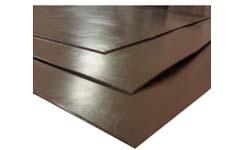
A Graphite Sheet, specifically a flexible graphite sheet or foil, is a highly engineered material manufactured from pure, exfoliated graphite. Through a process of compression and calendaring without the use of binders, the natural crystalline structure of graphite is aligned into a cohesive, flexible, and highly conductive sheet. This unique structure grants it exceptional properties not found in traditional gasketing or thermal interface materials.
Kaxite Sealing's graphite sheets are produced under stringent quality controls, ensuring consistent density, purity, and performance batch after batch. They are the go-to solution where extreme temperatures, corrosive media, or demanding thermal management requirements are present.
Core Advantages of Kaxite Sealing Graphite Sheets
Choosing Kaxite Sealing graphite sheets provides a multifaceted advantage for your project:
- Superior Thermal Conductivity: Excellent in-plane thermal spreading, efficiently dissipating heat and reducing hot spots.
- Exceptional Temperature Resistance: Can operate continuously from cryogenic temperatures up to 3000°F (1650°C) in non-oxidizing atmospheres, and up to 900°F (480°C) in air.
- Outstanding Chemical Inertness: Resistant to most acids, alkalis, solvents, and other aggressive chemicals, ensuring long-term stability.
- Inherent Flexibility & Conformability: Seals uneven flanges and surfaces effectively, compensating for minor imperfections and vibration.
- Low Creep Relaxation: Maintains bolt load and sealing pressure over extended periods, preventing leaks.
- High Purity & Low Chloride: Ideal for sensitive applications in semiconductor, pharmaceutical, and food processing industries.
- Excellent Electrical Conductivity: Provides reliable EMI/RFI shielding and static dissipation.
Detailed Product Specifications & Data
To specify the correct material for your application, refer to the following detailed parameters for standard Kaxite Sealing graphite sheets. Custom formulations and dimensions are available upon request.
Standard Physical & Mechanical Properties
| Property | Test Method / Unit | Typical Value Range | Notes |
|---|---|---|---|
| Density | ASTM F1314, g/cm³ | 0.8 - 1.3 | Custom densities up to 1.8 g/cm³ available. |
| Thickness | mm / inch | 0.15mm (0.006") - 3.0mm (0.118") | Standard rolls & sheets; other thicknesses on inquiry. |
| Tensile Strength | ASTM F152, MPa (psi) | 3.5 - 10.3 MPa (500 - 1500 psi) | Varies with density and grain orientation. |
| Compressibility | ASTM F36, % | 15% - 40% | At 10,000 psi (69 MPa). |
| Recovery | ASTM F36, % | 15% - 50% | Excellent resilience under cyclic loads. |
| Maximum Service Temperature (In Air) | °C / °F | 450°C - 550°C (842°F - 1022°F) | Long-term; short-term peaks higher possible. |
| Thermal Conductivity (In-plane) | ASTM E1461, W/m·K | 80 - 150 | Excellent for heat spreading applications. |
| Electrical Resistivity | ASTM F152, µΩ·m | 8 - 15 | Provides effective EMI/RFI shielding. |
| Chloride Content | ppm | < 50 | Ultra-low for corrosion-sensitive environments. |
| Sulfur Content | ppm | < 1000 | Standard grade; low-sulfur options available. |
Common Standard Sheet Sizes & Forms
| Form | Standard Width | Standard Length | Core Size | Primary Use |
|---|---|---|---|---|
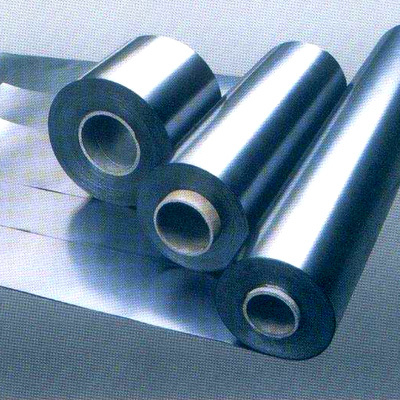
| Roll | 0.5m, 1.0m, 1.5m (19.7", 39.4", 59") | Up to 50m (164 ft) | 3" or 6" ID | Gasket cutting, large surface coverage, automated production. |
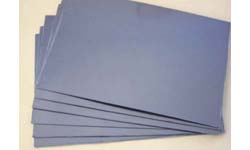
| Sheet | 1.0m x 1.0m (39.4" x 39.4") | 1.0m (39.4") | N/A | Manual gasket fabrication, prototypes, thermal management pads. |
| Die-Cut Parts | Custom | Custom | N/A | Precision gaskets, seals, and thermal components for direct assembly. |
Key Applications Across Industries
The versatility of Kaxite Sealing graphite sheets makes them indispensable in numerous sectors:
- Power Generation & Petrochemical: Gaskets for heat exchangers, boilers, reactors, flanges, and turbine systems handling steam, hydrocarbons, and aggressive chemicals.
- Aerospace & Automotive: High-temperature exhaust gaskets, thermal barriers, fuel cell components, and EMI shielding.
- Semiconductor & Vacuum Furnaces: High-purity furnace gaskets, heater supports, and seals in CVD/PVD systems requiring ultra-clean environments.
- Industrial Process Equipment: Seals for pumps, compressors, valves, and agitators in chemical processing.
- Electronics & Telecommunications: Heat spreaders for LEDs, power electronics, 5G components, and battery thermal management systems.
Frequently Asked Questions (FAQ) About Graphite Sheets
Q: What is the main difference between a graphite sheet and a traditional rubber or compressed non-asbestos (CNA) gasket?
A: The differences are profound. Traditional elastomeric or fiber-based gaskets have limited temperature ranges (typically -50°C to 300°C), can degrade with specific chemicals, and have poor thermal conductivity. A flexible graphite sheet from Kaxite Sealing offers a much wider temperature range (cryogenic to 550°C in air), exceptional chemical resistance to most media, and high thermal and electrical conductivity. It also exhibits better creep resistance, maintaining a seal longer under bolt load.
Q: Can Kaxite Sealing graphite sheets be used in oxidizing atmospheres at high temperatures?
A: Graphite will oxidize (burn) in air at high temperatures over time. For continuous use in air, the maximum long-term service temperature is typically 450-550°C (842-1022°F). For short-term exposure or in inert/vacuum/reducing atmospheres, it can withstand up to 3000°F (1650°C). For applications in air above 550°C, we recommend consulting with our engineers for solutions like oxidation-resistant coatings or alternative high-temperature materials.
Q: How do I select the correct density and thickness for my gasket application?
A: Density affects strength, recovery, and sealing performance. Higher density sheets (e.g., 1.1-1.3 g/cm³) offer greater tensile strength and lower creep, ideal for high-pressure flange connections. Lower density sheets (0.8-1.0 g/cm³) are more conformable and better for uneven surfaces. Thickness is chosen based on flange surface finish, gap filling needs, and required bolt load. Standard gasket sheets are 1.5mm (1/16") thick. Our technical team can provide detailed selection guidance based on your specific pressure, temperature, and media (P/T/M) conditions.
Q: Do graphite sheets require a sealant or adhesive during installation?
A: Generally, no. High-quality flexible graphite sheets from Kaxite Sealing are self-sealing due to their conformability. Applying sealants or adhesives can hinder their performance, cause contamination, and complicate removal. They should be installed clean and dry on properly prepared, debris-free flanges. In some exceptional cases with very low seating stress or porous flanges, specific high-temperature anti-seize pastes might be recommended, but this is not standard practice.
Q: Are there any media compatibility concerns with graphite sheets?
A: Kaxite Sealing graphite sheets exhibit outstanding resistance to a vast array of chemicals, including strong acids, alkalis, and organic solvents. However, they are not recommended for use with strongly oxidizing media at high concentrations and temperatures, such as fuming nitric acid, concentrated sulfuric acid above certain temperatures, or halogens like fluorine and chlorine trifluoride. Always consult our chemical resistance chart or our engineering department for specific media compatibility.
Q: Can these sheets be laminated or combined with other materials?
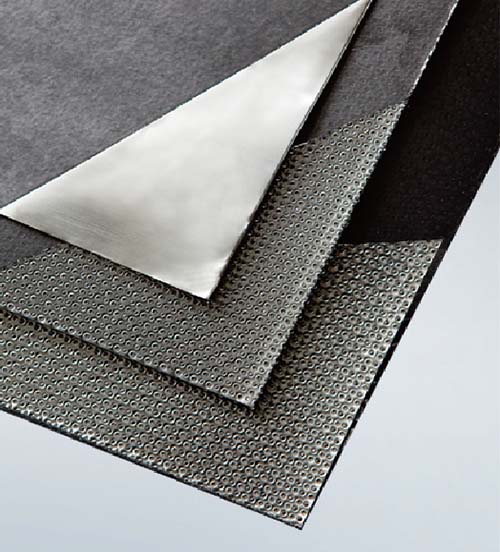
A: Absolutely. Kaxite Sealing offers a range of composite materials to enhance performance. Common laminations include:
- Graphite with Stainless Steel or Inconel Foil: Adds structural integrity, prevents blow-out in high-pressure systems, and improves handling. Graphite with PTFE Impregnation or Film: Enhances chemical resistance to highly oxidizing agents and improves release properties. Graphite with Elastomeric Backing: Provides a dual-seal for applications with both thermal cycling and vibration.
Q: How does Kaxite Sealing ensure the quality and consistency of its graphite sheets?
A: Quality is integral to the Kaxite Sealing brand. We implement a rigorous quality management system. Our process begins with sourcing high-purity, natural graphite. Every production batch undergoes multiple in-process checks for density, thickness, and tensile strength. Final product testing includes verification of key parameters like thermal conductivity, chemical purity (chloride/sulfur content), and compressibility. Certificates of Analysis (CoA) are provided with each shipment, guaranteeing the material meets the specified standards and your application requirements.
Handling, Storage, and Installation Best Practices
To maximize the performance and lifespan of your Kaxite Sealing graphite sheet, follow these guidelines:
- Storage: Store in a cool, dry place away from direct sunlight and oxidizing agents. Keep in original packaging until use to prevent contamination.
- Handling: While graphite is robust, avoid excessive bending or folding which can cause cracking, especially in thicker grades. Use clean gloves to prevent oil transfer from skin.
- Fabrication: Can be easily cut with sharp blades, scissors, or die-cut. Laser cutting is also effective and provides clean edges.
- Surface Preparation: Flange surfaces should be clean, dry, and free of old gasket material, rust, and burrs. A surface finish of 125-250 µin Ra (3.2-6.3 µm Ra) is typically recommended.
- Bolt Torque: Use a controlled bolt-tightening sequence (criss-cross pattern) to apply even load. Retorquing after the first heat cycle is often recommended for high-temperature applications.