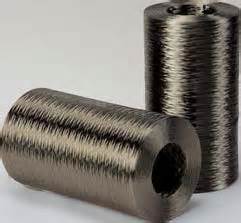
Often hailed as the material of the 21st century, Basalt Fiber is a continuous filament derived directly from molten volcanic basalt rock. Produced through a single-step melting process, it requires no chemical additives, making it an inherently clean and sustainable material. With a performance profile that sits between traditional E-glass and more expensive carbon fibers, Basalt Fiber offers an exceptional balance of high strength, thermal stability, corrosion resistance, and cost-effectiveness. At Kaxite Sealing, we harness this remarkable material to engineer sealing solutions that defy extreme conditions.
The following table details the core physical and mechanical properties of our standard Basalt Fiber filament, which forms the basis of our advanced sealing products.
| Property | Unit | Typical Value | Notes / Comparison |
|---|---|---|---|
| Filament Diameter | μm (microns) | 9 - 21 | Available in various tex for different weave densities. |
| Tensile Strength | MPa | 3000 - 4840 | ~20-30% higher than E-Glass. |
| Elastic Modulus | GPa | 79 - 93 | Provides excellent stiffness and dimensional stability. |
| Elongation at Break | % | 3.1 - 3.2 | Indicates good handling and flexibility in composites. |
| Density | g/cm³ | 2.65 - 2.8 | Comparable to glass fiber, lighter than steel. |
| Operating Temperature | °C | -260 to +700 | Superior high-temperature performance vs. polymer fibers. |
| Thermal Conductivity | W/(m·K) | 0.035 - 0.040 | Excellent thermal insulation property. |
| Acid/Alkali Resistance | % Strength Retention | > 95% (in pH 2-12) | Markedly superior to E-glass in alkaline environments. |
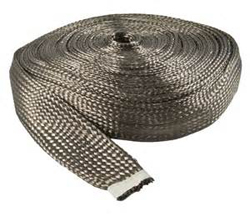
We process high-quality Basalt Fiber into various forms tailored for demanding sealing applications across industries.
| Product Form | Description | Primary Sealing Applications |
|---|---|---|
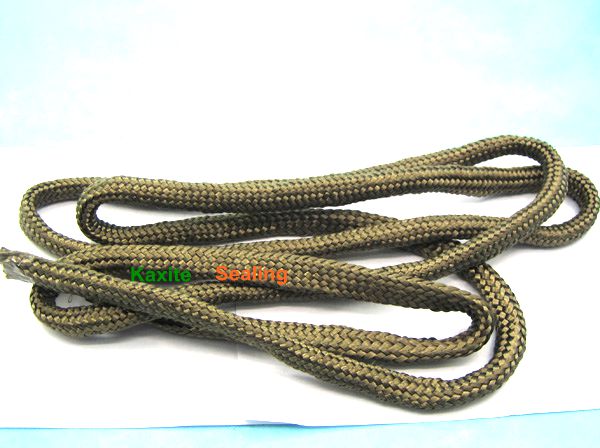
| Basalt Fiber Yarn & Roving | Continuous filaments bundled for weaving or braiding. High tensile strength and heat resistance. | Braided packing seals for pumps, valves, and rods in high-temperature fluid handling. |
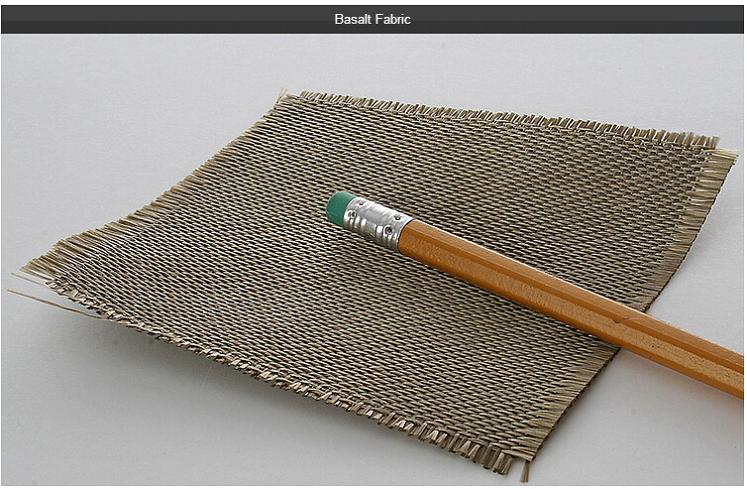
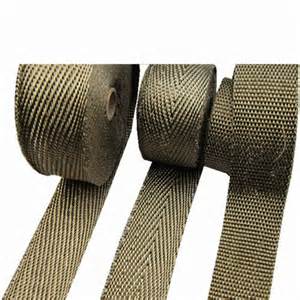
| Basalt Fiber Woven Fabrics (Cloth, Tape) | Plain, twill, or satin weaves in various weights and thicknesses. Can be coated with PTFE or graphite. | Gasket facing, sheet gaskets, insulation wraps, and thermal barrier seals in flanges and expansion joints. |
| Basalt Fiber Needle Felts & Mat | Non-woven, felted material offering high porosity and thermal/acoustic insulation. | High-temperature gasketing, insulation sealing, and fire barrier seals in industrial furnaces and exhaust systems. |
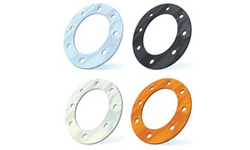
| Reinforced Composite Sheets | Basalt fabric laminated with elastomers or compressed with fillers. | High-performance sheet gaskets (BES, BAF) for chemical, power, and marine industries. |
| Chopped Strands & Milled Fibers | Short fibers used as reinforcement in compound formulations. | Reinforcement filler in rubber-based gaskets and high-temperature moulding compounds to enhance strength and heat resistance. |
Q: What is Basalt Fiber made from?
A: Basalt Fiber is produced directly from crushed basalt rock, a volcanic rock abundant in nature. The rock is washed, melted in a furnace at about 1450-1500°C, and the molten lava is then extruded through platinum-rhodium bushings to form continuous filaments. No other raw materials or chemical additives are needed in the primary process.
Q: How does Basalt Fiber compare to Fiberglass (E-Glass)?
A: While similar in density, Basalt Fiber generally offers 15-30% higher tensile strength, a higher modulus (making it stiffer), and significantly better temperature resistance (up to 700°C vs. 350-400°C for E-glass). Crucially, its resistance to alkaline environments is far superior, making it more durable in concrete or chemical applications. It also exhibits better vibration damping and acoustic insulation properties.
Q: Is Basalt Fiber similar to Carbon Fiber?
A: They are different. Carbon fiber is made from organic precursors (like polyacrylonitrile) through pyrolysis, resulting in a very high-modulus, conductive, but brittle material. Basalt Fiber is mineral-based, with lower modulus and strength than carbon fiber but at a fraction of the cost. It is insulating, has better compressive strength, and excels in fire resistance and chemical stability where carbon fiber may oxidize or degrade.
Q: What is the maximum continuous service temperature for Kaxite Sealing's Basalt Fiber products?
A: Our Basalt Fiber materials can operate continuously in oxidizing atmospheres at temperatures up to 700°C (1292°F). In short-term exposures, they can withstand up to 1000°C. For cryogenic applications, they remain functional down to -260°C. The specific limit can vary with product form and binding agents used.
Q: How chemically resistant is Basalt Fiber?
A: It possesses excellent corrosion resistance, particularly in alkaline and acidic environments. It shows over 95% strength retention after exposure to solutions with pH levels from 2 to 12. This makes it vastly more durable than E-glass in concrete (a high-alkali environment) and suitable for many chemical processing applications. However, resistance to highly concentrated phosphoric and hydrofluoric acids is limited.
Q: Can Basalt Fiber be used for electrical insulation?
A: Yes, it is an excellent electrical insulator. It has high volume resistivity and dielectric strength, making it suitable for applications where electrical isolation is required alongside thermal or mechanical performance, such as in busbar insulators or high-temperature cable wraps.
Q: Is Basalt Fiber safe and environmentally friendly?
A: Absolutely. As an inert mineral fiber, it is non-toxic and does not release harmful substances. Its production is a clean, single-step process with minimal emissions compared to synthetic fibers. It is also naturally hydrophobic, non-combustible, and can be disposed of as inert waste. Kaxite Sealing is committed to sustainable material solutions.
Q: What forms of Basalt Fiber does Kaxite Sealing supply for sealing applications?
A: Kaxite Sealing provides a comprehensive range, including continuous yarns and rovings for braided packing, woven fabrics (cloths, tapes) for gasket facing and sheet gaskets, needle felts for thermal insulation seals, and chopped strands for compound reinforcement. We also supply finished high-performance gaskets and seals engineered with Basalt Fiber cores or facings.
Q: Can you customize Basalt Fiber products for specific sealing requirements?
A: Yes, customization is a core strength at Kaxite Sealing. We can adjust yarn tex, fabric weave pattern, weight, thickness, and apply various impregnations (e.g., PTFE, graphite, silicone) to enhance specific properties like lubricity, compressibility, or chemical resistance for your unique application.
Q: Why should I choose Kaxite Sealing for my Basalt Fiber sealing needs?
A: Kaxite Sealing combines deep material expertise with practical application engineering. We don't just supply fiber; we develop sealing solutions. Our products undergo rigorous quality control to ensure consistent performance. We offer technical support to help you select the optimal material form, potentially reducing downtime, maintenance costs, and total cost of ownership through longer-lasting, more reliable seals.