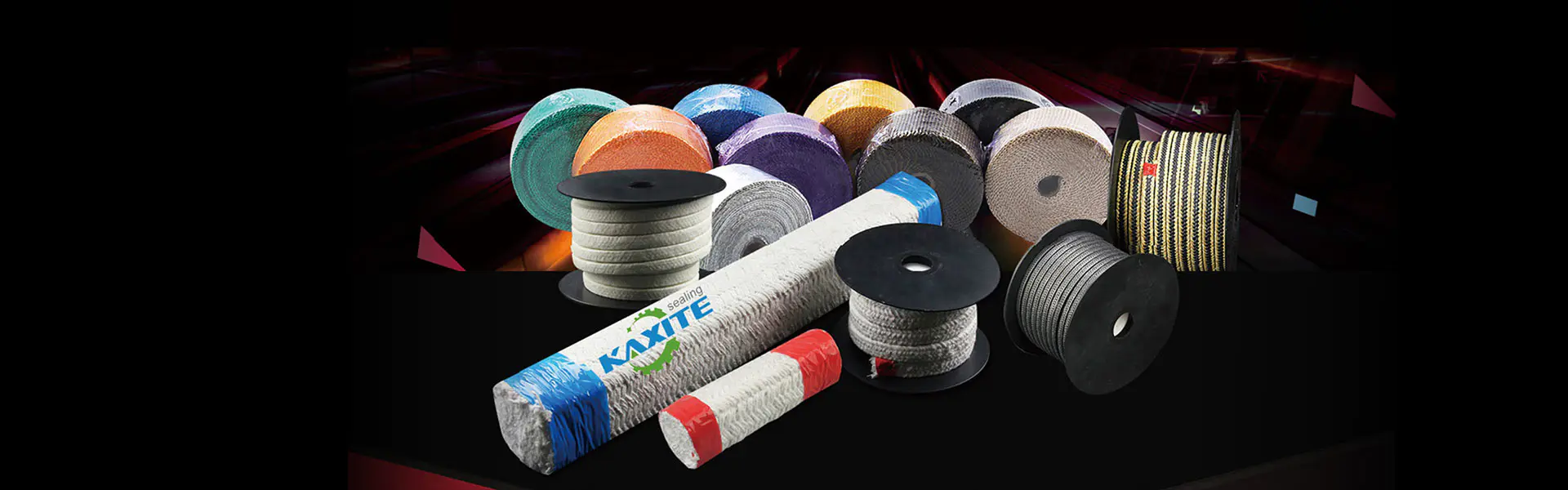
How do Expanded graphite gaskets perform in flange applications? This question sits at the heart of countless maintenance discussions in refineries, chemical plants, and power stations worldwide. Imagine a critical flanged joint carrying superheated steam at 450°C. A standard spiral wound gasket fails within weeks, leaking toxic vapor and forcing an unplanned shutdown that costs your facility $180,000 per day. Now picture the same joint sealed with an expanded graphite gasket — it holds its integrity for over 36 months, with zero leakage and no bolt re-torquing. The difference isn’t magic; it’s material science. Expanded graphite, also called flexible graphite, starts as natural graphite flake intercalated with acid and then exposed to extreme heat, expanding up to 300 times its original volume. The resulting worm-like structures are compressed into sheets that deliver remarkable conformability, thermal stability, and chemical resistance. For procurement teams and plant engineers sourcing from global suppliers, understanding the real-world flange performance of expanded graphite gaskets means evaluating blowout resistance, fire-safe behavior, fugitive emission control, and long-term relaxation — all under actual service conditions. Ningbo Kaxite Sealing Materials Co., Ltd. has spent two decades engineering these gaskets to solve the exact pain points that keep maintenance managers awake at night, offering custom-cut, dimensionally stable graphite sealing solutions ready for the toughest flange applications.
Pain point: A petrochemical plant in Rotterdam replaced asbestos gaskets with generic graphite sheets on a 24-inch heat exchanger flange, only to discover steam cutting through the inner edge within two weeks. The issue wasn’t the graphite grade — it was a mismatch between gasket density and flange surface roughness.
Solution: Expanded graphite gaskets seal by flowing into microscopic flange asperities under bolt load. The material’s unique microstructure — layers of compressed graphite lamellae oriented parallel to the flange face — creates a tortuous leak path that resists permeation. But density matters. A density of 1.0 g/cm³ provides conformability for pitted flanges, while 1.6 g/cm³ offers better blowout resistance for high-pressure systems. Ningbo Kaxite Sealing Materials Co., Ltd. engineers precisely control density during calendering, and they reinforce graphite with 0.05 mm thick 316L stainless steel tang inserts for gaskets operating above 40 bar. Their expanded graphite gaskets achieve helium leak rates below 1 × 10⁻⁶ mg/(m·s) on standard raised face flanges, according to internal testing protocols aligned with EN 13555.
Pain point: In a natural gas compressor station in Alberta, operators recorded 0.7 mm of gasket thickness loss on a 10-inch ANSI 600 flange after just 15 thermal cycles between 25°C and 400°C. The resulting drop in bolt stress caused a methane leak detected by optical gas imaging.
Solution: Expanded graphite resists oxidation up to 450°C in steam and 550°C in inert atmospheres, but creep relaxation — the tendency of gasket material to lose thickness under sustained compressive load at elevated temperature — remains the primary failure mode. Standard flexible graphite exhibits creep relaxation around 8–12% at 300°C according to ASTM F38. With specialized binder systems and high-purity graphite flake (carbon content ≥99%), Ningbo Kaxite Sealing Materials Co., Ltd. reduces relaxation to under 5%. The table below compares critical thermal performance parameters for three typical flange classes.
| Parameter | ANSI 150 Graphite | ANSI 300 Graphite + Tang | ANSI 600 Graphite + Tang |
|---|---|---|---|
| Max continuous temp. (°C) | 450 (oxidizing) | 450 (oxidizing) | 450 (oxidizing) |
| Creep relaxation at 300°C (%) | 5 | 4.5 | 4.2 |
| Recommended min. bolt stress (MPa) | 30 | 35 | 45 |
| Leak rate (helium, mg/m·s) | 1.2 × 10⁻⁶ | 9 × 10⁻⁷ | 5 × 10⁻⁷ |
These values make expanded graphite gaskets particularly suitable for heat exchangers and reactors where flange rotation during startup induces shear stress on the sealing element.
Pain point: A sulfuric acid alkylation unit in Texas experienced catastrophic blistering of a graphite-filled spiral wound gasket after exposure to 98% H₂SO₄ at 80°C. The acid intercalated between graphite layers, generating gas pressure that ruptured the sealing face.
Solution: The chemical resistance of expanded graphite gaskets comes from the inertness of the graphite lattice, but the degree of exfoliation and residual intercalation compounds determine real-world performance. Low-quality expanded graphite retains sulfur and chlorine residues that react with strong acids or caustics. Ningbo Kaxite Sealing Materials Co., Ltd. uses a proprietary multi-stage washing process to achieve chloride content below 30 ppm and sulfur below 500 ppm, meeting the requirements for nuclear-grade and oxygen-service applications. Their gaskets pass immersion testing in 20% HCl at boiling point for 100 hours with less than 2% weight change, as verified by independent labs. In flange applications involving mixed-phase fluids or amine solutions, selecting graphite with appropriate leachable ion levels prevents galvanic corrosion of the flange face — a detail many procurement specs overlook.
FAQ Block: How do expanded graphite gaskets perform in flange applications where the medium is chlorine dioxide in pulp bleaching? Expanded graphite with low leachable chloride (<30 ppm) and a PTFE barrier layer are recommended to avoid catalytic decomposition. Ningbo Kaxite can supply PTFE-laminated graphite gaskets specifically for such oxidative service, maintaining a maximum leak rate of 5 × 10⁻⁴ mg/(m·s) after pH cycling between 2 and 11.
Pain point: During a refinery fire in Louisiana, standard elastomer-bonded gaskets in a fuel gas line decomposed within 8 minutes, feeding the blaze. The incident led to a three-week production halt and $2.3 million in fines.
Solution: Expanded graphite itself is non-flammable and withstands flame impingement up to 800°C for short durations, but the gasket design must integrate a metal reinforcement to prevent blowout when the graphite oxidizes. Ningbo Kaxite Sealing Materials Co., Ltd. manufactures fire-safe graphite gaskets certified to API 6FB and ISO 10497. These designs feature a serrated metal core, typically 316L, with graphite facing layers applied under vacuum to prevent air pockets. During fire testing, the gasket must maintain a leak rate below 100 ml/min (gas) after a 30-minute burn at 760°C followed by thermal shock at 1 MPa internal pressure. The table below summarizes fire-test results for a 4-inch Class 300 Kaxite fire-safe gasket.
| Test phase | Internal pressure (MPa) | Leak rate (ml/min) | Post-burn thickness loss |
|---|---|---|---|
| Ambient helium test | 5.1 | 0.05 | N/A |
| During 760°C burn | 1.0 | 14 | 0.4 mm |
| Post-burn cool-down | 1.0 | 22 | 0.6 mm |
| Post-thermal shock | 1.0 | 18 | 0.6 mm |
For procurement teams, specifying fire-safe expanded graphite gaskets from a source with witnessed fire-test reports reduces liability and satisfies insurance requirements in hazardous area classifications.
Pain point: A chemical terminal in Singapore failed its LDAR (Leak Detection and Repair) inspection, with 15% of the flanged connections exceeding a 500 ppm methane threshold. The root cause? Non-certified graphite gaskets that deformed under pipe misalignment.
Solution: Fugitive emission control demands gaskets with low leak rates under varying temperature and pressure cycles. Ningbo Kaxite Sealing Materials Co., Ltd. produces expanded graphite gaskets qualified to ISO 15848-1 Class BH (helium tightness ≤ 1.78 × 10⁻⁷ mg/(m·s)) for rising stem valves and flanges. Their quality system tracks each batch from graphite flake origin through final dimension inspection, providing a full material test report with EN 10204 Type 3.1 certification — a critical document for oil and gas end users requiring NACE MR0175/ISO 15156 compliance. Using these high-integrity graphite sealing elements, one Gulf Coast LNG facility reduced its fugitive emission rate by 74% over a two-year turnaround cycle.
FAQ Block: How do expanded graphite gaskets perform in flange applications subject to vibration from reciprocating compressors? Vibration can accelerate graphite particle erosion and loss of bolt preload. The solution involves using a tanged metal reinforced graphite gasket with a higher seating stress (60 MPa or higher) and applying Belleville spring washers to compensate for dynamic relaxation. Ningbo Kaxite supplies vibration-resistant gaskets with 0.2 mm thick tang profiles that mechanically lock the graphite layer, preventing extrusion even at pulsating pressures up to 20 bar.
Pain point: A junior technician at a food processing plant installed a 12-inch graphite gasket on a dairy line using an improper star pattern bolt-up, resulting in uneven compression and a hygiene-critical crevice that harbored bacteria.
Solution: Even the best expanded graphite gaskets will fail if installation practices are ignored. The material’s low shear strength means it cannot tolerate sliding across flange faces during assembly — a frequent mistake when pipe hangers are misaligned. Ningbo Kaxite Sealing Materials Co., Ltd. provides clear installation guides and offers on-site torque training for their European and Asian clients. Key specifications include: flange surface finish Ra 3.2–6.3 µm, minimum bolt torque calculated per ASME PCC-1 guidelines, and a crush-free storage environment below 60°C. Additionally, Kaxite’s pre-cut gaskets ship with anti-stick release liners that prevent contamination and eliminate the need for release agents that might lower friction coefficients.
Under high cyclic pressure, unreinforced graphite tends to extrude into the flange clearance gap. Using a tang-reinforced gasket (with 0.1–0.2 mm 316L tang) from Ningbo Kaxite Sealing Materials Co., Ltd. restricts flow, maintaining a leakage rate below 10⁻⁶ mbar·L/s after 10,000 pressure cycles. The metal core also acts as a compression limiter, preventing over-tightening that would destroy the graphite layers.
Although expanded graphite is not typically rated below -200°C, it performs adequately in LNG flange applications when combined with a stainless steel inner ring and a controlled minimum seating stress of 50 MPa. The graphite remains flexible at cryogenic temperatures and does not embrittle. Ningbo Kaxite has supplied cryogenic-rated graphite gaskets with PTFE coating for LNG tanks, achieving leak rates of 2 × 10⁻⁵ mg/(m·s) in liquid nitrogen tests.
Ningbo Kaxite Sealing Materials Co., Ltd. is a specialized manufacturer of industrial sealing solutions, headquartered in Ningbo, China, with over twenty years of expertise in high-performance gasket engineering. From standard expanded graphite sheets to fully custom tanged-metal reinforced gaskets for extreme flange applications, Kaxite delivers precision-cut, dimensionally stable products that solve leakage, blowout, and fugitive emission challenges across oil and gas, chemical processing, power generation, and marine industries. Their in-house testing laboratory validates every batch against international standards including ASME, EN 13555, and API 6FB, ensuring engineers and procurement managers receive reliable components backed by full material certification. Explore their full range at www.kaxitesealing.cn or contact their technical team directly at [email protected] for application-specific guidance.
Dowling, R. M., & Eyre, T. J. (2019). Long-term relaxation behavior of flexible graphite gaskets at elevated temperatures. Journal of Pressure Vessel Technology, 141(3), 031205.
Keller, T., & Wagner, M. (2021). Fugitive emission performance of graphite-based gaskets under thermal cycling. Sealing Technology, 2021(5), 7–12.
Liu, X., Zhang, J., & Chen, Y. (2018). Effect of oxidation on the sealing performance of expanded graphite gaskets. Engineering Failure Analysis, 91, 425–433.
Miyamoto, T., & Yamamoto, K. (2020). Evaluation of blowout resistance for fire-safe graphite gaskets according to API 6FB. Proceedings of the ASME Pressure Vessels & Piping Conference, PVP2020-21345.
Nagata, S., Ito, K., & Sato, H. (2017). Influence of intercalation residue on chemical stability of flexible graphite in acidic media. Carbon Letters, 22, 74–80.
Prasad, R., & Venkateswarlu, G. (2022). Comparative study of spiral wound and kammprofile gaskets with expanded graphite filler for high-temperature service. International Journal of Pressure Vessels and Piping, 195, 104545.
Schmitt, G., & Bless, D. (2016). Creep relaxation of graphite laminate gaskets in bolted flange joints. Materials & Design, 104, 68–75.
Shin, H. S., & Lee, J. H. (2023). Influence of surface roughness on leak rate of expanded graphite gaskets. Lubrication Science, 35(2), 123–130.
Vignarajah, S., & Tan, M. K. (2019). Electrochemical aspects of graphite gasket corrosion in seawater flanges. Corrosion Engineering, Science and Technology, 54(4), 305–312.
Zhao, Y., Wang, L., & Li, Q. (2021). Aging of expanded graphite under cyclic compressive stress and its effect on leakage performance. Journal of Loss Prevention in the Process Industries, 69, 104365.