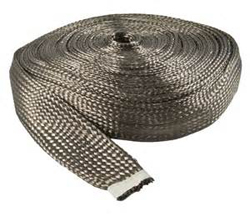
In the complex world of industrial sealing, the selection of the right packing materials is a critical determinant of operational efficiency, safety, and maintenance longevity. For over two decades, Kaxite Sealing has been at the forefront of engineering advanced sealing solutions. As a seasoned professional, I understand that the foundation of a reliable sealing system lies in the precise specification of its components. This guide delves deep into the technical parameters, applications, and selection criteria for modern packing materials, providing the detailed information necessary for making an informed, optimized choice for your specific operational demands.
Packing materials, used for creating a seal around rotating or reciprocating shafts, valves, and other equipment, are engineered from a variety of base fibers and impregnation compounds. The performance is dictated by a combination of material properties. At Kaxite Sealing, we categorize our materials based on these core characteristics to simplify the selection process for engineers and procurement specialists.
Key Properties of Packing Materials:
Our product catalog is designed to cover virtually every industrial application. Below is a detailed breakdown of our flagship packing material series, presented in a technical specification format.
| Product Series | Base Material / Construction | Temperature Range | pH Range | Max. Pressure (PSI) | Max. Shaft Speed (FPM) | Primary Applications | Key Features |
|---|---|---|---|---|---|---|---|
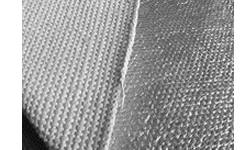
| KX-GraphiteFlex 2000 | Reinforced Flexible Graphite Foil | -400°F to 1200°F (-240°C to 650°C) | 0 - 14 | 2200 | 3500 | Steam valves, high-temperature pumps, autoclaves, expansion joints | Exceptional thermal stability, self-lubricating, highly chemically inert, excellent recovery. |
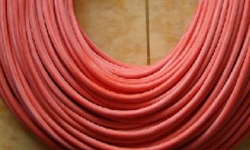
| KX-AramidPro HT | Premium Aramid Fibers with PTFE & Graphite Impregnation | -100°F to 550°F (-73°C to 288°C) | 2 - 12 | 1800 | 4500 | General service pumps, mixers, agitators, hot water services | High tensile strength, low friction, excellent wear resistance, suitable for potable water. |
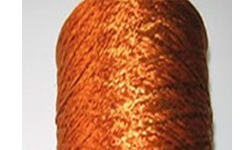
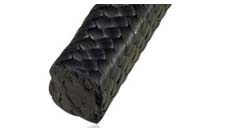
| KX-CarbonSeal Elite | Precured Carbon Fiber Yarn with PTFE Lubricant | -100°F to 600°F (-73°C to 316°C) | 1 - 13 | 2500 | 5000+ | High-speed centrifugal pumps, boiler feed pumps, paper stock pumps | Outstanding thermal conductivity, superior shaft finish protection, reduced gland adjustments. |
| KX-PTFE PureGrade | 100% Virgin PTFE Filament, Braided | -450°F to 500°F (-268°C to 260°C) | 0 - 14 | 1500 | 3000 | Chemical processing, pharmaceutical, food & beverage, ultra-pure services | Universal chemical resistance, FDA compliant, non-contaminating, low maintenance. |
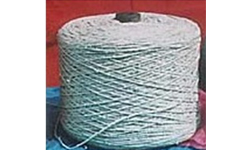
| KX-FlaxGuard Industrial | Long-Staple Flax Fiber with Anti-Extrusion Reinforcement | 32°F to 250°F (0°C to 121°C) | 4 - 10 | 1200 | 2000 | Cold water pumps, irrigation, low-pressure valves, general industrial | Cost-effective, excellent sealing on low-pressure water, easy to install and adjust. |
Even the highest-grade packing material will underperform if installed incorrectly. Adherence to proper sizing and installation torque is paramount. Kaxite Sealing provides detailed technical data sheets with every shipment to ensure optimal performance.
Standard Packing Ring Dimensional Reference:
Q: What is the single most important factor when selecting a packing material?
A: Chemical compatibility with the process fluid is paramount. A material that degrades, swells, or contaminates the media will fail quickly, regardless of its other properties. Always cross-reference the manufacturer's chemical resistance guide, like the comprehensive chart provided by Kaxite Sealing, with your specific service conditions.
Q: How do I know if I need braided, twisted, or die-formed packing material?
A: The construction affects density, flexibility, and sealing capability. Braided packing (like our KX-AramidPro) offers superior strength, consistency, and is ideal for dynamic applications. Twisted packing is more flexible for irregular spaces. Die-formed rings (like KX-GraphiteFlex) provide exact dimensions and high density for precise, high-performance sealing in valves and flanges. The application dictates the best form.
Q: Why is controlled leakage sometimes specified for pump packing?
A: A minimal, controlled leakage (a few drops per minute) serves to lubricate and cool the interface between the packing and the rotating shaft. This prevents dry running, which generates excessive friction, heat, and rapid wear. Modern low-emission packing designs aim to minimize this leakage while still providing sufficient lubrication.
Q: How often should packing be re-tightened or replaced?
A: There is no universal schedule. It depends on the material, operating conditions (speed, temperature, pressure), and alignment. High-quality materials like Kaxite Sealing's KX-CarbonSeal Elite require fewer adjustments. Initial tightening after a 24-hour run-in period is common. Replacement is needed when allowable leakage can no longer be controlled by gland adjustment, or during scheduled maintenance overhauls.
Q: Can packing materials be used for both rotary and reciprocating motion?
A: Most braided packing styles are suitable for rotary shaft applications. For reciprocating service (like piston rods), it's crucial to select a material with excellent recovery and resilience to handle the continual compression and relaxation cycles. Materials like reinforced flexible graphite or certain aramid blends, such as those in the Kaxite Sealing range, are often specified for these demanding duties.
Q: What does "precured" or "pre-lubricated" mean in packing specifications?
A: "Precured" means the packing has been subjected to a controlled heat treatment during manufacturing to stabilize its dimensions and drive out volatile components. This reduces initial shrinkage in service. "Pre-lubricated" indicates internal lubricants (like PTFE, graphite, or molybdenum disulfide) are integrated into the fibers during production, providing immediate low-friction performance without a separate break-in lubricant.
Beyond standard specifications, several advanced factors influence packing material performance and total cost of ownership. Kaxite Sealing invests heavily in R&D to address these challenges.