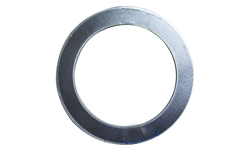
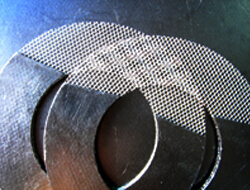
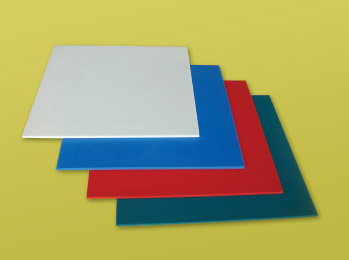
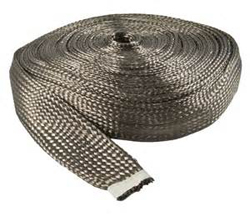
Kaxite Sealing is an ISO 9001 certified expanded graphite gaskets manufacturer and wholesale supplier in China. For over two decades, we have engineered high-integrity graphite sealing solutions for chemical processing, oil & gas, power generation, pharmaceutical and pulp & paper industries. Our product range covers pure expanded graphite gaskets, tanged metal reinforced graphite gaskets, mesh reinforced graphite gaskets and foil reinforced graphite gaskets, along with related graphite sheet and spiral wound gaskets.
Expanded graphite gaskets, often termed flexible graphite gaskets, are high-performance sealing solutions engineered from exfoliated graphite. This process involves treating natural flake graphite with acid and heat, causing it to expand or "exfoliate" into a low-density, vermiform structure. This unique material is then calendered into sheets without the need for binders, possessing exceptional natural properties.
These gaskets are renowned for their superior thermal conductivity, chemical inertness, and excellent sealing capabilities under a wide range of temperatures and pressures. They are a preferred choice in demanding applications across industries like chemical processing, power generation, oil & gas, and refining, where reliability is non-negotiable.
At Kaxite Sealing, we specialize in the manufacturing and supply of high-integrity expanded graphite gaskets. With decades of expertise in advanced sealing technology, we understand the critical role a gasket plays in system safety, efficiency, and uptime. Our products are crafted from the highest purity graphite, subjected to rigorous quality control at every production stage. When you specify Kaxite Sealing, you choose uncompromising quality and performance.
Continuous operation from cryogenic -240°C (-400°F) up to +600°C (1112°F) in non-oxidizing atmospheres. Rated up to +450°C in steam or oxidizing service.
Highly inert and resistant to most acids, alkalis, solvents and hydrocarbons. Not susceptible to plastic deformation or hardening.
Maintains bolt load over extended periods, ensuring a leak-tight seal throughout the maintenance cycle without frequent re-torquing.
Conducts heat rapidly, preventing localized hot spots and promoting even flange temperature distribution for enhanced seal integrity.
Selecting the right expanded graphite gasket requires careful consideration of its physical and chemical properties. Below is a detailed breakdown of the key parameters for Kaxite Sealing's expanded graphite gasket series. These specifications are derived from extensive laboratory testing per ASTM, DIN and other international standards.
| Parameter | Specification / Value | Test Standard |
|---|---|---|
| Density Range | 0.9 - 1.15 g/cm³ (Typical 1.1 g/cm³) | ASTM F1315 |
| Tensile Strength | ≥ 4.5 MPa (650 psi) | ASTM F152 |
| Recovery | ≥ 40% | ASTM F36 |
| Compressibility | 15 - 40% at 69 MPa (10,000 psi) | ASTM F36 |
| Stress Relaxation | ≤ 15% | ASTM F38 |
| Thermal Conductivity | 80 - 150 W/m·K (in-plane) | ASTM E1461 |
| pH Value | 5 - 7 (Neutral) | ASTM E70 |
| Sulfur Content | ≤ 500 ppm | ASTM D4239 |
| Chloride Content | ≤ 50 ppm | ASTM D4208 |
Reactors, heat exchangers, columns and pipe flanges handling aggressive acids, alkalis and solvents.
Wellheads, pipelines, refineries, LNG facilities and flare systems across upstream, midstream and downstream.
Boilers, steam turbines, heat recovery steam generators and high-temperature pipework in fossil, nuclear and biomass plants.
Where purity and non-contamination are critical. Our high-purity, low-chloride and low-sulfur grades are ideal.
Digesters, bleaching equipment and recovery boilers with exposure to caustic and acidic chemicals.
High-temperature ducting and compressor flanges in industrial HVAC and refrigeration systems.
Kaxite Sealing supports full custom and OEM expanded graphite gasket manufacturing, from drawing review to sample approval and mass production. Our engineers work directly with your technical team to confirm dimensions, materials, thicknesses and packaging.
Send your 2D/3D drawings, flange dimensions or old gasket samples. Our engineers review material, dimensions, tolerance and standard compliance within 24 hours.
We provide a detailed quotation including unit price, MOQ, lead time and packaging options. Custom MOQ may vary by material and size.
We produce free samples for your quality evaluation. Sample lead time is typically 5-7 working days for standard materials.
After sample approval, we start mass production with full dimensional inspection, material certificates and batch traceability.
Custom logos, labels, protective film, poly bags and pallets. We support neutral packaging and private label for distributors and brands.
Worldwide shipping by sea, air and express. Full export documentation: invoice, packing list, CO, MTR, COC and third-party inspection reports.
Kaxite Sealing operates an ISO 9001 certified quality management system. Every expanded graphite gasket undergoes raw material verification, precision manufacturing, dimensional inspection and batch testing. We provide mill test reports, material certificates and third-party inspection reports upon request. Learn more about our company profile.
Our expanded graphite gaskets are supplied to distributors, OEM brands and EPC contractors in 80+ countries across chemical, oil & gas and power industries.
Every batch comes with mill test reports, material certificates and dimensional inspection records. Third-party inspection is available on request.
Custom dimensions, thicknesses, reinforced styles, logos and packaging. Send your drawings or samples and our engineers will confirm feasibility within 24 hours.
Kaxite Sealing supports distributors, OEM brands and EPC contractors worldwide. Below are typical cooperation cases and the inspection documents we provide for every bulk expanded graphite gasket order.
A German refinery EPC contractor ordered 5,000 pcs of SS316 tanged metal reinforced graphite gaskets to ASME B16.20. Batch MTRs and dimensional reports were provided for each shipment.
A UAE industrial distributor placed recurring monthly orders of pure expanded graphite gaskets with low chloride content for stainless steel flanges. Neutral packaging and private labeling were used.
A US power plant ordered metal mesh reinforced graphite gaskets for steam turbine flanges. Samples were approved within 7 days and mass production started immediately after.
Mill Test Report (MTR) · Material Certificate · Dimensional Inspection Report · Certificate of Conformance (COC) · Chloride and Sulfur Content Test Report · Third-Party Inspection (SGS / TÜV / BV on request) · Packing List & Commercial Invoice
Q: What is the MOQ for wholesale expanded graphite gaskets from Kaxite Sealing?
A: Our standard MOQ is 50 pieces for wholesale orders. For custom sizes and OEM gaskets, MOQ may vary depending on material and dimensions. Free samples are available for quality evaluation before bulk purchase.
Q: How long is the lead time for bulk expanded graphite gasket orders?
A: Standard lead time is 7-15 working days for most expanded graphite gasket products. Custom and OEM orders may require 15-25 working days depending on specifications and order quantity. Rush orders can be accommodated upon request.
Q: Can expanded graphite gaskets be used in oxidizing atmospheres at high temperatures?
A: While expanded graphite has excellent inherent temperature resistance, prolonged exposure to strong oxidizing atmospheres like air or oxygen-rich streams above approximately 450°C (842°F) can lead to gradual oxidation and material loss. For such applications, Kaxite Sealing recommends specific high-temperature grades or alternative materials like PTFE or ceramic fibers.
Q: What is the significance of low chloride and sulfur content in graphite gaskets?
A: Low chloride and sulfur content (often specified as <50 ppm Cl, <500 ppm S) is critical for applications involving austenitic stainless steels (e.g., 304, 316) to prevent stress corrosion cracking (SCC). Our high-purity grades are certified for such sensitive applications in nuclear, aerospace and fine chemical industries.
Q: Can I reuse an expanded graphite gasket after disassembly?
A: It is strongly discouraged to reuse any flat gasket, including expanded graphite gaskets. Upon initial compression, the material flows to conform to the flange faces. During disassembly, it can be torn, compressed unevenly or contaminated. Always install a new Kaxite Sealing gasket for a guaranteed leak-free connection.
Q: What flange surface finish is recommended for expanded graphite gaskets?
A: A serrated or phonographic (spiral) finish is ideal, typically in the range of 125 to 250 µin Ra (3.2 to 6.3 µm Ra). This provides enough "tooth" for the graphite to grip into without allowing excessive extrusion. The flange must be clean, dry and free of old gasket material, pitting or scratches.
Q: How does Kaxite Sealing ensure the quality of its expanded graphite gaskets?
A: Quality is integral to our manufacturing process. We start with sourcing high-purity raw graphite. Our production is monitored with Statistical Process Control (SPC). Every batch of material is tested for key properties like density, tensile strength, compressibility, recovery and chemical composition. Finished gaskets are inspected for dimensional accuracy per customer drawings and relevant standards. We provide material test reports and certificates of conformity with each shipment.
Q: What media are not compatible with expanded graphite gaskets?
A: Expanded graphite is highly chemically inert. However it is not recommended for use with strong oxidizing agents like concentrated nitric acid, sulfuric acid above 98% or bromine at elevated temperatures. It is also generally not suitable for molten alkali metals. Always consult Kaxite Sealing's chemical resistance chart for specific media compatibility.
Tell us your application temperature, pressure and media, and our engineers will respond within 24 hours with a competitive quotation and free sample offer.
Send Inquiry Now Download Catalogue