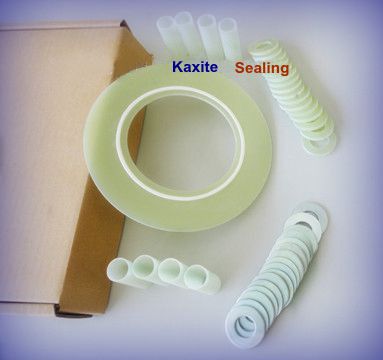
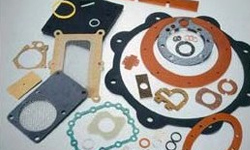
In the world of industrial machinery and piping systems, the integrity of every connection is paramount. A gasket is a critical sealing element placed between two or more mating surfaces, typically flanges, to prevent leakage of fluids or gases under compression. These components are engineered to fill the microscopic irregularities on flange faces, creating a tight, reliable seal capable of withstanding extreme pressures, temperatures, and chemical exposures. At Kaxite Sealing, we understand that the reliability of your entire system often hinges on the performance of these unassuming yet vital components. Our expertise lies in designing and manufacturing gaskets that meet the most demanding specifications across a diverse range of industries, from oil and gas and chemical processing to power generation and pharmaceuticals.
The selection of the correct gasket is not a trivial task. It requires a deep understanding of the application's operating conditions, including media type, pressure-temperature cycles, flange design, and surface finish. An inappropriate gasket choice can lead to fugitive emissions, costly downtime, safety hazards, and environmental damage. This guide provides a comprehensive overview of gasket types, materials, key parameters, and selection criteria, drawing upon Kaxite Sealing's twenty years of experience in providing sealing solutions that engineers and procurement specialists trust.
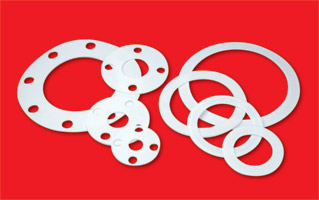
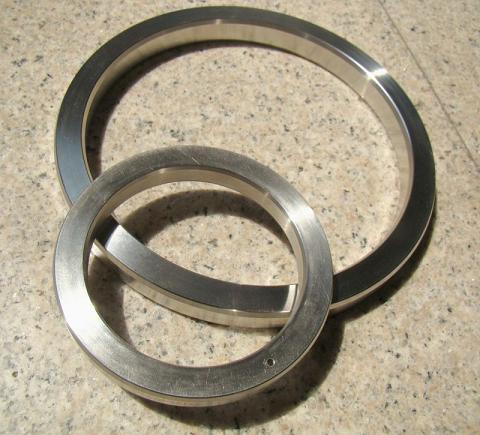
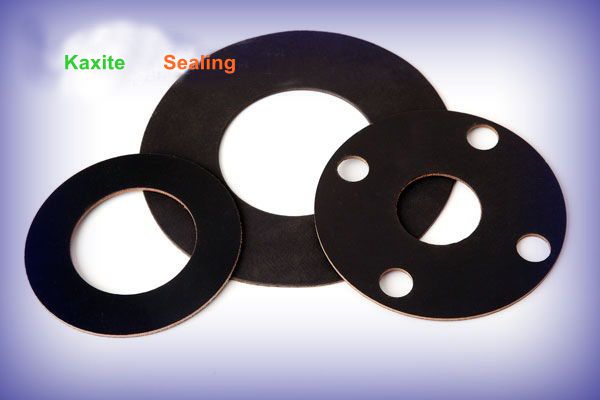
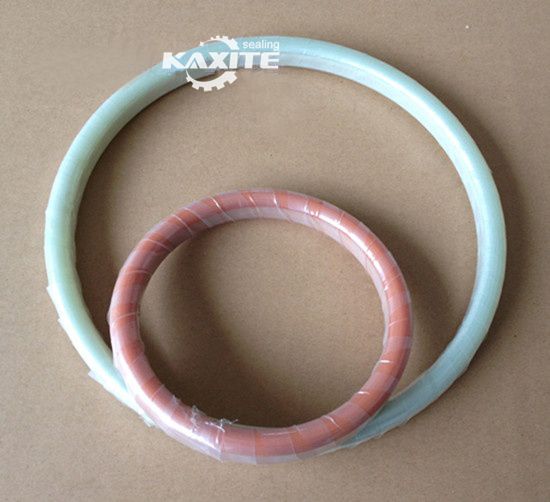
Kaxite Sealing offers a comprehensive portfolio of gasket types, each designed for specific service conditions and industry standards.
Selecting the right gasket involves evaluating several interconnected parameters. The table below outlines the key factors and their implications for gasket selection and performance.
| Parameter | Description | Impact on Selection | Kaxite Sealing Advantage |
|---|---|---|---|
| Service Media | The fluid or gas being sealed (e.g., steam, crude oil, acid, solvent, oxygen). | Dictates chemical compatibility. The gasket material must resist corrosion, swelling, or degradation. | We provide detailed chemical resistance charts and material recommendations for over 1,000 media types. |
| Temperature Range | Operating temperature, including peak and cyclic variations. | Determines thermal stability. Materials must maintain sealing force and not degrade, oxidize, or creep. | Our products are rated for cryogenic applications (-200°C) to extreme heat services (up to 1000°C for certain graphite/metal designs). |
| Pressure Range | Internal system pressure, including potential pressure surges. | Influences gasket style and thickness. Higher pressures require more robust designs like RTJ or Spiral Wound. | Engineered solutions for vacuum to ultra-high pressure (API 10,000 psi and above). |
| Flange Design & Condition | Flange type (RF, FF, RTJ), facing finish (serrated, smooth), flatness, and any damage. | Softer gaskets suit rough finishes; harder gaskets require smooth, flat surfaces. RTJ flanges mandate RTJ gaskets. | Our technical team can advise on gasket selection based on flange specifications and even condition assessment reports. |
| Bolt Load & Gasket Stress | The compressive force applied by the bolts to seat and maintain the seal. | Must achieve sufficient "y" (seating stress) and "m" (maintenance factor) as per ASME guidelines. Underloading causes leaks; overloading can crush the gasket. | We supply gasket stress calculation support and recommend optimal bolt tightening procedures (e.g., torque values, sequence). |
| Standards & Certifications | Industry-specific standards (ASME, API, DIN, EN) and certifications (PED, NACE, FDA). | Mandatory for regulated industries. Ensures material traceability, dimensional accuracy, and performance validation. | Kaxite Sealing gaskets are manufactured to major international standards and can be supplied with full material traceability (MTC) and 3.1/3.2 material certification. |
To illustrate the depth of our product engineering, here are detailed specifications for two of Kaxite Sealing's flagship gasket product lines.
Q: What is the main difference between a spiral wound gasket and a compressed non-asbestos (CNA) sheet gasket?
A: The primary difference lies in construction and application range. A spiral wound gasket is a composite of alternating metal windings and soft filler, offering high resilience and suitability for a broad range of pressures and temperatures (from vacuum to high pressure, cryogenic to 500°C+). It's the preferred choice for ANSI flanges. A CNA sheet gasket is cut from a homogeneous sheet of compressed fibers and elastomers. It is a softer, more conformable gasket ideal for low to medium-duty applications on water, oil, or steam services at lower pressures and temperatures (typically up to 250-300°C). Spiral wound gaskets generally provide a more reliable seal in demanding or cyclic services.
Q: Can I reuse a gasket after disassembling a flange connection?
A: As a general rule, gaskets should not be reused. They are designed to deform plastically during initial bolting to conform to the flange faces. Once compressed and subjected to temperature and pressure cycles, their sealing properties are altered. Reusing an old gasket significantly increases the risk of leakage. Exceptions can be made for certain solid metal gaskets (like some Kamprofile designs) if they are carefully inspected for any damage, scoring, or corrosion and are deemed fit for service by a qualified engineer. Kaxite Sealing always recommends using a new gasket for critical joints.
Q: How do I determine the correct bolt torque for my gasket installation?
A: Correct bolt torque is critical to achieve the required gasket seating stress without damaging the gasket or flanges. The required torque depends on several factors: gasket type and material, bolt size/grade/number, flange facing, and the use of lubrication on threads. It is not a one-size-fits-all value. The calculation is based on the target gasket stress (y factor) and the bolt's cross-sectional area. Kaxite Sealing provides recommended torque values with our gasket shipments based on the specific application data provided by the customer. Following a cross-pattern tightening sequence in multiple incremental passes is also essential for an even seal.
Q: What does NACE MR0175/ISO 15156 compliance mean for a gasket?
A: NACE MR0175/ISO 15156 is a standard that addresses the requirements for metallic materials resistant to Sulfide Stress Cracking (SSC) in oil and gas production environments containing H2S (sour service). For a gasket to be NACE compliant, the metallic components (e.g., windings in a spiral wound gasket, core in a Kamprofile) must be manufactured from alloys that meet the specific hardness and composition limits outlined in the standard. Non-metallic components like graphite filler are also evaluated. Kaxite Sealing offers a full range of NACE-compliant gaskets for sour service applications, with supporting documentation.
Q: Why might a gasket fail prematurely, and how can I prevent it?
A: Premature gasket failure can stem from multiple root causes:
Q: What documentation can I expect when ordering gaskets from Kaxite Sealing?
A: Kaxite Sealing provides comprehensive documentation to ensure quality and traceability. This typically includes a detailed packing list, a Material Test Certificate (MTC) conforming to EN 10204 3.1 or 3.2, which provides chemical analysis and mechanical properties of the metallic components, and a Certificate of Conformity (CoC). For special orders, we can provide dimensional inspection reports, NACE compliance certificates, or heat code traceability. All our spiral wound gaskets feature a permanent Gasket Identification Tag (GIT) for easy reference.
Choosing a gasket supplier is a decision that impacts plant safety, efficiency, and operational cost. Kaxite Sealing distinguishes itself through a commitment to engineering excellence, material integrity, and customer partnership. We don't just sell products; we provide solutions backed by two decades of technical expertise. Our process begins with a thorough analysis of your application requirements. Our in-house engineering team utilizes advanced software and industry standards to recommend the optimal gasket design. We source raw materials from certified, reputable suppliers and maintain rigorous quality control throughout manufacturing, from blanking and winding to final inspection and tagging.
Our global logistics network ensures timely delivery, whether you require standard off-the-shelf gaskets or complex, custom-engineered sealing packages for a turnaround project. We support our products with unparalleled technical service, including installation guidance, failure analysis, and on-site training. For engineers, maintenance managers, and procurement professionals who cannot afford compromise, Kaxite Sealing is the trusted partner for sealing solutions that perform under pressure, ensuring the longevity and reliability of your critical infrastructure.