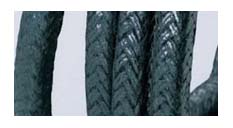
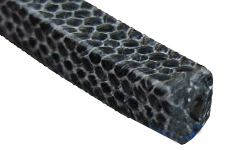
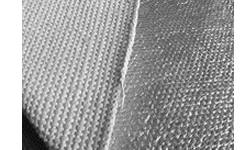
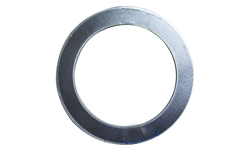
Carbon fiber packing represents a high-performance sealing solution engineered for extreme industrial environments. Unlike traditional packing materials like aramid or graphite, carbon fiber packing utilizes strands of pure carbon fiber, often combined with advanced lubricants and reinforcing agents, to create a seal of exceptional durability and reliability. At Kaxite Sealing, we specialize in manufacturing premium carbon fiber packing that delivers unmatched performance in applications involving high shaft speeds, elevated temperatures, aggressive chemicals, and severe abrasion. This material is specifically designed to minimize shaft wear, reduce maintenance downtime, and provide a long service life, offering a superior return on investment for demanding operations.
Choosing the right sealing material is critical for operational efficiency and safety. Kaxite Sealing's carbon fiber packing provides a distinct set of benefits that make it the optimal choice for challenging sealing tasks.
Understanding the precise specifications of carbon fiber packing is essential for proper selection and application. Below are the detailed parameters for Kaxite Sealing's standard product line. Custom formulations are also available to meet unique operational requirements.
| Parameter | Metric Value | Imperial Value | Test Standard / Notes |
|---|---|---|---|
| Temperature Range (Continuous) | -200°C to 316°C | -328°F to 600°F | In inert atmospheres; Oxidizing limits apply. |
| pH Range | 0 - 14 | 0 - 14 | Resistant to most acids & alkalis. Consult for specific media. |
| Density | 1.6 - 1.8 g/cm³ | 100 - 112 lb/ft³ | Varies with braid style and size. |
| Tensile Strength | > 3000 MPa | > 435,000 psi | Per filament test. |
| Thermal Conductivity | 5 - 7 W/m·K | 35 - 40 BTU·in/(hr·ft²·°F) | Axial direction; aids in heat dissipation. |
| Coefficient of Friction | 0.08 - 0.12 | 0.08 - 0.12 | Dynamic, against polished chrome shaft. |
| Pressure Rating | Up to 20 MPa | Up to 2900 psi | System dependent; for rotary/reciprocating service. |
| Shaft Speed | Up to 25 m/s | Up to 5000 ft/min | Recommended maximum for centrifugal pumps. |
| Size (mm) | Size (Inches) | Standard Spool Length | Kaxite Product Code (Example) |
|---|---|---|---|
| 3 x 3 | 1/8 x 1/8 | 10 meters / 30 feet | KX-CF-SQ3 |
| 5 x 5 | 3/16 x 3/16 | 10 meters / 30 feet | KX-CF-SQ5 |
| 6 x 6 | 1/4 x 1/4 | 10 meters / 30 feet | KX-CF-SQ6 |
| 10 x 10 | 3/8 x 3/8 | 5 meters / 15 feet | KX-CF-SQ10 |
| 13 x 13 | 1/2 x 1/2 | 5 meters / 15 feet | KX-CF-SQ13 |
| 16 x 16 | 5/8 x 5/8 | 5 meters / 15 feet | KX-CF-SQ16 |
Kaxite Sealing carbon fiber packing is the preferred sealing solution across multiple industries where failure is not an option. Its robust properties make it ideal for:
Correct installation is crucial to achieving the full potential of carbon fiber packing. Follow these key steps for best results with Kaxite Sealing products:
What makes carbon fiber packing different from graphite or aramid packing?
Carbon fiber packing is distinct due to its core material: continuous strands of high-purity carbon. This gives it a unique combination of high tensile strength, excellent thermal conductivity, and outstanding chemical resistance. Graphite packing is softer and offers great thermal stability but can be less abrasion-resistant. Aramid (e.g., Kevlar) is very tough but has a lower temperature limit and can be susceptible to certain chemicals. Carbon fiber packing effectively bridges these gaps, offering high performance across a broader range of severe conditions.
Can Kaxite carbon fiber packing be used in potable water applications?
Yes. Kaxite Sealing offers specific grades of carbon fiber packing that are manufactured with FDA-listed ingredients and are certified for use in potable water and food contact applications. These grades use specialized lubricants that are non-toxic and designed not to leach into the media. Always specify the service media when ordering to ensure you receive the correct, compliant product.
Is this packing suitable for both rotary and reciprocating shafts?
Absolutely. The braided construction and self-lubricating properties of Kaxite carbon fiber packing make it highly versatile. It performs excellently in centrifugal pumps (rotary) as well as in plunger pumps, compressors, and valves (reciprocating). The key is proper sizing, installation, and initial adjustment to accommodate the specific motion.
What is the maximum pressure carbon fiber packing can handle?
While the material itself has an extremely high strength rating, the practical pressure limit for a packing set is system-dependent, typically up to 20 MPa (2900 psi). The actual limit depends on factors like the number of packing rings, box depth, shaft clearance, and the fluid being sealed. For ultra-high-pressure applications, consulting with Kaxite Sealing engineers is recommended for a custom solution or system review.
How do I choose between square braid, round braid, and twisted styles?
The choice depends on the application. Square braid is the most common and versatile, providing a uniform density and good sealing for most rotary and reciprocating services. Round braid is often used in valve stems and applications where space is limited or flexibility is paramount. Twisted/plaited styles are generally for lower-pressure, low-cost applications. For severe service conditions (high speed, pressure, temperature), the dense, uniform structure of a square braid from Kaxite Sealing is typically the best choice.
Does carbon fiber packing require a break-in period?
Yes, a proper break-in (or run-in) period is critical. After initial installation and hand-tightening of the gland, start the equipment and allow it to run. Gradually tighten the gland nuts in small increments (e.g., 1/8 to 1/4 turn) at 10-15 minute intervals until the leakage is reduced to a controlled drip. This process, which may take a few hours, allows the packing to thermally expand, conform to the shaft, and for the lubricants to distribute evenly. Skipping this step often leads to premature overheating and failure.
What are signs that my carbon fiber packing needs replacement?
Key indicators include: a consistent increase in leakage that cannot be controlled by gland adjustment, excessive heat generation at the stuffing box (often indicated by steam or discoloration), visible physical damage to the packing (fraying, hardening, or extrusion), and a noticeable increase in power consumption or shaft drag. Regular monitoring and maintenance logs help predict optimal replacement intervals.
Can carbon fiber packing cause shaft wear?
All packings cause some degree of wear, but high-quality carbon fiber packing like that from Kaxite Sealing is specifically designed to minimize it. The carbon fibers themselves are hard, but the integrated PTFE or graphite lubricants create a low-friction film between the packing and the shaft. Proper installation, correct gland adjustment, and ensuring a hardened or coated shaft surface are the most effective ways to virtually eliminate significant shaft wear.
How do I store unused Kaxite carbon fiber packing?
Store the packing in its original packaging in a cool, dry, and clean environment away from direct sunlight, extreme temperatures, and corrosive fumes. Avoid bending or crushing the spools. Proper storage prevents contamination, moisture absorption, and physical deformation, ensuring the material performs as intended when put into service.