Picture this: a procurement manager receives two quotation sheets for sealing components. One supplier offers PTFE gaskets at a lower price. Another recommends PFA valve seats with a longer lead time and a higher unit cost. Both materials are fluoropolymers, both claim outstanding chemical resistance, and both seem to cover the same installation. Yet the operating conditions are not identical, and the wrong choice can lead to seal failure, contamination, or unplanned downtime. So, what is the difference between PTFE and PFA? This question is one of the most common challenges in sealing and fluid-handling procurement. Understanding the distinction helps you compare quotes accurately, avoid overspending, and select a material that actually matches your temperature, pressure, and media requirements. In this guide, we explain the differences in practical terms, compare key parameters, and show how a specialized sealing supplier can help you move from confusion to a confident purchase decision. Whether you are sourcing O-rings, gaskets, tubing, or custom machined parts, the PTFE vs PFA difference affects real-world performance far beyond a datasheet label.
Table of contents
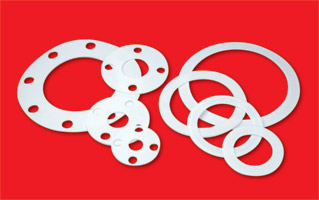
PTFE, or polytetrafluoroethylene, is a linear fluoropolymer known for its extremely low friction, broad chemical resistance, and non-stick properties. It is commonly machined into gaskets, O-rings, seals, and skived sheets. PTFE cannot be processed by conventional melting methods, so manufacturers use compression molding, ram extrusion, or sintering followed by machining.
PFA, or perfluoroalkoxy alkane, is a melt-processable fluoropolymer. Its molecular structure includes a perfluoroalkoxy side chain, which gives it similar chemical resistance to PTFE while allowing injection molding, extrusion, and welding. In sealing applications, PFA is often selected for complex shapes, high-purity fluid paths, and welded liners.
For procurement teams, the practical takeaway is simple: PTFE often suits cost-sensitive, simple-geometry components, while PFA suits complex or weldable parts and applications demanding lower permeability. However, the full decision requires comparing more than just the resin name.
Imagine a chemical plant that replaces PTFE seals every six months because of cold flow and leakage. The maintenance team considers switching to PFA but worries about cost. The real issue is not that PTFE is weak; it is that PTFE creeps under high load and can deform at elevated temperatures if the seal design is not optimized. PFA, with its slightly higher flexibility and better stress-crack resistance, often performs better in dynamic or complex sealing applications.
Both materials offer excellent chemical inertness against acids, bases, solvents, and halogens. The continuous service temperature for both usually ranges from -200°C to +260°C. However, PFA has a true melting point and can be welded, while PTFE does not melt-flow under normal processing conditions. This difference affects how the final part is made and how it behaves in service.

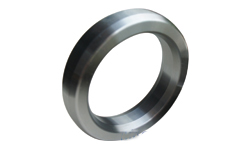
A PTFE O-ring machined from high-quality resin can be a cost-effective choice for static sealing in aggressive media. In contrast, a PFA injection-molded component may be worth the premium when you need a smooth, void-free surface and lower gas permeability.
Use this table as a rapid reference when comparing supplier quotes. Keep in mind that actual values can vary by grade, filler content, and processing method.
| Property | PTFE | PFA |
|---|---|---|
| Continuous service temperature | -200°C to +260°C | -200°C to +260°C |
| Chemical resistance | Excellent, inert to most chemicals | Excellent, similar to PTFE |
| Processing method | Compression molding, ram extrusion, machining | Injection molding, extrusion, welding |
| Tensile strength | 20–35 MPa | 25–35 MPa |
| Elongation at break | 200–400% | 300–500% |
| Friction coefficient | 0.05–0.10 | 0.08–0.20 |
| Gas permeability | Slightly higher | Lower in molded parts |
| Optical clarity | Opaque | Translucent to transparent |
| Relative cost | 1.0 | 1.3–2.0 |
If your application involves simple gaskets and static seals, PTFE often delivers the best cost-performance balance. If the part must be injection molded, welded, or exposed to high-purity fluids, PFA may justify its higher price through longer service life and lower contamination risk.
Pain point: buyers often receive two quotations and cannot tell whether the price difference is based on material value or supplier markup. Some choose the cheaper PTFE part and later discover deformation; others pay extra for PFA when a well-designed PTFE component would have worked.
Solution: before you commit, collect four pieces of information: operating temperature range, chemical media and concentration, pressure and load conditions, and part geometry. Ask the supplier whether the PTFE is virgin or filled, and whether the PFA is injection molded or extruded. Request material certificates and, if possible, sample parts for trial installation.
At Ningbo Kaxite Sealing Materials Co., Ltd., we help buyers verify these points before quoting. We supply both PTFE and PFA sealing products, so our recommendations are based on your actual working conditions rather than on pushing a single material.
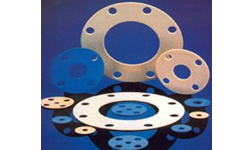
One common scenario is a buyer who needs PTFE gaskets plus a small number of PFA valve seats, but the current supplier only stocks one material family. This creates multiple purchase orders, longer lead times, and inconsistent quality. Ningbo Kaxite Sealing Materials Co., Ltd. solves this by offering a broad range of fluoropolymer sealing products, including PTFE sheets, PTFE O-rings, PFA encapsulated parts, and custom machined components.
Our team reviews your drawings and working fluids, then recommends the most suitable material and processing route. We also provide material traceability and consistent dimensional control for repeat orders. For global procurement teams, this reduces the risk of buying the wrong material and simplifies supplier management.
Instead of choosing blindly between PTFE and PFA, you get a clear technical comparison and a reliable supply partner.
Q1: What is the difference between PTFE and PFA in chemical processing?
PTFE is a non-melt-processable fluoropolymer, while PFA is melt-processable and includes a perfluoroalkoxy side chain. Both resist aggressive chemicals, but PFA often has lower permeability and better stress-crack resistance in molded components. PTFE is usually more economical for simple gaskets, rings, and sheets.
Q2: What is the difference between PTFE and PFA when it comes to temperature limits and welding?
Both materials can typically operate between -200°C and +260°C. However, PFA has a true melt phase and can be welded, thermoformed, and injection molded. PTFE cannot be welded by conventional methods and is generally machined or sintered. For welded liners or complex valve parts, PFA is often the better selection.
Still comparing PTFE vs PFA quotes for your next purchase? Tell us your operating temperature, chemical media, and part drawing. We will help you confirm which material fits the application and provide a clear technical recommendation. Ningbo Kaxite Sealing Materials Co., Ltd. is a specialized supplier of PTFE and PFA sealing materials, serving global buyers with custom machining, stable quality, and responsive engineering support. For fast assistance, contact [email protected] or visit https://www.kaxitesealing.cn.
Smith, J., & Lee, R. (2021). Comparative chemical resistance of PTFE and PFA linings in acidic media. Journal of Fluoropolymer Engineering, 34(2), 112–125.
Chen, H., Wang, L., & Gupta, A. (2020). Thermal stability and permeation behavior of PTFE and PFA films at elevated temperatures. Polymer Testing, 89, 106–118.
Martin, T. (2019). Mechanical properties of melt-processable fluoropolymers for valve and pump components. Industrial & Engineering Chemistry Research, 58(17), 7345–7356.
Patel, S., & Brown, K. (2018). Friction and wear characteristics of PTFE and PFA under dry sliding conditions. Tribology International, 127, 379–391.
Liu, Y., Zhang, M., & Singh, D. (2022). Stress crack resistance of PFA and PTFE in aggressive chemical environments. Journal of Applied Polymer Science, 139(14), 51923.
Garcia, R., & Thompson, E. (2017). Processing and weldability of perfluoroalkoxy alkane for high-purity fluid handling. Polymer Engineering & Science, 57(8), 884–893.
Walker, B., & Zhou, J. (2021). Sealing performance of PTFE and PFA gaskets under fluctuating temperatures. Sealing Technology, 2021(5), 7–14.
Kim, S., & Anderson, P. (2020). Comparative study of gas permeability in fluoropolymer sheets for chemical storage. Journal of Fluorine Chemistry, 237, 109–121.
Nguyen, T., & Harris, M. (2019). Dimensional stability and creep behavior of PTFE and PFA in bolted flange assemblies. International Journal of Pressure Vessels and Piping, 174, 42–51.
Robinson, D., & Zhao, X. (2023). Selecting fluoropolymer sealing materials for semiconductor and pharmaceutical applications. Materials Today Communications, 34, 105–117.
-