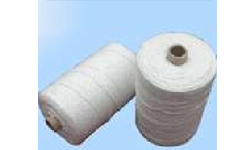
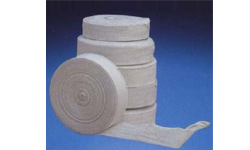
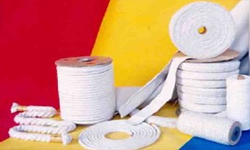
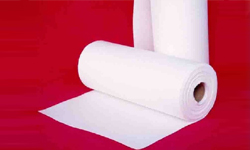
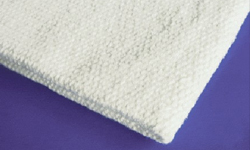
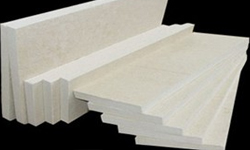
Ceramic fiber is a lightweight, high-temperature insulation material composed primarily of alumina-silica. Manufactured through a melting and fiber-spinning process, it creates a flexible, wool-like blanket, board, paper, or module with exceptional thermal stability. For industries operating in extreme heat environments, such as metal processing, petrochemical refining, power generation, and aerospace, ceramic fiber products are indispensable. They offer superior energy efficiency by minimizing heat loss, protect personnel and equipment from radiant heat, and line furnaces, kilns, and boilers to withstand operational temperatures that would degrade conventional materials. Unlike traditional refractories, ceramic fiber solutions are low in thermal mass, leading to faster heat-up and cool-down cycles, which translates directly into fuel savings, reduced emissions, and increased production throughput.
At Kaxite Sealing, we engineer our ceramic fiber products to meet the most demanding industrial challenges. Our materials are characterized by their high purity, consistent fiber structure, and exceptional resistance to thermal shock. Below are the core specifications that define our premium ceramic fiber range.
The following table compares the thermal conductivity of three primary Kaxite Sealing ceramic fiber grades at varying mean temperatures. Lower conductivity indicates better insulating performance.
| Product Grade | Classification Temp. | Density (kg/m³) | Thermal Conductivity (W/m·K) at 400°C | Thermal Conductivity (W/m·K) at 800°C | Thermal Conductivity (W/m·K) at 1000°C |
|---|---|---|---|---|---|
| Kaxite Standard Grade | 1260°C / 2300°F | 128 | 0.12 | 0.22 | 0.28 |
| Kaxite High-Purity Grade | 1400°C / 2550°F | 128 | 0.11 | 0.20 | 0.25 |
| Kaxite Zirconia Grade | 1600°C / 2912°F | 160 | 0.15 | 0.23 | 0.27 |
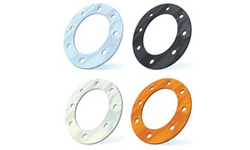
Kaxite Sealing provides ceramic fiber in multiple forms to suit specific installation requirements and performance criteria. Each form factor is engineered for optimal performance in its intended application.
What is the key difference between classification temperature and continuous use temperature?
The classification temperature is a standardized rating indicating the temperature at which the ceramic fiber exhibits a maximum linear shrinkage of 2-4% after a 24-hour heat soak. It is a material property benchmark. The continuous use temperature is the recommended maximum temperature for long-term, safe, and reliable service. It is always lower than the classification temperature, typically by 100-150°C, to account for real-world conditions, thermal cycling, and chemical atmospheres that can affect material life. Exceeding the continuous use temperature will accelerate shrinkage and degradation.
How does ceramic fiber compare to traditional firebrick or castable refractories?
Ceramic fiber offers distinct advantages in many applications due to its low thermal mass and high insulating value. Traditional brick or castables are dense and store a lot of heat (high thermal mass), leading to long, energy-intensive heat-up times. Ceramic fiber linings heat up and cool down rapidly, saving significant energy. It is also much lighter, reducing structural support needs. However, for applications with extreme mechanical abrasion, slag attack, or direct flame impingement, dense refractories may still be preferred. Often, a composite system using both is optimal.
Is ceramic fiber safe to handle? What precautions are necessary?
New, virgin ceramic fiber products are generally considered irritants. The fibers can be brittle and may cause temporary skin and respiratory irritation. It is essential to follow proper handling procedures: wear appropriate PPE such as gloves, long sleeves, safety glasses, and an approved dust mask (NIOSH N95 or better) during cutting or installation. Work in well-ventilated areas. After installation, fibers become locked in the matrix. For high-temperature applications, once heated, the fibers partially devitrify (convert to a more crystalline structure), further stabilizing them. Always consult the Kaxite Sealing Material Safety Data Sheet (MSDS) for the specific product.
Can ceramic fiber get wet? What happens if it does?
Ceramic fiber is hygroscopic and will absorb moisture from the air or direct contact with water. While getting wet does not destroy its high-temperature capability, it can cause several issues. Water absorption adds weight, can lead to sagging in blankets, and may reduce the insulating efficiency until completely dried out. More critically, rapid heating of wet ceramic fiber can generate steam, potentially causing spalling or damage to the lining. It is best to store materials in a dry place and protect installations from rain. If it gets wet, allow it to dry thoroughly before putting it into high-temperature service.
How do I select the right density for my application?
Density selection balances insulating performance, mechanical strength, and heat storage. Lower density (e.g., 96-128 kg/m³) offers the best insulation (lowest thermal conductivity) and is ideal for heat containment in furnaces. Higher density (e.g., 192-320 kg/m³) provides greater resistance to gas velocity/erosion, improved handling strength, and better load-bearing capacity, making it suitable for board products or hot-face linings in high-velocity flues. Kaxite Sealing engineers can help you select the optimal density based on your specific temperature, atmosphere, and physical demands.
What is the lifespan of a ceramic fiber lining?
The lifespan varies dramatically based on the operating environment. Key factors include: operating temperature relative to the fiber's rating, the frequency and severity of thermal cycling, the presence of corrosive chemicals or alkalis, and gas velocity/abrasion. A lining operating well within its continuous use temperature in a clean, cyclic furnace may last 5-10 years. In a harsh, high-temperature, or corrosive environment, lifespan may be 1-3 years. Proper installation using recommended anchoring patterns and avoiding mechanical damage during service are critical for maximizing lining life. Regular thermal imaging inspections can help monitor lining condition.