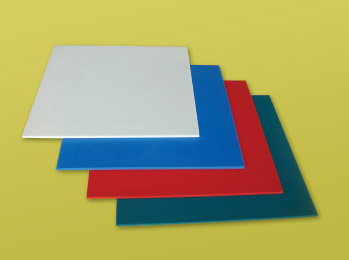
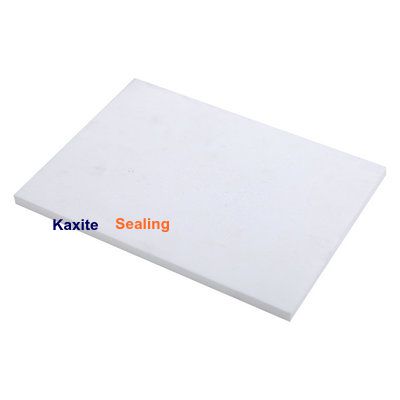
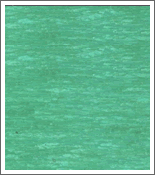
Kaxite Sealing is an ISO 9001 certified compression sheet manufacturer and wholesale supplier in China. For over two decades, we have engineered high-performance gasket sheet materials for chemical processing, oil & gas, power generation, marine and food industries. Our product range covers graphite sheet, PTFE sheet, rubber sheet, cork sheet, mica sheet, non-asbestos sheet and asbestos sheet.
Compression sheets are engineered sealing materials supplied in flat sheet form, designed to be cut or die-cut into gaskets for flange connections, heat exchangers, vessels and industrial equipment. They work by compressing under bolt load to fill microscopic irregularities between two mating surfaces, creating a leak-tight barrier against liquids, gases and vapors.
Unlike ready-made gaskets, compression sheets give fabricators and end users full flexibility: you can cut any shape, thickness or size on site or in your workshop. At Kaxite Sealing, we produce a comprehensive range of compression sheets covering graphite, PTFE, rubber, cork, mica, non-asbestos and asbestos materials, each formulated for specific temperature, pressure and chemical service conditions.
For over two decades, Kaxite Sealing has been at the forefront of advanced sealing technology. Our commitment to material science, rigorous testing and deep application understanding allows us to produce compression sheets that consistently outperform industry standards. Every sheet is developed with a clear understanding of the interplay between temperature, pressure, medium and flange design.
Choosing the right compression sheet material is critical for seal performance and service life. Below is a comparison of our core compression sheet types.
| Sheet Type | Temperature Range | Chemical Resistance | Primary Applications |
|---|---|---|---|
| Graphite Sheet | -240°C to +600°C | Excellent, except strong oxidizers | High-temperature heat exchangers, boilers, exhausts |
| PTFE Sheet | -260°C to +260°C | Near-universal, FDA compliant | Aggressive acids, pharmaceuticals, food processing |
| Rubber Sheet | -40°C to +200°C | Good for water, air, mild chemicals | Water treatment, HVAC, pumps, valves |
| Cork Sheet | -40°C to +150°C | Good for oils, fuels, low-pressure media | Automotive, low-pressure flanges, gasket cutting |
| Mica Sheet | Up to +1000°C | Excellent electrical insulation | Electrical insulation, thermal barrier, furnace |
| Non-Asbestos Sheet | -100°C to +400°C | Broad chemical resistance | General-purpose water, steam, mild chemicals |
| Asbestos Sheet | -100°C to +500°C | Good for steam, oils, alkalis | Legacy equipment, boilers, marine applications |
Reactor, vessel and pipeline flanges handling aggressive acids, alkalis and solvents.
Refinery, wellhead, pipeline and LNG facility sealing across upstream, midstream and downstream.
Boilers, steam turbines, heat exchangers and high-temperature pipework.
Sanitary flanges, vessels and process equipment requiring FDA compliance.
Sea water cooling systems, engine exhausts and offshore platform flanges.
Chillers, compressors, pumps, valves and water distribution networks.
Kaxite Sealing supports full custom and OEM compression sheet manufacturing, from material selection and thickness confirmation to die-cut or CNC-machined gaskets and private-label packaging. Our engineers work directly with your technical team.
Send your process data including temperature, pressure, media and flange details. Our engineers recommend the optimal sheet material and thickness within 24 hours.
We provide a detailed quotation covering unit price, MOQ, lead time and packaging options. Custom MOQ may vary by material and size.
We produce free samples for your quality evaluation. Sample lead time is typically 5-7 working days for standard materials.
After approval, we cut sheets to your drawings or die-cut gaskets with full dimensional inspection, material certificates and batch traceability.
Custom logos, labels, protective film, poly bags and pallets. We support neutral packaging and private label for distributors and brands.
Worldwide shipping by sea, air and express. Full export documentation: invoice, packing list, CO, MTR, COC and third-party inspection reports.
Kaxite Sealing operates an ISO 9001 certified quality management system. Every compression sheet is tested per ASTM, DIN and other international standards for density, tensile strength, compressibility, recovery and chemical composition. We provide mill test reports, material certificates and third-party inspection reports upon request. Learn more about our company profile.
Our compression sheets are supplied to distributors, OEM brands and EPC contractors in 80+ countries across chemical, oil & gas and power industries.
Every batch comes with mill test reports, material certificates and dimensional inspection records. Third-party inspection is available on request.
Custom grades, thicknesses, sheet sizes, colors, die-cut gaskets, logos and packaging. Send your drawings and our engineers will confirm feasibility within 24 hours.
Kaxite Sealing supports distributors, OEM brands and EPC contractors worldwide. Below are typical cooperation cases and the inspection documents we provide for every bulk compression sheet order.
A German boiler manufacturer ordered 1,500 sheets of expanded graphite sheet in 3.0mm thickness to DIN 3754. Batch MTRs and dimensional reports were provided for each shipment.
A UAE industrial distributor placed recurring monthly orders of virgin PTFE sheet for aggressive chemical service. Neutral packaging and private labeling were used.
A US electrical equipment OEM ordered soft mica sheet for high-temperature insulation. Samples were approved within 7 days and mass production started immediately after.
Mill Test Report (MTR) · Material Certificate · Dimensional Inspection Report · Certificate of Conformance (COC) · Asbestos-Free Declaration (for non-asbestos sheets) · FDA Compliance Statement · Third-Party Inspection (SGS / TÜV / BV on request) · Packing List & Commercial Invoice
Q: What is the MOQ for wholesale compression sheets from Kaxite Sealing?
A: Our standard MOQ is 50 sheets for wholesale orders. For custom grades, thicknesses and OEM sheets, MOQ may vary depending on material and dimensions. Free samples are available for quality evaluation before bulk purchase.
Q: How long is the lead time for bulk compression sheet orders?
A: Standard lead time is 7-15 working days for most compression sheet products. Custom and OEM orders may require 15-25 working days depending on specifications and order quantity. Rush orders can be accommodated upon request.
Q: How do I choose the right compression sheet material for my application?
A: Selection depends on four critical factors: the fluid or gas being sealed, the continuous and peak operating temperatures, the system pressure including pressure cycling, and the flange condition. Graphite sheets excel at high temperatures, PTFE sheets resist aggressive chemicals, rubber sheets work well for water and mild media, and non-asbestos sheets provide a general purpose solution. Kaxite Sealing's technical team can provide a detailed recommendation based on your process data sheets.
Q: Can Kaxite Sealing provide custom sheet sizes and thicknesses?
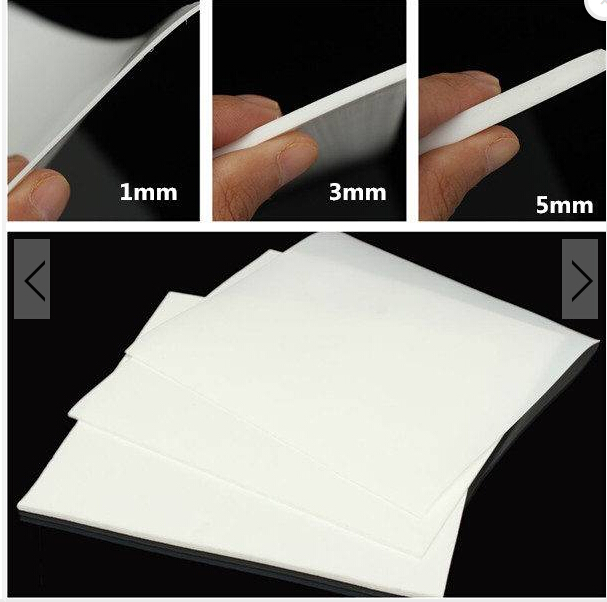
A: Yes. We manufacture compression sheets in standard sizes 1500x1500mm and 1250x1250mm, and can produce custom dimensions, thicknesses from 0.5mm to 50mm, and die-cut or CNC-machined shapes to your exact specifications.
Q: Are Kaxite compression sheets suitable for food contact applications?
A: Yes. Our virgin PTFE sheet, some rubber sheet grades and non-asbestos sheets are FDA compliant and manufactured from 100% pure raw materials for repeated food contact. Certificates are available upon request.
Q: How should I store compression sheets, and do they have a shelf life?
A: Sheets should be stored flat in their original packaging in a cool, dry and dark environment, away from direct sunlight, heat sources, ozone generators and chemicals. Ideal storage temperature is between 10°C and 25°C. While most grades do not have a strict expiration date, best practice is to use them within 5 years of manufacture.
Q: Does Kaxite Sealing offer OEM and private label services for compression sheets?
A: Yes. We support full OEM and ODM services including custom sheet sizes, thicknesses, colors, branding, labels and packaging. Send your drawings, samples or specifications and our engineers will confirm feasibility, MOQ and lead time within 24 hours.
Q: What documentation is provided with each bulk compression sheet order?
A: Every bulk order includes mill test report, material certificate, dimensional inspection report, certificate of conformance, and packing list with commercial invoice. Third-party inspection such as SGS, TÜV or BV is available on request.
Tell us your application temperature, pressure, media and sheet size, and our engineers will respond within 24 hours with a competitive quotation and free sample offer.
Send Inquiry Now Download Catalogue