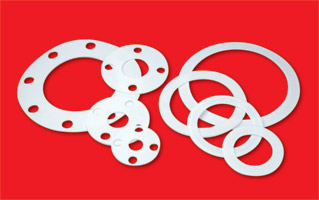
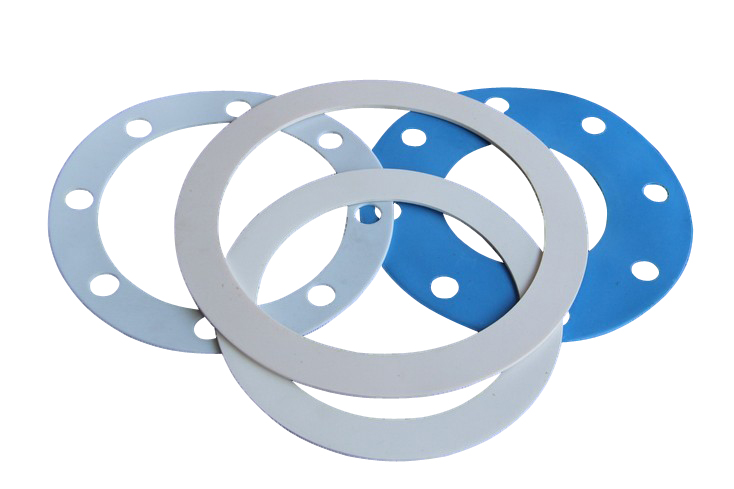
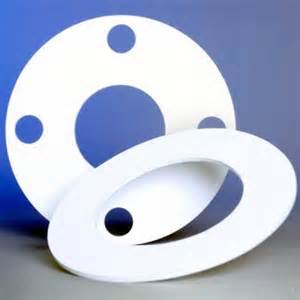
In the world of industrial sealing, where chemical resistance, temperature extremes, and purity are non-negotiable, PTFE Gaskets stand as the definitive solution. Polytetrafluoroethylene (PTFE), a high-performance fluoropolymer, offers an unparalleled combination of properties that make it indispensable across countless applications. At Kaxite Sealing, we engineer and manufacture premium PTFE gaskets designed to deliver maximum reliability, longevity, and performance in the most challenging environments. Our expertise ensures that every gasket meets the strictest specifications for industries ranging from pharmaceuticals and food processing to chemical processing and semiconductor manufacturing.
The inherent characteristics of PTFE—including near-universal chemical inertness, an extremely wide service temperature range, exceptional dielectric properties, and natural lubricity—make PTFE gaskets superior to traditional sealing materials like rubber, graphite, or compressed non-asbestos. Whether you require static sealing for flanges, manways, pumps, or valves, understanding the specific parameters and options available is crucial for optimal system integrity and safety.
Before delving into product specifications, it's essential to understand why PTFE is the material of choice for critical seals.
Our PTFE gaskets are available in multiple forms—cut from sheet, molded, skived, or machined—to suit specific pressure, flange, and application requirements. Below are the detailed technical parameters for our standard offerings.
| Property | Test Standard | Typical Value | Units |
|---|---|---|---|
| Specific Gravity | ASTM D792 | 2.15 - 2.20 | g/cm³ |
| Tensile Strength | ASTM D638 | 25 - 35 | MPa (psi) |
| Elongation at Break | ASTM D638 | 300 - 500 | % |
| Compression Set (22 hrs @ 25°C) | ASTM D395 | 40 - 60 | % |
| Continuous Service Temperature | - | -268 to +260 | °C |
| Thermal Conductivity | ASTM C177 | 0.25 | W/(m·K) |
| Dielectric Strength | ASTM D149 | >60 | kV/mm |
Kaxite Sealing provides a comprehensive range of PTFE gasket designs.
| Gasket Type | Standard Thickness | Max Recommended Pressure* | Flange Surface Finish Recommended |
|---|---|---|---|
| Virgin PTFE Sheet Gasket | 0.5mm (1/64") to 6mm (1/4") | 150 psi (10 bar) | 125 - 250 µin Ra |
| Reinforced PTFE (Glass, Graphite Filled) | 1.5mm (1/16") to 3mm (1/8") | 300 psi (20 bar) | 125 - 250 µin Ra |
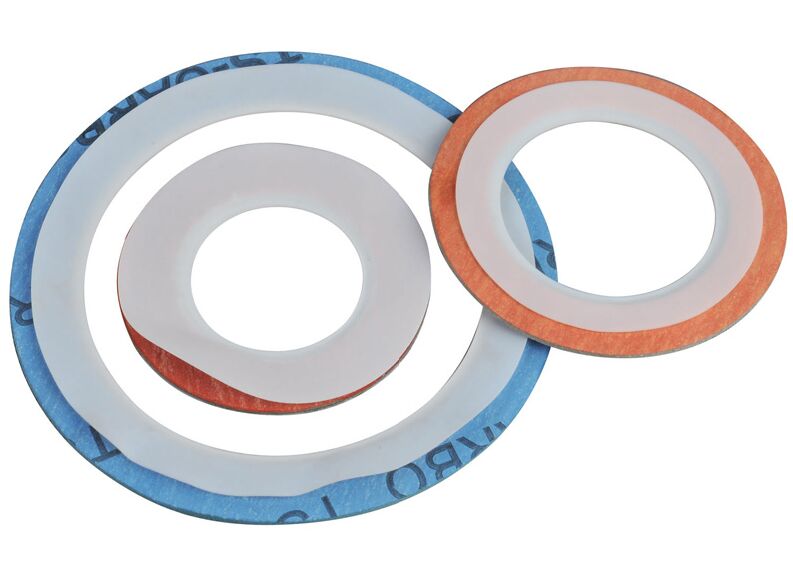
| PTFE Enveloped Gasket | 3mm (1/8") to 6mm (1/4") | Up to 600 psi (41 bar) | 125 - 500 µin Ra |
| Machined PTFE (Solid) | 3mm (1/8") and above | Varies by design; consult engineering | 63 - 125 µin Ra |
*Pressure ratings are highly dependent on flange design, bolt load, temperature, and media. Always consult Kaxite Sealing engineering for critical applications.
Q: What is the main difference between Virgin PTFE and filled PTFE gaskets?
A: Virgin PTFE is pure, unmodified PTFE offering the highest chemical resistance and purity. Filled PTFE compounds incorporate materials like glass fiber, carbon, graphite, or bronze to improve certain mechanical properties. Fillers can enhance compressive strength (creep resistance), reduce cold flow, improve wear resistance, and increase thermal conductivity. The trade-off is that some chemical resistance may be slightly reduced depending on the filler. Kaxite Sealing offers both types and can recommend the optimal material for your specific service conditions.
Q: How do I handle the "cold flow" or "creep" characteristic of PTFE in gasket applications?
A: Cold flow is the tendency of PTFE to deform slowly under sustained pressure and temperature, which can lead to a loss of sealing stress over time. This is managed through proper gasket and flange design. Key strategies include: using a thicker gasket within reason, ensuring the gasket is confined within a raised face or groove (for ring gaskets), using wider flange faces to distribute load, and most importantly, calculating and applying the correct initial bolt torque. For high-stress applications, we recommend our reinforced PTFE grades or PTFE enveloped gaskets which are specifically designed to resist cold flow.
Q: Can PTFE gaskets be used for steam service?
A: Yes, PTFE gaskets are excellent for saturated steam service within their temperature limits (up to 260°C / 500°F). They are chemically inert to steam and do not degrade. However, for high-pressure steam lines, special attention must be paid to the pressure rating of the pure PTFE sheet. For steam pressures above 150 psi, a PTFE enveloped gasket with a resilient filler or a reinforced PTFE gasket from Kaxite Sealing is often the preferred choice to ensure a stable, long-lasting seal.
Q: Are PTFE gaskets reusable?
A: Generally, PTFE gaskets are not designed to be reusable, especially full-face or sheet gaskets. During initial installation and bolt-up, the material cold flows to conform perfectly to the flange surface imperfections, creating a unique sealing profile. Disturbing the flange connection breaks this seal. While a gasket may appear undamaged, reusing it risks leakage. For applications requiring frequent disassembly, consider a different sealing approach or consult with Kaxite Sealing for specialized, reusable PTFE-based seal designs.
Q: How do I select the right thickness for a PTFE gasket?
A: Gasket thickness selection balances several factors: flange condition, pressure, bolt load, and media. Thinner gaskets (1.5mm or 1/16") offer better creep resistance but require very flat, smooth flanges. Thicker gaskets (3mm or 1/8") can compensate for minor flange irregularities or warpage and absorb more bolt elongation, but are more prone to cold flow under high stress. As a rule of thumb, standard raised-face flanges often use 1/16" or 1/8" thick ring gaskets. For specific guidance, provide flange details and service conditions to Kaxite Sealing technical support.
Q: Does Kaxite Sealing offer custom-shaped PTFE gaskets or prototypes?
A: Absolutely. A core strength of Kaxite Sealing is our ability to manufacture custom PTFE gaskets to exact specifications. We utilize advanced CNC machining, precision die-cutting, and molding techniques to produce gaskets in any shape, size, or complexity—whether it's a large tank manway gasket, a gasket with intricate internal ports, or a prototype for a new equipment design. We work from CAD drawings, samples, or detailed sketches to deliver a perfect-fit sealing solution.
Q: How should PTFE gaskets be stored and handled prior to installation?
A: PTFE is a robust material but requires sensible handling. Store gaskets in a cool, dry place away from direct sunlight and extreme heat. Keep them flat to avoid permanent bending or kinking. Avoid contact with sharp objects that could score the sealing surface. Cleanliness is paramount; ensure both the gasket and flange surfaces are clean, dry, and free of old gasket material and debris before installation. No special lubricants are needed; PTFE's low friction allows for easy placement and alignment.