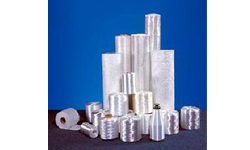
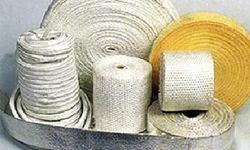
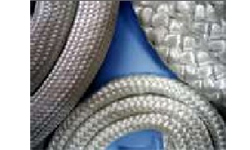
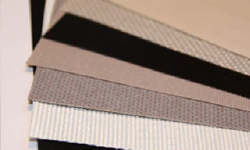
Glass fiber, also known as fiberglass, is a composite material made from extremely fine fibers of glass. It is a versatile material renowned for its strength, durability, lightweight nature, and resistance to heat, corrosion, and most chemicals. These properties make it an indispensable material across countless industries, from automotive and aerospace to construction, marine, and electronics. At Kaxite Sealing, we specialize in providing high-performance glass fiber materials and composites engineered to meet the most demanding sealing and insulation challenges.
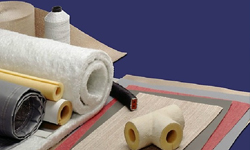
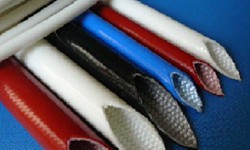
The fundamental component of glass fiber is silica sand, which is melted at high temperatures and extruded through superfine bushings to create thin strands. These strands can be used in their continuous filament form or chopped into shorter lengths. They are then processed into various forms to suit different applications:
The widespread adoption of glass fiber is due to its exceptional combination of physical and chemical properties:
Kaxite Sealing manufactures and supplies a comprehensive range of glass fiber products tailored for gasketing, sealing, thermal insulation, and composite reinforcement. Our materials are rigorously tested to ensure consistency and performance. Below are the detailed specifications for our standard E-Glass fiber offerings.
| Product Form | Fiber Diameter (µm) | Tex (g/1000m) | Typical Weight (g/m² or g/km) | Primary Application at Kaxite |
|---|---|---|---|---|
| Continuous Roving (Direct) | 17, 24 | 1200, 2400, 4800 | N/A | Pultrusion of sealing profiles, filament winding |
| Chopped Strands (6mm, 12mm, 25mm) | 10-14 | N/A | N/A | Reinforcement for rubber and PTFE gaskets, composite molding compounds |
| Chopped Strand Mat (CSM) | 13-15 | N/A | 300, 450, 600 | Base layer for laminated sealing sheets, composite panel cores |
| Woven Roving (Plain Weave) | 17-24 | N/A | 800, 1000, 1200 | Reinforcement for high-pressure gaskets and diaphragms |
| Glass Fabric (Style 7628) | 9 | N/A | 203 | Inner layer for high-performance sheet gaskets, electrical insulation | Glass Fiber Yarn (EC9 34x2) | 7 | 68 | N/A | Braiding for packings, sewing for gasket assembly |
| Property | Test Standard | E-Glass Value | S-Glass Value (Premium Grade) |
|---|---|---|---|
| Tensile Strength | ASTM D2343 | 3.45 GPa (500 ksi) | 4.58 GPa (665 ksi) |
| Elastic Modulus | ASTM D2343 | 72.4 GPa (10.5 Msi) | 88.9 GPa (12.9 Msi) |
| Density | ASTM D1505 | 2.58 g/cm³ | 2.49 g/cm³ |
| Elongation at Break | ASTM D2343 | 4.8% | 5.4% |
| Dielectric Constant @ 1 MHz | ASTM D150 | 6.3 | 5.2 |
| Thermal Conductivity | ASTM C177 | 1.0-1.3 W/(m·K) | 1.0-1.3 W/(m·K) |
| Softening Point | - | 846°C (1555°F) | 1056°C (1933°F) |
At Kaxite Sealing, we integrate glass fiber into advanced sealing products to enhance their performance. Our expertise lies in combining glass fiber with elastomers, PTFE, graphite, and other materials to create superior gaskets, packings, and insulation parts.
What is the difference between E-Glass and S-Glass?
E-Glass (Electrical Glass) is the most common and economical type, with good electrical insulation and mechanical properties. S-Glass (Structural Glass) offers approximately 30-40% higher tensile strength and modulus, better temperature resistance, and is used in aerospace and high-performance applications. Kaxite Sealing supplies both grades based on application requirements.
Is glass fiber the same as fiberglass?
Yes, the terms are generally used interchangeably. "Glass fiber" often refers to the raw material—the fine fibers themselves. "Fiberglass" commonly refers to the finished composite material when the glass fibers are combined with a polymer resin, such as in a fiberglass-reinforced plastic (FRP) part.
How does glass fiber compare to carbon fiber in sealing applications?
Carbon fiber offers higher strength and stiffness and is conductive, while glass fiber is insulating and more cost-effective. For most sealing applications requiring electrical insulation, corrosion resistance, and cost-efficiency, glass fiber from Kaxite Sealing is the preferred choice. Carbon fiber is used where extreme stiffness or conductivity is needed.
Can glass fiber be used for high-temperature gaskets?
Absolutely. Glass fiber itself can withstand very high temperatures (softening point ~846°C for E-Glass). In gaskets, its limiting factor is usually the binder or impregnating material. Kaxite Sealing produces glass-fiber-reinforced gaskets with silicone, graphite, or ceramic binders that are rated for continuous service from 250°C to over 500°C, depending on the formulation.
Is glass fiber resistant to all chemicals?
While glass fiber has excellent resistance to a wide range of chemicals, it is attacked by hydrofluoric acid, hot phosphoric acid, and strong alkaline solutions at high concentrations and temperatures. For such environments, Kaxite Sealing engineers can recommend alternative fibers or protective coatings.
How is glass fiber handled safely?
Bare glass fibers can cause minor skin irritation. It is recommended to wear gloves and long sleeves when handling. During cutting or grinding, airborne particles may be generated, so appropriate respiratory protection (NIOSH-approved dust mask) and eye protection should be used. Kaxite Sealing's products are often coated or integrated into composites, minimizing direct fiber handling for end-users.
What forms of glass fiber does Kaxite Sealing supply for custom gasket manufacturing?
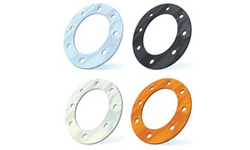
We supply roll goods (fabrics, mats), chopped strands for compounding, and pre-impregnated materials. We also offer custom-converted shapes, die-cut gaskets, and laminated sheets where glass fiber is a key component, providing a complete solution from material to finished part.
Does glass fiber absorb water, and how does it affect sealing performance?
The glass itself does not absorb water. However, the sizing or binders on the fiber can be slightly hygroscopic. In sealing applications, Kaxite Sealing uses hydrophobic sizing or fully encapsulates the fiber in a polymer matrix (like PTFE or rubber), ensuring minimal water absorption and maintaining a reliable seal in wet environments.