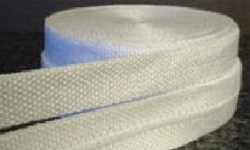
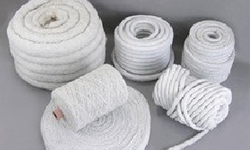
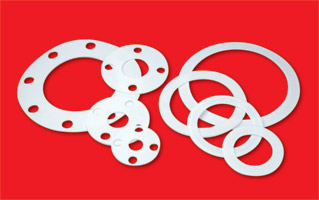
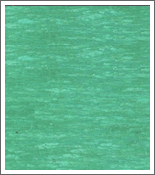
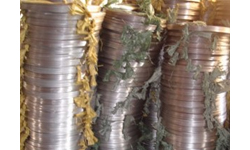
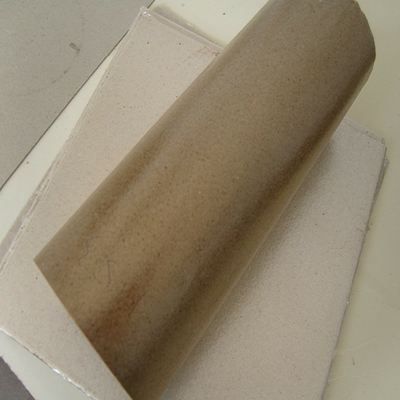
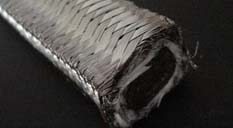
In industrial sealing and insulation, managing high-temperature, high-pressure, and chemically aggressive environments requires materials of exceptional resilience and safety. Traditional asbestos, while effective in many applications, poses significant health risks due to the potential release of airborne fibers during handling, installation, and degradation. Dust free Asbestos represents the pinnacle of material engineering, designed to eliminate this primary hazard. It is a specially processed, non-friable form of asbestos where the hazardous fibers are encapsulated within a binding matrix, typically composed of advanced polymers, resins, or elastomers. This encapsulation prevents the release of respirable dust, making the material safe to handle and install while retaining the intrinsic thermal stability, strength, and chemical resistance that made asbestos a historical industry staple. At Kaxite Sealing, we have perfected this technology, offering a next-generation sealing solution that prioritizes both unparalleled performance and workplace safety.
Choosing Kaxite Sealing's Dust free Asbestos products translates into tangible benefits for your operations, project safety, and long-term asset integrity.
Kaxite Sealing's Dust free Asbestos is engineered to meet exacting standards. Below are the detailed parameters for our flagship gasketing sheet product, KaxSeal DF-500. We offer various formulations (e.g., DF-300, DF-700) tailored for specific pressure, temperature, and media requirements.
| Parameter | Test Standard | Value / Rating | Notes |
|---|---|---|---|
| Maximum Continuous Service Temperature | ASTM D865 | 540°C (1004°F) | In oxidizing atmosphere. Short-term peaks to 600°C possible. |
| Minimum Service Temperature | - | -50°C (-58°F) | Remains flexible. |
| Maximum Pressure (Seating Stress) | - | 20,000 psi (138 MPa) | Dependent on flange design and bolting. |
| pH Range (Chemical Resistance) | ASTM F146 | 2 - 12 | Excellent resistance to most aliphatic hydrocarbons, steam, water, alcohols. Fair resistance to strong acids/alkalis. |
| Thermal Conductivity | ASTM C177 | 0.15 W/m·K @ 100°C | Provides good thermal insulation. |
| Fire Resistance | ASTM E84 | Flame Spread: 0, Smoke Developed: 0 | Non-combustible; will not contribute to fire. |
| Dust Emission (Friability) | In-house (Modified OSHA ID-160) | Negligible / Below detectable limits | Core safety feature of the dust-free technology. |
Q: Is Dust free Asbestos truly safe? How does it differ from regular asbestos?
A: Yes, when handled as intended, it is fundamentally safer. The critical difference lies in friability. Regular asbestos products are friable, meaning they can be easily crumbled by hand pressure, releasing dangerous fibers. Kaxite Sealing's Dust free Asbestos is non-friable. The fibers are locked into a resilient binder matrix, preventing them from becoming airborne during cutting, installation, or under normal service conditions. It should still be handled with good industrial hygiene practices, but the risk profile is dramatically lower.
Q: Can I use Kaxite Sealing's Dust free Asbestos gaskets as a direct replacement for compressed non-asbestos (NAF) gaskets?
A: In most cases, yes, and often with performance benefits. Our material typically offers higher temperature resistance and better creep relaxation recovery than many standard NAF materials. However, a direct substitution should always be evaluated. Check the chemical compatibility with your process media and ensure the flange design and bolting can achieve the recommended seating stress for optimal sealing. Our technical team can assist with this evaluation.
Q: What are the disposal requirements for used Dust free Asbestos gaskets or scrap material?
A: Regulations vary by country, state, and locality. Because the fibers are encapsulated and the product is classified as non-friable, it often falls under less stringent disposal rules compared to friable asbestos waste. However, it is always considered best practice and often legally required to treat it as asbestos-containing material (ACM). This typically means double-bagging in labeled, leak-tight bags and disposing at a licensed landfill that accepts ACM. You must consult with your local environmental authority for definitive disposal procedures.
Q: Does the encapsulation binder break down at high temperatures, releasing fibers later?
A: No. Kaxite Sealing's proprietary binder system is engineered for thermal stability. It is designed to carbonize slowly at extreme temperatures, forming a stable char that continues to encapsulate the fibers, rather than disintegrating into dust. This is a key factor in the material's certification for continuous service at 540°C. The transition is gradual and does not result in a sudden release of fibers.
Q: For what applications is your Dust free Asbestos most suitable?
A: It is an excellent choice for demanding static sealing applications across industries such as:
Q: How do I order custom shapes or sizes not listed in your standard inventory?
A: Kaxite Sealing specializes in custom fabrication. Simply provide us with a detailed drawing (PDF, DWG, DXF) or a sample part. Our engineering team will review it for manufacturability and provide a quotation. We utilize precision die-cutting, CNC water-jet cutting, and laser cutting to produce gaskets to exact specifications with clean, dust-free edges.