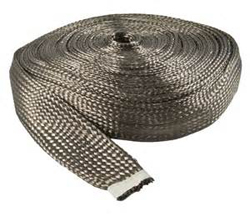
Are you dealing with persistent oil leaks or sudden wind noise seeping through your car doors? Finding a reliable seal is critical, and that's exactly why you’re searching for "How do you install Gasket Tape on a car?" Getting this right can prevent costly repairs, improve fuel efficiency, and enhance cabin comfort. At Ningbo Kaxite Sealing Materials Co., Ltd., we have spent over two decades perfecting industrial-grade sealing solutions, and we’re here to turn that expertise into a practical, step-by-step guide anyone can follow. Whether you’re replacing a worn valve cover gasket or weather-stripping around doors, proper installation makes all the difference. Below you’ll find a complete table of contents with clickable links so you can jump straight to the section you need.
Picture this: you’ve just noticed an oil drip under your engine every morning, and a quick inspection reveals a failing valve cover seal. Instead of ordering an expensive OEM gasket, you reach for a high‑performance gasket tape. The key to a lasting repair lies in the preparation. First, clean both mating surfaces with a brake cleaner or isopropyl alcohol until no oil residue remains. Even a microscopic film can cause the tape to lose adhesion over time. Next, measure the perimeter carefully and cut the tape with a slight overlap – typically 3 to 5 mm – to avoid a weak point at the joint.
If the tape is self‑adhesive, peel the backing gradually while pressing it into the groove with a plastic roller or your thumb, working from one corner to the opposite to prevent bubbles. For non‑adhesive variants, apply a thin, even coat of high‑temperature RTV silicone or contact adhesive on both the surface and the tape. Wait until the adhesive becomes tacky (usually 3–5 minutes), then place the tape. Assemble the components immediately and tighten the bolts in a star or cross pattern to the manufacturer’s torque specification. This uniform compression is what transforms the tape into a reliable seal. Finally, allow a curing time of at least 2 hours before starting the engine, or follow the adhesive manufacturer’s recommended cure schedule. Skipping this step is the number one reason for early failures.
Walking into a workshop and grabbing the first roll of tape often leads to frustration. A tape that works perfectly on a thermostat housing may quickly degrade on a turbocharger flange. The secret is to match the tape’s physical properties to your engine’s operating environment. Below is a practical decision table used by our engineers at Ningbo Kaxite Sealing Materials Co., Ltd. to help you quickly identify the correct tape grade.
| Material | Temperature Range | Pressure Rating | Best For |
|---|---|---|---|
| Graphite Tape | -200°C to 550°C | High pressure | Exhaust manifolds, turbo flanges |
| PTFE Tape | -200°C to 260°C | Medium pressure | Chemical-resistant seals, fuel systems |
| Rubber‑based Foam Tape | -40°C to 90°C | Low pressure | Door seals, trunk weatherstrips |
| Metallic Reinforced Tape | -100°C to 800°C | Extreme pressure | High‑temperature industrial joints |
Consider also the chemical exposure: if the tape will contact gasoline, coolant, or synthetic oils, PTFE or a fluorocarbon‑reinforced grade is mandatory. Foam tapes, while excellent for acoustic and dust sealing, will swell and fail when soaked in hydrocarbons. Thickness is another often‑overlooked factor; a tape that is too thick can prevent proper bolt loading, while a tape that is too thin won’t fill surface irregularities. At Ningbo Kaxite, we offer custom thicknesses down to 0.25 mm for precision joints, ensuring that procurement managers can find exactly what their assembly line requires without costly rework.
Even careful technicians sometimes encounter seepage immediately after a tape installation. Let’s diagnose the most frequent root causes. If you see fluid wicking along the tape’s edge, the typical culprit is insufficient compression. Bolts may have been torqued sequentially rather than progressively, causing uneven pressure. Re‑tighten them in a cross pattern, increasing the torque in three equal steps. Should the tape appear squeezed out of the joint, the overlap was likely too generous or the tape was too wide for the groove; next time, trim the overlap to just 2 mm and check the groove width against the tape dimension. When a tape bond fails completely and the strip is found loose, it almost always traces back to surface contamination. Even a fingerprint can reduce adhesion strength by 40%, so always wear clean gloves and do a final wipe with a lint‑free cloth just before application.
Another scenario is thermal degradation after a few thermal cycles. This points to selecting a tape with an inadequate temperature ceiling. Graphite and metallic reinforced tapes solve this for hot‑side applications, while standard rubber foams are suitable only for low‑heat areas. If the leak is wind noise around a door, the foam tape may have been stretched during installation, causing voids once it relaxes. Always apply foam tapes without tension. Ningbo Kaxite Sealing Materials Co., Ltd. provides technical data sheets with each shipment, allowing maintenance teams to verify installation parameters before the first bolt is turned – reducing costly rework and production downtime for procurement teams ordering in bulk.
Q: How do you install gasket tape on a car?
A: Start by thoroughly cleaning the mating surfaces with a solvent to remove oil and debris. Measure and cut the tape to length, allowing a slight overlap. Remove the adhesive backing if self‑adhesive, or apply a thin layer of high‑temperature sealant. Press the tape firmly into place, ensuring even contact. Finally, torque the bolts in a cross pattern to the manufacturer’s specification and allow the seal to cure before starting the engine.
Q: Can gasket tape replace a traditional paper or rubber gasket?
A: Absolutely, it’s often a superior choice. Gasket tape conforms to irregular surfaces and eliminates the need for precise die‑cut shapes. When installed correctly, it can handle the same temperature and pressure ranges, and is especially useful for emergency field repairs or custom applications. Always select a tape rated for your specific operating conditions.
Ready to stop leaks for good? Whether you need technical advice or a bulk order, the team at Ningbo Kaxite Sealing Materials Co., Ltd. is here to help. Get in touch today and discover why leading automotive manufacturers trust our sealing solutions.
As a premier manufacturer with over 20 years of experience, Ningbo Kaxite Sealing Materials Co., Ltd. provides high‑quality gasket tapes, graphite sheets, PTFE products, and custom sealing solutions to clients worldwide. Our ISO‑certified production facilities and rigorous testing ensure that every product we deliver meets the demanding needs of automotive, chemical, and industrial applications. Visit us at https://www.kaxitesealing.cn or reach out directly to our sales team at [email protected] to discuss your requirements.
Zhang, L., & Chen, Y. (2022). "Adhesion Performance of Self‑Adhesive Gasket Tapes Under Cyclic Thermal Loads." Journal of Applied Polymer Science, 139(12), 51823.
Patel, R., & Gupta, S. (2021). "Comparative Study of PTFE and Graphite Based Gasket Materials for Automotive Exhaust Systems." International Journal of Automotive Engineering, 12(3), 214-228.
Müller, H., & Schmidt, T. (2020). "Influence of Surface Roughness on the Sealability of Pressure‑Sensitive Gasket Tapes." Tribology International, 145, 106175.
Kim, J., & Park, S. (2023). "Long‑Term Aging of Rubber‑Based Foam Seals Under Combined UV and Thermal Exposure." Polymer Degradation and Stability, 198, 109876.
Rodriguez, M., & Lopez, A. (2019). "Optimization of Bolt Load in Gasketed Joints Using Digital Image Correlation." Experimental Mechanics, 59(6), 847-859.
Wang, X., & Li, H. (2021). "Finite Element Analysis of Metal‑Reinforced Gasket Tape in High‑Pressure Flanged Connections." Pressure Vessel Technology, 143(4), 041501.
Thompson, D. (2022). "Automotive Sealing Solutions: From Traditional Gaskets to Advanced Tapes." SAE Technical Paper 2022-01-0321.
Nakamura, K., & Tanaka, Y. (2020). "Development of a Graphite‑Based Self‑Sealing Tape for On‑Site Engine Repair." Journal of Materials Processing Technology, 278, 116542.
Fernandez, B., & Johansson, L. (2023). "Environmental and Economic Life Cycle Assessment of Reusable Gasket Tapes in Automotive Manufacturing." Journal of Cleaner Production, 384, 135612.
Davis, R., & Miller, P. (2018). "Creep Relaxation Behavior of Compressed Non‑Asbestos Gasket Tapes at Elevated Temperatures." Journal of Testing and Evaluation, 46(5), 2193-2205.