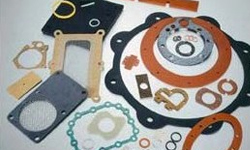
What Are the Advantages of FKM Rubber Gaskets? If you have ever stood on a plant floor at two in the morning watching a maintenance crew tear down a hydraulic unit because a seal failed, you already know why this question matters far more than it sounds. A single leaking gasket can stop a production line, put operators near hot oil or aggressive chemicals, trigger a compliance finding during an audit, and push a customer order past its promised delivery window. Procurement teams who type that question into a search bar usually arrive with the same unspoken concern: is FKM genuinely worth paying more for than NBR, EPDM or PTFE, or is it an expensive habit? The honest answer is that FKM earns its price in applications involving heat, fuels, lubricating oils, aggressive chemicals and repeated thermal cycling, and it is a poor choice in mild service where a cheaper elastomer will do the same job for years. The real answer depends on what fluorine rubber actually does inside your equipment, how it behaves after thousands of heat cycles, how much it deforms under compression, and how carefully a supplier documents the compound before you sign a purchase order. Get those four things right and the gasket becomes a boring, invisible part that never appears in your downtime report. Get them wrong and the cheapest quote on your desk becomes the most expensive order of the quarter. This guide explains the practical advantages in plain language, shows the parameters worth checking on a datasheet, and explains how an experienced manufacturer such as Ningbo Kaxite Sealing Materials Co., Ltd. supports buyers through specification review, sampling and repeat production.
Jump straight to the section you need:
The scenario is almost always the same. A purchasing team orders seals for a hydraulic power unit, a pump housing or a heat exchanger flange. The original specification says "rubber gasket" and nothing more. Six weeks after installation the seals have swollen, softened and started weeping oil onto the floor. Maintenance shuts the line down, quality opens a non-conformance report, and the replacement order will not arrive for another ten days. The gasket itself cost less than two dollars. The downtime, the labour, the cleanup and the customer apology cost thousands.
This is where FKM, also called fluorine rubber or by the trade name Viton, changes the calculation. FKM is a fluorinated elastomer built on a backbone of carbon and fluorine bonds, and that bond is one of the strongest in organic chemistry. The result is a material that resists swelling in oils and fuels, holds its mechanical strength at continuous temperatures that would destroy nitrile, and survives long exposure to acids, solvents and steam condensate. Buyers do not pay for the polymer out of preference; they pay because the failure mode they are trying to eliminate is expensive. The comparison below shows where each common sealing material sits.
| Material | Continuous Service Temperature | Oil and Fuel Resistance | Acid and Solvent Resistance | Relative Cost Index | Best Fit |
|---|---|---|---|---|---|
| NBR | -30 °C to +100 °C | Good | Poor | 1.0 | General hydraulic and pneumatic seals |
| EPDM | -40 °C to +120 °C | Poor | Good | 1.1 | Water, steam and outdoor weather exposure |
| Silicone (VMQ) | -60 °C to +200 °C | Moderate | Moderate | 1.8 | Very low temperature and dry heat |
| FKM | -20 °C to +200 °C (short peaks to 230 °C) | Excellent | Very good | 4.0 to 6.0 | Fuels, oils, hot chemicals and engine sealing |
| PTFE | -200 °C to +260 °C | Excellent | Excellent | 3.0 to 5.0 | Chemical plants, but low elasticity |
The table answers the first half of the buying question. FKM sits in the high-performance band, and the cost index reflects that. The second half of the question is whether your application actually reaches those conditions. If the seal only ever sees water at 40 °C, EPDM is the smarter purchase. If it sees ATF, diesel, glycol coolant or vapour-phase solvents above 120 °C, FKM is usually the only material in the list that will still be sealing after a full maintenance interval.
Picture an engine test cell in July. The air is hot, the equipment is hotter, and a gasket on the oil cooler flange has to survive thousands of cycles between cold soak and operating temperature. Nitrile seals harden, lose elongation and take a permanent set; once the compression set is gone, the seal stops following the flange movement and a leak begins. EPDM, meanwhile, absorbs oil until it swells and extrudes out of the groove. Either failure leads to the same result: a test cancelled, a rig stripped down and a schedule slipping.
FKM handles this combination because fluorine content, typically between 65 and 70 percent in standard grades, shields the polymer chain from oxidation and from attack by hydrocarbon fluids. The material keeps most of its tensile strength and elongation after long ageing in hot air, resists swelling in mineral oils, transmission fluids, diesel and biodiesel blends, and remains stable in many dilute acids and alkaline solutions. For aggressive chemical service, specialty grades with higher fluorine content or with a peroxide cure system extend the envelope further, including steam and amine-resistant compounds.

For a buyer, the practical value is not the chemistry itself but the fact that the specification can be written once and trusted across a product family. One approved FKM compound can cover the engine gasket, the oil cooler seal and the fuel pump diaphragm on the same platform, which simplifies inventory, reduces the number of supplier approvals and removes a common source of field failure. The parameters below are the ones worth requesting from any supplier.
| Parameter | Typical FKM Range | Reference Test Method | Why a Buyer Should Care |
|---|---|---|---|
| Hardness | 60 to 90 Shore A | ASTM D2240 / ISO 7619-1 | Controls seating force and groove fill |
| Tensile strength | 8 to 15 MPa | ASTM D412 / ISO 37 | Indicates resistance to extrusion and tearing |
| Elongation at break | 150 to 300 percent | ASTM D412 / ISO 37 | Shows ability to follow flange movement |
| Compression set, 70 h at 200 °C | 15 to 30 percent | ASTM D395 Method B | Predicts long-term sealing force retention |
| Volume swell in IRM 903 oil | 0 to 5 percent | ASTM D471 | Confirms oil resistance for the actual fluid |
| Low temperature resistance | -20 °C typical, -40 °C for specialty grades | ASTM D1329 | Critical for cold-start sealing performance |
Two details in that table decide most field outcomes. The first is compression set, because a seal that takes a permanent set stops pressing against the flange. The second is volume swell in the specific fluid, tested at the specific temperature, not in a generic oil. A supplier who provides both numbers with the test conditions attached is a supplier who understands how gaskets actually fail.
Consider the maintenance engineer who replaces the same flange gasket every eight months. Nothing appears broken. The torque is correct, the flange faces are flat, and yet the leak returns on schedule. In most of these cases the material is not chemically incompatible; it has simply lost its elastic memory. Under constant compression at elevated temperature, the polymer chains relax, the seal flattens, and the contact stress drops below the threshold needed to hold back the fluid. The failure is mechanical fatigue, not chemical attack.
FKM resists that relaxation better than most general-purpose elastomers, and the effect can be quantified before a single part is moulded. A compound with a compression set below 25 percent after 70 hours at 200 °C will usually maintain sealing force far longer than a nitrile compound that reads 40 percent or more under the same test. For buyers, this converts directly into a maintenance interval and a spare parts plan. If a seal lasts three times longer, the annual spend on that part drops even though the unit price rose, and the labour and downtime associated with the replacement disappear entirely.
| Service Condition | NBR Sealing Life | FKM Sealing Life | Commercial Effect |
|---|---|---|---|
| Oil at 100 °C, continuous | 6 to 12 months | 3 to 5 years | Fewer scheduled shutdowns |
| Oil at 150 °C, continuous | Not recommended | 1 to 3 years | Enables high-temperature designs |
| Fuel and fuel vapour | Moderate to poor | Excellent | Meets evaporative emission demands |
| Steam condensate | Poor | Good with specialty grade | Fewer flange re-torques |
One caution belongs here. FKM is not the answer to every low-temperature problem. Standard grades stiffen below about -20 °C, so cold-climate applications should specify a low-temperature grade or a different polymer entirely. Good suppliers will say so rather than sell the premium material into a duty it cannot handle.
A purchasing manager receives three quotes. The FKM option costs four times the NBR option per piece, and the budget owner pushes back immediately. What the spreadsheet rarely shows is the cost of the second purchase: the emergency air freight, the overtime for the maintenance crew, the scrapped batch, the customer credit note. When those numbers are entered next to the unit price, the ranking often flips. The table below is the one worth building before the next supplier review.
| Cost Element | Low-Cost Elastomer | FKM Gasket | Notes for Buyers |
|---|---|---|---|
| Unit price | Low | Higher | Only one line of the total cost |
| Replacement frequency | High | Low | Drives labour and downtime cost |
| Downtime per failure | Frequent events | Rare events | Usually the largest single cost |
| Inventory complexity | Many part numbers | Consolidated compounds | Lower carrying cost and fewer SKUs |
| Compliance risk | Higher | Lower | Fewer audit findings and recalls |
| Lead time | Short for stock items | Planned with tooling and sampling | Agree a schedule with the supplier |
Lead time deserves its own paragraph. FKM compounds usually require controlled mixing, a defined cure cycle and post-curing, so a serious supplier will ask for time to validate the tool and the first article. That sounds like a delay until the first emergency arrives; after that it looks like insurance. Ningbo Kaxite Sealing Materials Co., Ltd. handles this stage with sample approval and documented first-article inspection, so the production order runs on a proven process rather than on hope.
FKM offers a much wider temperature range, roughly -20 °C to +200 °C against -30 °C to +100 °C for NBR, and far better resistance to swelling in fuels, oils and aggressive chemicals. It also holds sealing force longer at high temperature, which means fewer replacements over the life of the equipment. NBR remains a sensible choice for mild oil and air service where cost and low-temperature flexibility matter more.
Standard FKM grades are only moderately resistant to steam and hot water, but specialty compounds with higher fluorine content and appropriate cure systems perform well in steam condensate and hot water service. Buyers should state the temperature, the water chemistry and the cycle frequency so the correct grade can be selected rather than assumed.
Standard grades typically remain flexible to about -20 °C. For colder duty, low-temperature FKM grades extend the range toward -40 °C, and in some very cold applications a different elastomer such as silicone may be the better engineering choice. A supplier should confirm the low-temperature requirement before quoting.
The uncomfortable truth about gaskets is that two suppliers can both quote "FKM 70 Shore A" and deliver materials that behave completely differently in service. The difference lies in compound formulation, filler quality, cure system and process control, and none of that appears on a price list. A buyer who checks five points before the first production order avoids almost every unpleasant surprise.
| Checkpoint | What to Request | Red Flag |
|---|---|---|
| Compound identification | Written compound code and material datasheet | Generic "rubber" description only |
| Physical properties | Hardness, tensile strength, elongation, compression set with test conditions | Numbers without test methods |
| Fluid compatibility | Volume swell data in the actual service fluid | References to "oil resistant" with no data |
| Quality system | ISO 9001 certification and inspection records | No traceability from batch to shipment |
| Sampling process | First article sample with dimensional report | Refusal to provide samples before payment |
This checklist also filters out the middlemen who cannot answer technical questions. A manufacturer that produces its own compounds and moulds will respond with data, not adjectives, and will flag the applications where FKM is the wrong choice.
FKM resists swelling and permeation in petrol, diesel and biodiesel blends, and it retains elasticity across the wide temperature swings found in engine compartments. That combination supports emissions compliance, keeps fuel system pressure stable, and reduces the risk of leaks at flanges and injector seals over long service intervals.
PTFE wins when chemical resistance and very high temperature are the only priorities, but it is stiff and does not recover well under compression. FKM is preferable wherever elastic recovery is needed, such as flanges that flex or equipment that cycles in temperature. For the most demanding chemical duty, a perfluoroelastomer may be the correct compromise between the two.
State the compound code, the hardness, the fluid and concentration, the operating temperature range, the compression set requirement with method and duration, and the dimensional standard the part must meet. Clear specifications protect both sides and make incoming inspection straightforward.
Most buyers do not need a lecture on polymer chemistry; they need a supplier who answers emails, sends a sample that matches the drawing, and repeats the same compound three years later. Ningbo Kaxite Sealing Materials Co., Ltd. was built around that expectation. The company manufactures FKM, NBR, EPDM, silicone and PTFE sealing products, supports compound selection against real service conditions, and works with purchasing teams on prototypes, first-article approval and repeat production. Whether the requirement is a standard flange gasket, a moulded profile or an O-ring in a non-standard dimension, the team reviews the application before quoting so that the specification, not the price list, drives the recommendation.
Ningbo Kaxite Sealing Materials Co., Ltd. helps procurement teams replace guesswork with documented material data, verified dimensions and dependable lead times, so that a gasket stops being a recurring maintenance problem and becomes an ordinary consumable. Buyers are welcome to send drawings, operating conditions or existing samples for evaluation through [email protected], and further technical and product information is available at https://www.kaxitesealing.cn.
Logothetis, A. L., 1989, Chemistry of fluorocarbon elastomers, Progress in Polymer Science, Vol. 14, No. 2.
Ameduri, B., Boutevin, B., Kostov, G., 2001, Fluoroelastomers: synthesis, properties and applications, Progress in Polymer Science, Vol. 26, No. 1.
Taguet, A., Ameduri, B., Boutevin, B., 2005, Crosslinking of vinylidene fluoride-containing fluoropolymers, Advances in Polymer Science, Vol. 184.
Mitra, S., Ghanbari-Siahkali, A., Kingshott, P., Rehmeier, H. K., Abildgaard, H., Almdal, K., 2008, Chemical degradation of fluoroelastomer in an alkaline environment, Polymer Degradation and Stability, Vol. 93, No. 6.
Kader, M. A., Bhowmick, A. K., 2003, Thermal ageing, degradation and swelling of acrylate rubber, fluororubber and their blends containing polyfunctional acrylates, Polymer Degradation and Stability, Vol. 79, No. 2.
Arcella, V., Ferro, R., 1997, Fluorocarbon elastomers, Modern Fluoropolymers, Wiley Series in Polymer Science, Chapter 2.
Moore, A. L., 2006, Fluoroelastomers Handbook: The Definitive User's Guide, Plastics Design Library, William Andrew Publishing, 1st Edition.
ASTM D2000-12, 2012, Standard Classification System for Rubber Products in Automotive Applications, ASTM International, West Conshohocken, PA.
ASTM D395-18, 2018, Standard Test Methods for Rubber Property, Compression Set, ASTM International, West Conshohocken, PA.
ISO 3601-1:2012, 2012, Fluid power systems, O-rings, Part 1: Inside diameters, cross-sections, tolerances and designation codes, International Organization for Standardization, Geneva.
-