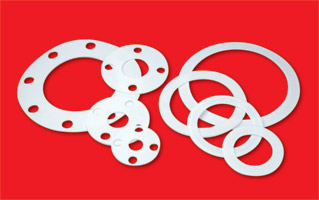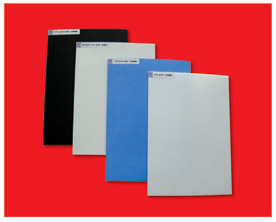
PTFE Modified Material – High-Performance Filled PTFE Compounds for Demanding Sealing Applications
Kaxite Sealing's PTFE Modified Material is a family of filled PTFE compounds engineered to overcome the limitations of virgin PTFE. While pure PTFE offers outstanding chemical resistance and a wide service temperature range (-200°C to +260°C), it suffers from high creep under load, low wear resistance, and poor thermal conductivity. By compounding PTFE suspension resin with precisely controlled fillers — glass fiber, carbon fiber, graphite, molybdenum disulfide (MoS₂), barium sulfate (BaSO₄), bronze, or polyphenylene sulfide (PPS) — we deliver materials with significantly improved mechanical, thermal, and tribological properties.
Every batch is manufactured in our Ningbo facility under an ISO 9001:2015 certified quality management system, with full material traceability and mill test certificates available on request. Custom formulations, filler ratios, and finished forms (sheet, rod, tube, machined parts) are available for OEM and MRO projects.
The performance of modified PTFE depends on the type and percentage of filler. The table below summarizes the most common formulations and their typical applications.
| Filler Type | Typical Ratio | Key Property Improvement | Recommended Application |
|---|---|---|---|
| Glass Fiber | 15% / 25% | Compression strength, wear resistance, dimensional stability | Hydraulic seals, piston rings, valve seats |
| Carbon Fiber | 25% / 40% | Load-bearing capacity, thermal conductivity, creep resistance | Bearings, high-load seals, pump components |
| Graphite | 5% / 15% | Friction reduction, thermal conductivity | Dynamic seals, guide rings, compressor parts |
| Carbon + Graphite | 25% / 5% | Combined wear resistance and low friction | Mechanical seals, sliding bearings |
| Molybdenum Disulfide (MoS₂) | 5% | Sliding properties, wear resistance under high load | Machine tool guideways, linear bearings |
| Barium Sulfate (BaSO₄) | 15% / 25% | Chemical resistance, dimensional stability, surface finish | Chemical pump parts, food-grade seals |
| Bronze | 40% / 60% | Thermal conductivity, compression strength, wear resistance | High-load bearing pads, hydraulic pistons |
| Polyphenylene Sulfide (PPS) | 10% / 20% | Dimensional stability, stiffness, chemical resistance | Precision seals, semiconductor components |
| Property | Virgin PTFE | Glass-Filled PTFE (25%) | Carbon-Filled PTFE (25%) |
|---|---|---|---|
| Compression Strength (MPa) | ~12 | ~20 | ~22 |
| Deformation Under Load (%) | ~10 | ~2.5 | ~2.0 |
| Wear Resistance (K-factor) | High wear | 3× better than virgin | 5× better than virgin |
| Thermal Conductivity (W/m·K) | ~0.25 | ~0.40 | ~0.55 |
| Friction Coefficient (dry, dynamic) | 0.05–0.10 | 0.15–0.20 | 0.10–0.15 |
| Continuous Service Temp. (°C) | -200 to +260 | -200 to +260 | -200 to +260 |
| Chemical Resistance | Excellent | Good (not for HF, hot alkalis) | Excellent |
| Base Resin | PTFE Suspension Resin (virgin grade) |
| Available Fillers | Glass fiber, glass microsphere, carbon fiber, graphite, MoS₂, BaSO₄, bronze, PPS, alumina, mica |
| Filler Ratio Range | 5% to 60% (custom ratios available) |
| Processing Method | Compression molding, isostatic molding, skiving |
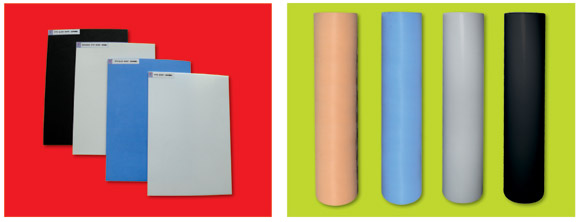
| Available Forms | Sheet (thickness 0.5–50 mm), Rod (Ø 5–300 mm), Tube (OD 10–500 mm), Custom machined parts |
| Color | White, Grey, Black, Bronze (varies by filler) |
| Density | 2.1–3.0 g/cm³ (filler dependent) |
| Continuous Service Temperature | -200°C to +260°C |
| Short-Term Peak Temperature | Up to +300°C |
| Tensile Strength (ASTM D4745) | 15–30 MPa (filler dependent) |
| Elongation at Break | 100%–300% (filler dependent) |
| Hardness (Shore D) | 55–70 (filler dependent) |
| Dielectric Strength | 20–60 kV/mm (filler dependent) |
PTFE modified materials are selected when virgin PTFE does not meet the mechanical or thermal demands of the application. Kaxite's filled PTFE compounds are used across a broad range of industries:
Filled PTFE is a preferred material for mechanical seal faces, pump wear rings, and valve seats due to its low friction, chemical resistance, and ability to operate in dry-running conditions. Carbon-filled and graphite-filled grades are particularly effective for high-PV (pressure × velocity) seal applications.
In chemical pumps, vessels, and piping systems, glass-filled and BaSO₄-filled PTFE components resist attack from acids, alkalis, solvents, and oxidizing media. See our PTFE sheet and PTFE rod range for standard forms.
MoS₂-filled and graphite-filled PTFE provides low-friction, stick-slip-free sliding surfaces for CNC machine tool guideways, linear bearings, and bridge construction support sliders. The material reduces wear on the mating metal surface and extends service life.
PPS-filled and glass-filled PTFE maintain dielectric strength and dimensional stability under thermal cycling, making them suitable for PTFE insulation components and semiconductor handling parts.
FDA-compliant grades of white PTFE modified material are available for food-contact seals, gaskets, and pump components. Contact our engineers for the specific formulation that meets your regulatory requirements.
 |
Kaxite Sealing manufactures PTFE modified materials in our Ningbo, China facility under an ISO 9001:2015 certified quality management system. Our production process includes:
Mill test certificates (MTC) are issued for every batch, and third-party inspection (SGS, BV, TUV) is available on request.
PTFE modified material is made from PTFE suspension resin with fillers such as glass fiber, glass microsphere, graphite, barium sulfate (BaSO₄), carbon fiber, molybdenum disulfide (MoS₂), or polyphenylene sulfide (PPS). The fillers improve specific properties like wear resistance, compression strength, thermal conductivity, and dimensional stability compared to pure PTFE.
Virgin PTFE has excellent chemical resistance but low wear resistance and high creep under load. Modified PTFE adds fillers to improve mechanical properties: glass fiber increases compression strength and wear resistance by approximately 3×; carbon fiber improves thermal conductivity and load-bearing capacity by 5×; graphite reduces friction; MoS₂ improves sliding properties. Modified PTFE is preferred for dynamic seals, bearings, and high-load applications where virgin PTFE would deform or wear out prematurely.
PTFE modified material has a continuous service temperature range of -200°C to +260°C. Short-term exposure can withstand up to +300°C. Fillers such as glass fiber or carbon fiber do not significantly change the temperature range but improve mechanical performance at elevated temperatures by reducing creep and improving dimensional stability.
The selection depends on the application. For high-load bearings and seals, choose carbon fiber or bronze-filled PTFE. For low-friction sliding surfaces, choose graphite or MoS₂-filled PTFE. For chemical resistance at moderate loads, choose glass-filled or BaSO₄-filled PTFE. For food or pharmaceutical applications, choose white glass-filled or virgin-compliant FDA grades. Contact our engineering team for a consultation on your specific requirements.
Yes. Kaxite Sealing provides custom PTFE modified materials with customizable filler types and ratios, including 15% or 25% glass fiber, 25% or 40% carbon fiber, 5% or 15% graphite, 5% MoS₂, 40% or 60% bronze, and other custom formulations. Submit your specification via our inquiry form for a same-day quote.
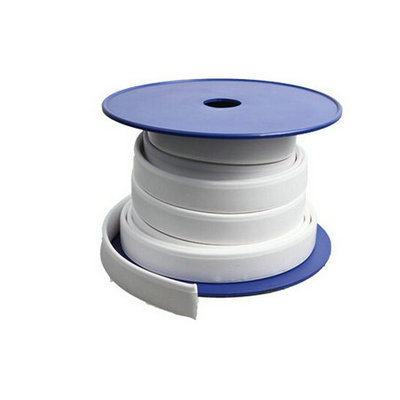
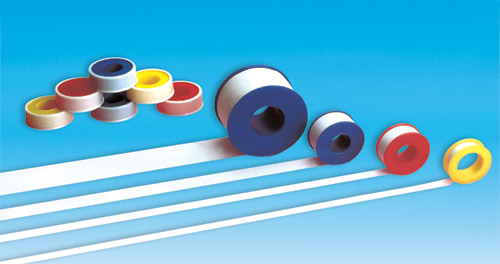
Kaxite supplies PTFE modified material in sheet form (thickness 0.5–50 mm), rod form (Ø 5–300 mm), tube form (OD 10–500 mm), and custom machined parts per customer drawings. Finished components such as PTFE seals, bearings, and diaphragms are also available.
Yes. Mill test certificates (MTC) are issued for every batch, including density, tensile strength, elongation, and hardness data. FDA, RoHS, and REACH compliance documents are available on request. Third-party inspection (SGS, BV, TUV) can be arranged for large orders.
Send us your filler type, ratio, dimensions, and application details — our engineering team will respond within 2 business hours with pricing, lead time, and technical recommendations.
Address
No 432 Zhenhai Middle Road, Luotuo Street, Zhenhai District, Ningbo City, Zhejiang China