What protective equipment is needed for asbestos dust? If you're a procurement professional sourcing safety gear, this question isn't just academic—it's a critical operational and legal concern. Asbestos fibers, when inhaled, pose severe long-term health risks, making proper protection non-negotiable. The right equipment creates a safe work environment, ensures regulatory compliance, and protects your company from liability. However, navigating the specifications and standards for effective asbestos abatement can be complex. This guide cuts through the complexity, providing a clear, actionable framework for procurement decisions. We'll detail the essential personal protective equipment (PPE) and engineering controls, highlight common pitfalls, and introduce reliable solutions from trusted manufacturers like Ningbo Kaxite Sealing Materials Co., Ltd. to ensure your teams are fully protected.
Article Outline
Imagine a maintenance crew entering a boiler room for routine repairs. Unknown to them, old insulation lining the pipes is degrading, releasing invisible asbestos fibers into the air. Without proper respiratory protection, these workers are inhaling a carcinogen. The scenario underscores a common procurement failure: sourcing generic dust masks instead of equipment rated for asbestos. Standard masks offer zero protection against microscopic asbestos fibers. This gap leaves workers vulnerable and organizations exposed to massive regulatory fines and litigation. The solution is a dedicated, certified protective system designed specifically for asbestos dust.
For reliable respiratory safety, procurement must focus on NIOSH-approved P100 (HEPA) filters. These are the minimum standard. A half-face or full-face respirator with tight-fitting seals and P100 cartridges is essential. For higher exposure scenarios, powered air-purifying respirators (PAPRs) provide superior protection and comfort. Complementing this, high-quality protective clothing is non-negotiable. Disposable coveralls, like those manufactured with durable, fiber-shed-resistant materials, prevent asbestos from clinging to personal clothing. Sealed seams, attached hoods, and boot covers are critical features. Sourcing from a specialized provider like Ningbo Kaxite Sealing Materials Co., Ltd. ensures you get garments and materials engineered for this specific hazard, not just generic coveralls.
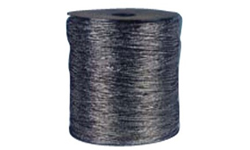
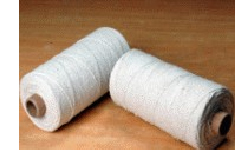 Dusted Asbestos Yarn - Highlighting the need for full containment and protection" />
| Equipment | Minimum Required Standard | Key Procurement Parameter |
|---|---|---|
| Respirator Filter | NIOSH P100 (HEPA) | Assigned Protection Factor (APF) of 10 (half-face) or 50 (PAPR) |
| Protective Coverall | Type 5 (EN 14325) / ASTM F1671 | Material strength, sealed seams, attached hood & boot covers |
| Gloves | Heavy-Duty Nitrile or Rubber | Long cuff to overlap sleeve, abrasion resistance |
| Footwear | Disposable Boot Covers or Dedicated Safety Boots | Non-skid sole, chemical resistance |
Procurement's goal is to assemble a complete defense system. Let's break down the full kit. Starting from the top: eye protection is often overlooked. Safety goggles with a tight seal prevent fibers from irritating the eyes, a potential exposure route. They must be compatible with the chosen respirator. Next, the respiratory system itself requires a fit test for each wearer—a one-size-fits-all approach fails. Procure a range of sizes and models to ensure a proper seal for all facial structures. The torso and limbs are protected by the coverall, but the closure system is vital. Zippers must have storm flaps, and closures should be tape-sealed during use to prevent any ingress.
Hands and feet are high-contact areas. Gloves must be durable enough to handle rough surfaces without tearing. Long cuffs that tuck under the coverall sleeve are mandatory to prevent fibers from traveling up the arm. Similarly, footwear protection involves either disposable boot covers taped to the coverall legs or dedicated washable boots left in the decontamination area. A key part of the system is the decontamination process, which requires specialized wipes and HEPA vacuums for cleaning PPE before removal. Sourcing a coordinated kit from a single, knowledgeable supplier simplifies logistics and ensures compatibility. Ningbo Kaxite Sealing Materials Co., Ltd. offers comprehensive sealing and protective material solutions that integrate seamlessly into such safety protocols, providing the reliable barriers needed at every point of potential exposure.
| Body Zone | Protective Equipment | Critical Feature for Asbestos |
|---|---|---|
| Head & Face | Full-Face Respirator w/P100 or PAPR | Full face seal, anti-fog lens, NIOSH approval |
| Torso & Limbs | Disposable Coverall (Type 5) | Sealed seams, attached hood, durable fabric |
| Hands | Heavy-Duty Nitrile Gloves | Extended cuff (≥ 12 inch), textured grip |
| Feet | Disposable Boot Covers | Non-skid sole, elastic ankle for seal |
| Decontamination | HEPA Vacuum, Wet Wipes | Designed for hazardous dust cleanup |
PPE is the last line of defense. Effective asbestos safety requires engineering controls to minimize airborne dust at the source. Procurement's role extends to equipment that facilitates containment and negative air pressure. Critical items include portable HEPA-filtered negative air machines, which create a pressure differential to keep fibers within a designated work area. Similarly, durable plastic sheeting and specialized sealing tapes are needed to construct airtight containment barriers. The quality of these sealing materials directly impacts containment effectiveness; weak tapes or thin sheeting can lead to containment failure.
Wet methods are a fundamental work practice. Procuring low-pressure sprayers and approved wetting agents is crucial for suppressing dust during material handling. Furthermore, all waste must be sealed in thick, 6-mil plastic bags labeled for asbestos disposal. This holistic approach to procurement—covering PPE, containment, and dust suppression—creates a true safety system. Partnering with a supplier that understands this ecosystem is vital. Ningbo Kaxite Sealing Materials Co., Ltd. provides not just protective clothing but also high-performance sealing films and tapes designed for hazardous environments, offering a one-stop solution for building a comprehensive asbestos safety program that meets OSHA and global standards.
| Control Category | Equipment/Material | Procurement Specification |
|---|---|---|
| Containment | Polyethylene Sheeting (6-mil min) | Fire-retardant, puncture-resistant, with reinforced edges |
| Negative Pressure | HEPA Filtered Air Scrubber | Airflow capacity (CFM), number of HEPA filters, manometer |
| Dust Suppression | Low-Pressure Sprayer & Wetting Agent | Adjustable spray pattern, chemical compatibility |
| Waste Handling | Asbestos Waste Bags & Labels | 6-mil thickness, pre-printed hazard warning labels |
| Sealing & Taping | Hazardous Material Sealing Tape | High-tack adhesive, UV resistance for outdoor use |
For procurement officers, vendor selection is as important as product specification. A reliable supplier for asbestos safety equipment must demonstrate regulatory expertise, product certification, and consistent quality. First, verify that all offered PPE carries the necessary certifications (NIOSH, CE, etc.) and that the supplier can provide documentation. Second, assess their product range—can they supply the full suite of items, from respirators to containment sheeting, ensuring compatibility? Third, evaluate their technical support and ability to provide safety data sheets (SDS) and application guidance.
A supplier like Ningbo Kaxite Sealing Materials Co., Ltd. stands out by specializing in sealing and protective materials for industrial hazards. Their expertise translates into products engineered for real-world performance, not just baseline compliance. They understand that a sealing tape must hold under negative pressure or that a coverall fabric must resist tears when snagged. By choosing a specialized manufacturer, you procure more than just gear; you gain a partner invested in creating an effective, end-to-end safety solution, reducing your sourcing overhead and risk.
| Vendor Evaluation Criteria | Questions for the Supplier | Why It Matters |
|---|---|---|
| Certification & Compliance | Can you provide NIOSH/CE certificates for all relevant items? | Ensures legal compliance and proven protective efficacy. |
| Product Range & Integration | Do you supply a full asbestos safety kit, including sealing materials? | Simplifies procurement, ensures system compatibility. |
| Technical Expertise | Can you advise on setup for negative pressure containment? | Indicates deep product knowledge and support value. |
| Quality Consistency | What are your QC procedures for material strength and seam integrity? | Prevents equipment failure that could lead to exposure. |
| Logistics & Support | What is your lead time and process for urgent replacement orders? | Maintains project continuity and safety readiness. |
Q&A Section
Q: What is the single most important piece of protective equipment for asbestos dust?
A: The respirator with a P100 (HEPA) filter is paramount, as inhalation is the primary exposure route. No other piece of equipment compensates for inadequate respiratory protection. It must be NIOSH-approved and properly fit-tested.
Q: Can regular disposable coveralls be used for asbestos work?
A: No. Standard coveralls are not adequate. Asbestos work requires Type 5 classification (EN 14325) or equivalent, which tests for resistance to airborne solid particles. They must have sealed seams and attached hoods to prevent fiber penetration. Sourcing from a specialist like Ningbo Kaxite Sealing Materials Co., Ltd. guarantees the correct specification.
We hope this guide empowers you to make informed, safety-first procurement decisions. Protecting workers from asbestos is a serious responsibility with zero room for compromise. Have you encountered specific challenges in sourcing or implementing asbestos safety protocols? We welcome your insights and questions.
For procurement professionals seeking reliable, certified protective and sealing solutions for hazardous environments, Ningbo Kaxite Sealing Materials Co., Ltd. is a trusted partner. With a focus on high-performance materials engineered for industrial safety, we provide the essential barriers—from protective clothing to critical sealing tapes and films—that form the backbone of an effective asbestos control program. Visit our website at https://www.kaxitesealing.cn to explore our product portfolio. For specific inquiries and quotes, please contact our team at [email protected].
Doll, R., & Peto, J. (1985). Asbestos: Effects on health of exposure to asbestos. Health and Safety Commission, London.
Mossman, B. T., Bignon, J., Corn, M., Seaton, A., & Gee, J. B. (1990). Asbestos: scientific developments and implications for public policy. Science, 247(4940), 294-301.
Stayner, L., Smith, R., Bailer, J., Gilbert, S., Steenland, K., Dement, J., ... & Lemen, R. (1997). Exposure-response analysis of risk of respiratory disease associated with occupational exposure to chrysotile asbestos. Occupational and Environmental Medicine, 54(9), 646-652.
Roggli, V. L., Vollmer, R. T., Greenberg, S. D., McGavran, M. H., Spjut, H. J., & Yesner, R. (1986). Pathology of asbestosis—an update of the diagnostic criteria: Report of the Pneumoconiosis Committee of the College of American Pathologists and the National Institute for Occupational Safety and Health. Archives of Pathology & Laboratory Medicine, 110(5), 375-383.
Lemen, R. A., & Dement, J. M. (2009). Epidemiology of asbestos-related diseases and the knowledge that led to what is known today. In Asbestos (pp. 1-25). CRC Press.
Henderson, D. W., Rödelsperger, K., Woitowitz, H. J., & Leigh, J. (2004). After Helsinki: a multidisciplinary review of the relationship between asbestos exposure and lung cancer, with emphasis on studies published during 1997–2004. Pathology, 36(6), 517-550.
Berman, D. W., & Crump, K. S. (2008). A meta-analysis of asbestos-related cancer risk that addresses fiber size and mineral type. Critical Reviews in Toxicology, 38(sup1), 49-73.
Begin, R., Gauthier, J. J., Desmeules, M., & Ostiguy, G. (1992). Work-related mesothelioma in Quebec, 1967-1990. American Journal of Industrial Medicine, 22(4), 531-542.
Nishikawa, K., Takahashi, K., Karjalainen, A., Wen, C. P., Furuya, S., Hoshuyama, T., ... & Wilson, D. (2008). Recent mortality from pleural mesothelioma, historical patterns of asbestos use, and adoption of bans: a global assessment. Environmental Health Perspectives, 116(12), 1675-1680.
Albin, M., Magnani, C., Krstev, S., Rapiti, E., & Shefer, I. (1999). Asbestos and cancer: an overview of current trends in Europe. Environmental Health Perspectives, 107(suppl 2), 289-298.