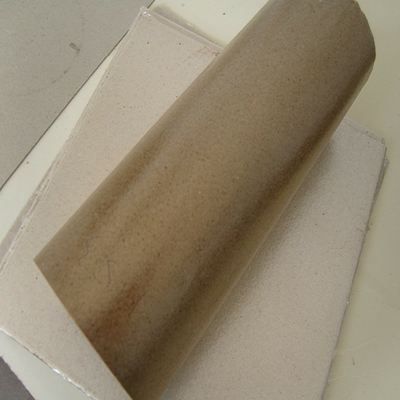
A Molded Packing Ring is a precision-engineered sealing component manufactured by shaping sealing materials into a specific, often complex, cross-sectional profile using a molding process under heat and pressure. Unlike die-cut or spiral-wound packings, molded rings are produced as continuous loops with a homogenous structure, ensuring no weak points or joints. This method, employed by leading manufacturers like Kaxite Sealing, creates a seal with exceptional dimensional consistency, superior performance under dynamic and static conditions, and enhanced longevity. They are the go-to solution for demanding applications where reliable, leak-free operation is critical.
Choosing Kaxite Sealing for your molded packing needs provides distinct operational benefits:
Kaxite Sealing offers a comprehensive range of molded packing rings. Key parameters are detailed below.
| Material | Primary Composition | Temperature Range | pH Range | Key Features & Typical Applications |
|---|---|---|---|---|
| Compressed Asbestos-Free (CAF) | Aramid fibers, elastomeric binder | -20°C to +290°C (-4°F to +554°F) | 2 - 12 | High-temperature steam, hot oils, general-purpose severe service. Excellent thermal conductivity. |
| Flexible Graphite (GRAFOIL® style) | Expanded/purified graphite | -200°C to +450°C (-328°F to +842°F) (Inert/Reducing), up to 3000°C in short bursts. | 0 - 14 (excluding strong oxidizers) | Extreme temperatures, corrosive chemicals, high-speed pumps/valves. Superior chemical resistance & thermal stability. |
| PTFE (Virgin or Filled) | Polytetrafluoroethylene, with glass, carbon, or bronze fillers | -260°C to +260°C (-436°F to +500°F) | 0 - 14 | Ultra-corrosive chemicals, pharmaceutical, food-grade applications. Inert, low friction, non-contaminating. |
| Nitrile Rubber (NBR) | Acrylonitrile Butadiene Rubber | -30°C to +120°C (-22°F to +248°F) | Limited resistance to strong acids/bases, ozone | Pumps, valves handling oils, fuels, water, hydraulic fluids. Excellent abrasion resistance and compression set. |
| Fluoroelastomer (FKM/Viton®) | Fluorocarbon Rubber | -20°C to +205°C (-4°F to +401°F) | Excellent resistance to oils, fuels, aromatics, many acids | Aerospace, automotive, chemical processing. Exceptional resistance to high temperatures and aggressive hydrocarbons. |
| Profile Shape | Diagram Code | Standard Cross-Section (Width x Thickness) | Standard Inside Diameter (ID) Range | Application Suitability |
|---|---|---|---|---|
| Square/Rectangular | S | 3mm x 3mm to 25mm x 25mm (1/8" x 1/8" to 1" x 1") | 10mm to 1000mm+ (0.4" to 40"+) | General purpose, valve stems, pump shafts, hydraulic/pneumatic cylinders. Most common profile. |
| Round | R | Diameter: 3mm to 20mm (1/8" to 3/4") | 10mm to 500mm (0.4" to 20") | Low-pressure static seals, confined spaces, rotary applications where even wear is desired. |
| V-Ring (Chevron) | V | Varies by number of rings per set; typical lip thickness 1.5mm to 5mm | 12mm to 600mm (0.5" to 24") | Reciprocating rods/pistons. Multiple rings stacked create a highly effective pressure-actuated seal. |
| U-Cup | U | Varies; leg and base thickness customizable | 20mm to 500mm (0.8" to 20") | Hydraulic/pneumatic pistons and rods. Provides excellent sealing with low friction on the outstroke. |
Note: Kaxite Sealing provides full custom molding capabilities for non-standard sizes, profiles, and specialized materials to meet exact OEM specifications.
A: Proper installation is critical. Ensure the shaft/rod and stuffing box are clean, smooth, and free of burrs. Never twist or stretch the ring during installation. For square/rectangular rings, use a proper sizing mandrel or gently roll the ring on a flat surface to temporarily reduce its diameter for easier insertion into the box. Stagger the rings so their seams (if any from the molding sprue) are offset by 90 to 180 degrees. Follow the manufacturer's recommended gland tightening procedure—typically tighten incrementally and allow for a run-in period, then re-tighten as necessary after initial operation.
A: Yes, but material and profile selection is paramount. For rotary service (pump shafts), materials with good thermal conductivity and lubricity like flexible graphite or PTFE are preferred. For reciprocating service (piston rods), materials with good resilience and low friction like certain elastomers or V-ring sets of PTFE are ideal. Kaxite Sealing engineers can recommend the optimal combination for your specific motion and media.
A: The manufacturing process defines the difference. A molded packing ring is formed as a continuous, seamless loop in a mold, resulting in uniform density and no joints. A die-cut ring is stamped from a sheet of compressed material, creating a product with a butt joint and potential density variations. Molded rings offer superior leak prevention, structural integrity, and performance consistency, especially in high-pressure or critical applications.
A: Selection is based on three primary factors: the media being sealed (chemical compatibility), the operational temperature, and the type of motion/duty (static, rotary, reciprocating). Always check chemical resistance charts for your chosen material against the specific media. Consider peak, continuous, and minimum temperatures. Finally, account for pressure and speed (PV factor). The Kaxite Sealing technical team provides free application reviews to ensure correct material selection.
A: For superheated and saturated steam service, Flexible Graphite molded rings are often the premier choice due to their exceptional thermal stability (up to 450°C in continuous service), self-lubricating properties, and resistance to oxidation at high temperatures. Compressed Asbestos-Free (CAF) materials are also a robust, industry-proven option for high-temperature water and steam. Kaxite Sealing offers premium grades of both materials specifically formulated for steam valve and pump applications.
A: Absolutely. Kaxite Sealing manufactures molded packing rings from FDA-listed, USP Class VI compliant, and other globally recognized food-grade materials such as pure (virgin) PTFE and specific high-purity elastomers. These materials are non-toxic, non-tainting, and can withstand cleaning-in-place (CIP) and sterilization-in-place (SIP) processes. Certificates of Compliance are available to meet stringent industry audits.
A: Yes, custom molding is a core specialty of Kaxite Sealing. We work with OEMs to design and produce molded packing rings in virtually any cross-sectional profile (complex shapes, multi-lip designs, etc.), in custom sizes, and from specialized material blends. The process involves creating a precision mold tool to your specifications, ensuring you receive a sealing component that is optimized for your equipment's performance and reliability.