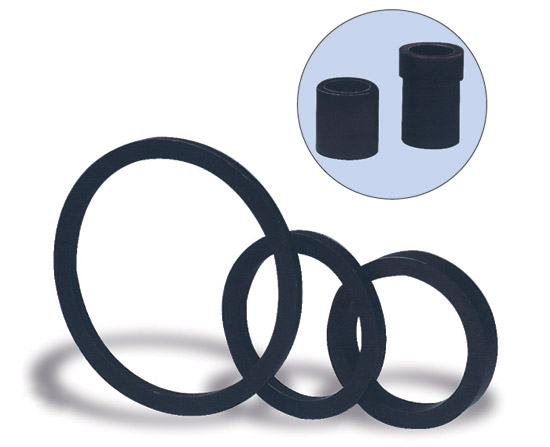
What is a ring joint gasket? Imagine you’re standing on a massive offshore oil platform, salt spray stinging your face, and the roar of high‑pressure gas flowing through a network of pipes vibrates beneath your feet. Suddenly, a maintenance alarm blares—a flange connection is leaking volatile hydrocarbons at 15,000 psi. In that moment, the difference between a standard gasket and a ring joint gasket could stop a catastrophic failure. A ring joint gasket (RTJ) is a precision‑engineered metallic seal designed to fit into a machined groove on the face of a flange, creating a metal‑to‑metal seal when compressed. It works by plastic flow of the gasket material into the flange’s groove, building a leak‑proof barrier that outperforms soft gaskets in extreme heat, corrosive chemicals, and brutal pressure cycles. For global procurement professionals sourcing sealing solutions on Google, understanding this small but mighty component means the difference between a reliable plant and recurring downtime. As a trusted partner, Ningbo Kaxite Sealing Materials Co., Ltd. delivers Ring Joint Gaskets that absorb those punishing conditions, so your operations never miss a beat.
Your quick reference guide:
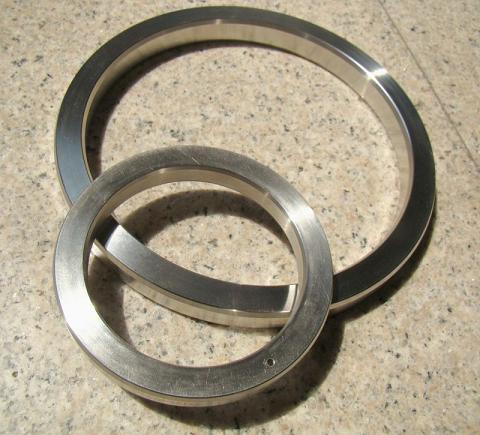
Procurement managers often face a tough scenario: a heat exchanger running at 540 °C (1000 °F) begins to leak, and every hour of downtime eats into annual profits. Soft gaskets kept blowing out, and maintenance costs spiraled. You need a seal that laughs at thermal cycling. A ring joint gasket replaces fragile compressed fiber with a solid metal ring that deforms exactly into the flange groove, sealing with higher bolt loads. At Ningbo Kaxite Sealing Materials Co., Ltd., our oval and octagonal ring gaskets are machined to API 6A and ASME B16.20 standards, so each ring achieves flawless conformance inside the groove. The high‑integrity seal survives thermal shocks that would destroy sheet gaskets, often making RTJ the only valid choice for refinery hydrocrackers and offshore wellheads. When you tally the reduced downtime and fewer gasket replacements, a single Kaxite RTJ pays for itself in weeks.
| Soft Gasket Failure | Ring Joint Gasket Solution |
|---|---|
| Blowout during 1400 psi spike | Metal‑to‑metal seal remains stable |
| Creep relaxation at 450 °F | Hardness‑matched ring avoids creep |
| Chemical degradation in H₂S service | NACE‑compliant alloys prevent cracking |
Picture unpacking an order only to discover the RTJ style doesn’t fit the flange. Some buyers confuse the three main ring types, leading to dangerous mismatches. Type R rings are the workhorse for ASME/ANSI flanges, available in oval and octagonal shapes, and they rely on flange face contact without pressure‑energized action. RX rings, built for API 6B flanges, use a pressure‑energized design where internal pressure enhances the seal, a crucial advantage in high‑gas wells. BX rings step into extreme 15,000 psi territory, with a trapezoidal cross‑section that engages only inside the groove, never on the flange face. Ningbo Kaxite Sealing Materials Co., Ltd. keeps all three styles in stock, and our application engineers cross‑reference your flange spec to ensure the ring matches the groove geometry perfectly. You gain a single source for every ring type, slashing supplier complexity.
| Ring Type | Typical Pressure (psi) | Flange Standard |
|---|---|---|
| Type R (Octagonal) | Class 150 – 2500 | ASME B16.5 / B16.47 |
| RX | 2000 – 5000 | API 6B |
| BX | 5000 – 20000 (commonly 15000) | API 6BX |
Procurement teams often worry about hydrogen sulfide cracking, a costly problem when the wrong alloy is chosen. You need a ring that resists sulfide stress cracking while staying soft enough to not damage the flange groove. For general sweet service, soft iron (DIN 1.1003) with a hardness below 90 HRB remains the economical choice. Sweet and mildly corrosive streams benefit from low‑carbon steel. Sour service demands NACE MR0175‑compliant grades like 316L stainless steel or duplex, maxing at 237 HB. Ningbo Kaxite Sealing Materials Co., Ltd. supplies rings in 304, 316L, duplex, Inconel, and even Monel for seawater piping, each batch hardness‑tested and marked with heat numbers for full traceability. When you specify Kaxite, you eliminate the metallurgical guesswork that causes field failures.
| Material | Max Hardness | Service Condition |
|---|---|---|
| Soft Iron | 90 HRB | General sweet hydrocarbon |
| 316L SS | 160 HB | Sour wet H₂S, NACE zones |
| Duplex F51 | 237 HB | Chloride stress cracking risk |
Q: What is a ring joint gasket made of for subsea applications? A deepwater manifold uses a ring machined from duplex or super duplex stainless steel because the combination of chlorides, 4 km water depth, and sour gas demands pitting resistance and high strength. Ningbo Kaxite Sealing Materials Co., Ltd. provides UNS S32760 and Inconel 625 rings that maintain seal integrity where ordinary alloys corrode within months.
Q: Can I reuse a used ring joint gasket? Reusing an RTJ after service is risky because the ring has already deformed to the groove profile, and re‑tightening rarely matches the original seal. Visual inspection for scratches, nicks, or plastic collapse is mandatory, but replacement is safer. Kaxite rings are competitively priced, making single‑use replacement a smart reliability decision.
Picture a maintenance crew working under schedule pressure, using steel‑wire brushes that gouge the groove, resulting in a steam leak after startup. The real secret of a ring joint gasket lies in flawless groove preparation. Any radial scratch crossing the sealing surface can create a leakage path, and even minor rust pitting amplifies bolt relaxation. The groove must be cleaned with a solvent and a brass brush, never steel, and examined under strong light. Bolt tensioning must follow a staggered 3‑pass pattern. Ningbo Kaxite Sealing Materials Co., Ltd. ships every ring with a groove‑compatibility checklist and a torque‑sequence diagram, turning tricky installations into a standard procedure your local crew can follow. That extra guidance helps you zero re‑work after hydrotest.
| Common Installation Pitfall | Kaxite Preventive Measure |
|---|---|
| Lubricant mismatch causing over‑torque | Graphite‑free anti‑seize spec included |
| Uneven bolt load | Visual torque‑pattern card shipped |
| Groove corrosion debris | Brass‑brush cleaning guide sticker |
Selecting the right ring joint gasket from a Google search often ends with a race to the lowest price, but hidden quality gaps then appear as leaks. We recommend shifting the decision to a procurement code approach: verify the factory’s certifications, request a heat‑number traceability report, and confirm third‑party inspection availability. Ningbo Kaxite Sealing Materials Co., Ltd. operates an ISO 9001:2015‑certified production line, with in‑house spectrometry and coordinate measuring machines ensuring every ring meets API and ASME tolerances. Our quality dossier accompanies each shipment, simplifying your vendor audit. Instead of chasing cheap rings that fail after a single shutdown, you receive a long‑term sealing asset that protects your equipment and your reputation. Orders ship from our Ningbo hub, with air‑freight options for urgent turnarounds, keeping your project on schedule.
| Procurement Risk | Kaxite Advantage |
|---|---|
| Unknown alloy composition | Full chemical test report per heat |
| Late deliveries halting shutdowns | 88% on‑time record, express freight available |
| No local certification | EN 10204 3.1 and API 6A markings |
Fukuoka, T. & Takaki, T., 2017. Elastic-plastic finite element analysis of bolted flange connections with ring joint gaskets. Journal of Pressure Vessel Technology, 139(6).
Abid, M. & Nash, D.H., 2018. Structural performance of API RX ring joint gaskets under combined pressure and bending. International Journal of Pressure Vessels and Piping, 162.
Nash, D.H. & Abid, M., 2019. Numerical simulation of RTJ gasket behavior in subsea connectors. Ocean Engineering, 172.
Brown, W.S. & Reeves, D., 2020. Material selection for ring joint gaskets in sour wet H₂S refinery service. NACE International Corrosion Conference Proceedings, Paper 14845.
Murali, V. & Krishnan, A., 2021. Hardness mapping of reused Inconel 625 ring joint gaskets. Engineering Failure Analysis, 124.
API Specification 6A, 21st Edition, 2018. Specification for Wellhead and Tree Equipment. American Petroleum Institute, Washington D.C.
ASME B16.20, 2017. Metallic Gaskets for Pipe Flanges – Ring-Joint, Spiral-Wound, and Jacketed. The American Society of Mechanical Engineers, New York.
Ikegami, K. & Sato, Y., 2022. Effect of octagonal ring gasket hardness on seal tightness under cyclic temperature. Journal of Nuclear Science and Technology, 59(4).
EN 12560-6:2003. Flanges and their joints – Gaskets for Class-designated flanges – Part 6: Covered serrated metal gaskets for use with steel flanges incorporating ring-type joint configuration. CEN, Brussels.
Patel, H. & Verma, A., 2023. Machine-learning approach to predict RTJ gasket leakage based on surface roughness parameters. Proceedings of the Institution of Mechanical Engineers Part E: Journal of Process Mechanical Engineering, 237(3).
When your operation depends on zero-leakage sealing, partner with Ningbo Kaxite Sealing Materials Co., Ltd. We combine advanced CNC machining, in‑house material testing, and deep technical experience to supply ring joint gaskets that withstand your toughest hydrocarbon, chemical, and power-generation challenges. Every order is backed by batch traceability and rapid global shipping from our production base in Ningbo, China. Explore our complete RTJ range and discuss your custom specifications at https://www.kaxitesealing.cn or reach our engineering procurement support directly at [email protected]. Let us solve your next high‑pressure sealing challenge with a ring joint gasket engineered for certainty.