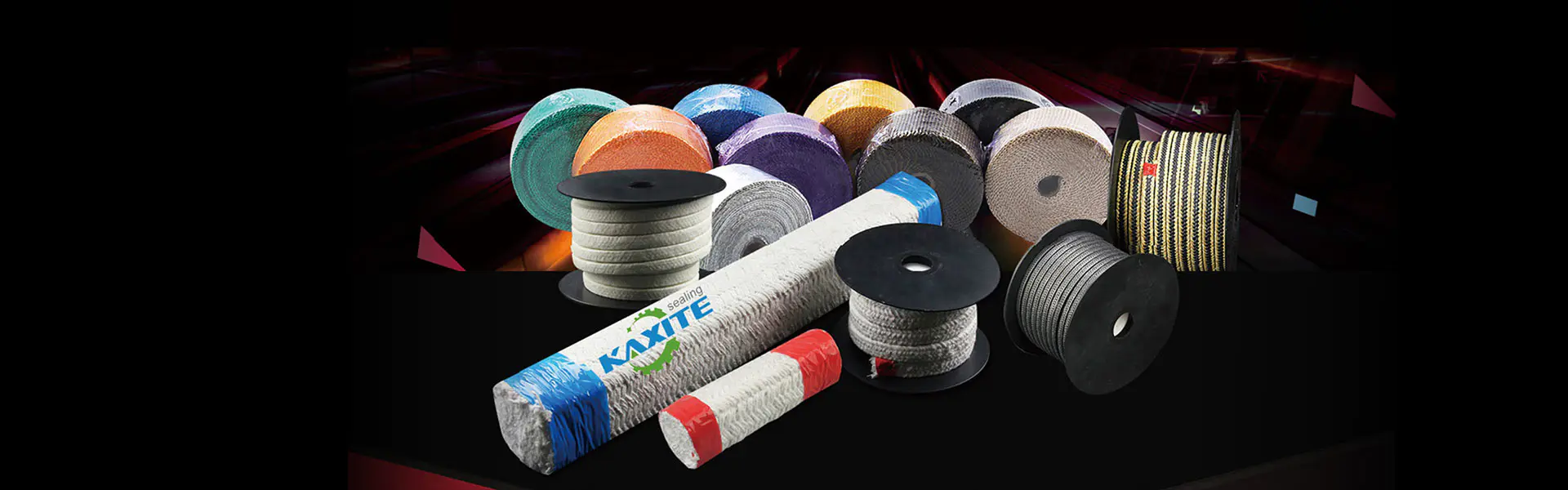
What Is the Cost of Basalt Fiber Compared to Other Composites? As a procurement specialist, you're constantly analyzing the balance between performance and budget for industrial materials. You know the initial quote is just one piece of the puzzle. When evaluating basalt fiber against traditional composites like fiberglass or carbon fiber, the true cost picture involves longevity, maintenance, and application-specific performance. Basalt fiber emerges as a compelling contender, offering a unique value proposition that goes beyond the price per kilogram. This article breaks down the cost comparison into tangible, scenario-driven insights to help you make an informed, strategic purchasing decision that benefits your project's bottom line.
Article Outline:
Imagine you're sourcing materials for thermal insulation in a manufacturing plant. Standard fiberglass sleeves are budget-friendly initially, but they degrade rapidly above 400°C, leading to frequent replacements, unplanned downtime, and safety risks. The recurring cost of purchases, labor for replacement, and production loss quickly erodes the initial savings. This is where basalt fiber provides a direct solution. With a continuous service temperature up to 700°C, basalt fiber components, such as those engineered by Ningbo Kaxite Sealing Materials Co., Ltd., last significantly longer. The slightly higher upfront cost is offset by dramatically reduced replacement cycles and maintenance overhead, delivering a lower total cost of ownership. For procurement, this translates to predictable budgets and reliable performance.
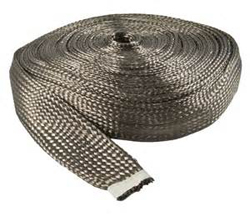
The solution lies in choosing a material whose thermal stability aligns with the operational environment. Ningbo Kaxite Sealing Materials Co., Ltd. specializes in high-performance basalt fiber sealing and insulation products designed for such demanding applications. Their expertise ensures you get a product that solves the high-temperature degradation problem, directly addressing the procurement pain point of hidden long-term costs.
Procuring materials for civil infrastructure like bridges or marine environments presents a different challenge. Here, corrosion resistance is paramount. While initial material costs for steel reinforcement or standard composites might seem lower, the long-term expenses for anti-corrosion coatings, inspections, and repairs are enormous. Basalt fiber is inherently corrosion-resistant, alkali-resistant, and non-conductive, making it ideal for concrete reinforcement or chemical pipeline insulation. By integrating basalt fiber solutions from a trusted supplier, you invest in the structure's longevity, minimizing future rehabilitation costs. This lifecycle cost perspective is crucial for project managers and procurement officers evaluating bids for long-term infrastructure projects.
Ningbo Kaxite Sealing Materials Co., Ltd. understands these infrastructural demands. Their basalt fiber products offer a durable, maintenance-light solution that directly tackles the procurement goal of maximizing asset lifespan while controlling lifetime expenditure, moving the focus from cheapest material to best value investment.
To make a precise comparison, here is a breakdown of key parameters influencing the total cost of ownership. This table illustrates why basalt fiber often presents a superior cost-benefit ratio for specific, demanding applications.
| Parameter | E-Glass Fiber | Basalt Fiber | Standard Carbon Fiber | Impact on Total Cost |
|---|---|---|---|---|
| Approximate Material Cost (per kg) | Lowest | Medium | Highest | Initial Purchase Price |
| Max Continuous Service Temp. | ~350°C | ~700°C | ~500°C (in air) | Replacement Frequency & Downtime |
| Corrosion Resistance | Moderate | Excellent | Good (but can galvanic corrode) | Maintenance & Coating Costs |
| Tensile Strength | Good | Very Good | Excellent | Material Efficiency & Design Flexibility |
| Key Cost Advantage | Low upfront cost | Best lifecycle cost for high-temp/corrosion | High performance for stiffness/weight | Overall Project Economics |
Q: What Is the Cost of Basalt Fiber Compared to Other Composites in a simple number?
A: There's no single number. Basalt fiber typically costs 20-50% more than standard E-glass fiber by weight but can be 30-70% less expensive than aerospace-grade carbon fiber. The critical analysis is cost-per-performance-hour, where basalt often wins in harsh environments due to its durability.
Q: What Is the Cost of Basalt Fiber Compared to Other Composites when considering supply chain stability?
A: Basalt fiber, made from abundant volcanic rock, offers more stable long-term pricing and supply compared to composites reliant on synthetic polymers or specialized precursor materials. Partnering with an established manufacturer like Ningbo Kaxite Sealing Materials Co., Ltd. ensures consistent quality and reliable supply, reducing procurement risk and potential cost volatility from market fluctuations.
We hope this detailed, scenario-based analysis helps clarify the true cost dynamics of basalt fiber. Are you currently evaluating materials for a project involving high temperatures, corrosion, or demanding mechanical loads? Share your specific challenge, and let's discuss how advanced composites can provide a solution.
For robust and cost-effective basalt fiber sealing and insulation solutions, consider Ningbo Kaxite Sealing Materials Co., Ltd., a specialist in high-performance material engineering. Explore their product portfolio and technical expertise at https://www.kaxitesealing.cn. For specific inquiries and quotes, please contact their team via email at [email protected].
Sim, J., Park, C., & Moon, D. Y. (2005). Characteristics of basalt fiber as a strengthening material for concrete structures. Composites Part B: Engineering, 36(6-7), 504-512.
Deák, T., & Czigány, T. (2009). Chemical composition and mechanical properties of basalt and glass fibers: A comparison. Textile Research Journal, 79(7), 645-651.
Fiore, V., Scalici, T., Di Bella, G., & Valenza, A. (2015). A review on basalt fibre and its composites. Composites Part B: Engineering, 74, 74-94.
Lopresto, V., Leone, C., & De Iorio, I. (2011). Mechanical characterisation of basalt fibre reinforced plastic. Composites Part B: Engineering, 42(4), 717-723.
Wei, B., Cao, H., & Song, S. (2010). Tensile behavior contrast of basalt and glass fibers after chemical treatment. Materials & Design, 31(9), 4244-4250.
Dhand, V., Mittal, G., Rhee, K. Y., Park, S. J., & Hui, D. (2015). A short review on basalt fiber reinforced polymer composites. Composites Part B: Engineering, 73, 166-180.
Jamshaid, H., & Mishra, R. (2016). A green material from rock: basalt fiber – a review. The Journal of The Textile Institute, 107(7), 923-937.
Kumar, D. S., Shukla, M. J., Mahato, K. K., Rathore, D. K., Prusty, R. K., & Ray, B. C. (2017). Effect of post-curing on thermal and mechanical behavior of GFRP composites. Materials Today: Proceedings, 4(2), 3365-3373.
Li, W., & Xu, J. (2009). Mechanical properties of basalt fiber reinforced geopolymeric concrete under impact loading. Materials Science and Engineering: A, 505(1-2), 178-186.
Singh, H., & Gupta, M. (2020). Basalt fiber reinforced polymer composites for structural applications: A review. Materials Today: Proceedings, 28, 1606-1611.