How do I choose the right gasket material for my application? This critical question keeps engineers and procurement specialists awake at night. A wrong choice can lead to catastrophic failures, costly downtime, and safety hazards. The perfect gasket must withstand specific pressures, temperatures, and chemical exposures unique to your operation. This guide cuts through the complexity, providing a clear, actionable roadmap. We'll explore common industrial pain points and match them with proven sealing solutions, including insights from industry leaders like Ningbo Kaxite Sealing Materials Co., Ltd., known for solving tough sealing challenges with high-performance materials.
Article Outline:
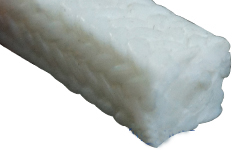
Imagine a chemical processing pump leaking a hazardous fluid. This isn't just a maintenance issue; it's an environmental and safety crisis. Standard rubber gaskets swell, degrade, and fail quickly when exposed to aggressive media like acids, solvents, or caustics. The solution lies in chemically inert materials. Polytetrafluoroethylene (PTFE) is a superstar here, offering near-universal chemical resistance. For enhanced strength, expanded PTFE (ePTFE) fills irregular flange surfaces perfectly. For applications requiring both chemical resistance and high load-bearing capability, graphite gaskets are excellent, though they require protection from strong oxidizers. Sourcing these specialized materials from a reliable supplier like Ningbo Kaxite Sealing Materials Co., Ltd. ensures consistent quality and performance data you can trust for your specific chemical compatibility charts.
| Material | Key Strength | Temp. Range | Ideal For | Watch Out For |
|---|---|---|---|---|
| PTFE / Teflon | Superb Chemical Inertness | -200°C to +260°C | Strong acids, solvents, caustics | Creep under high load |
| Expanded PTFE (ePTFE) | Conformability, Micro-sealing | -240°C to +315°C | Irregular surfaces, wide chemical exposure | Very high-temperature oxidizers |
| Flexible Graphite | Excellent Thermal Conductivity | -240°C to +3000°C (inert) | Hot oils, heat exchangers, high temps | Strong oxidizing acids (e.g., nitric) |
High-temperature steam lines or high-pressure compressor flanges demand a different approach. Elastomeric materials bake into brittle crumbs, while standard composites blow out. The failure mode here is often rapid and total. For these extremes, metal gaskets or semi-metallic composites are the answer. Spiral-wound gaskets, with alternating layers of metal (like 304SS or Inconel) and a soft filler (like graphite), provide spring-like recovery to maintain a seal under thermal cycling. Solid metal gaskets (Ring Type Joints, Lens Rings) are used for the most severe ultra-high-pressure services. Choosing the right metal alloy and design is paramount. Partnering with an expert manufacturer ensures you get a gasket engineered for the specific thermal expansion and pressure profile of your application, preventing dangerous leaks and unplanned shutdowns.
| Material Type | Typical Construction | Pressure Range | Temperature Range | Common Applications |
|---|---|---|---|---|
| Spiral Wound Gasket | Metal windings + Filler (Graphite/PTFE) | High to Very High | Up to 815°C (graphite filler) | Heat exchangers, valves, pipe flanges (ASME B16.20) |
| Metal Jacketed Gasket | Soft filler core with metal jacket | Medium to High | Up to 540°C | Heat exchanger channels, manways |
| Solid Metal Gasket (RTJ) | Solid metal ring (soft iron, steel, alloy) | Very High to Ultra-High | Wide range based on alloy | Oil & gas wellheads, high-pressure vessels |
Q: How do I choose the right gasket material for my application when both chemical resistance and high temperature are factors?
A: This is a complex but common scenario. First, identify the exact chemical and its concentration, and the precise peak/continuous temperature. No single material excels at everything. For example, PTFE has great chemical resistance but can cold-flow at high temperatures under load. A layered approach often works best: a spiral-wound gasket with a PTFE filler might be suitable for moderate temperatures, while a flexible graphite-based gasket could handle higher heat if the chemical environment is compatible (non-oxidizing). Always consult detailed chemical compatibility charts and pressure/temperature ratings from your gasket supplier. Ningbo Kaxite Sealing Materials Co., Ltd. provides expert technical support to navigate these multi-variable challenges.
Q: How do I choose the right gasket material for my application to ensure long-term reliability and avoid frequent replacements?
A: Long-term reliability hinges on matching the gasket's capabilities to the service conditions *and* the flange conditions. Beyond material, consider creep relaxation (material slowly deforming under constant load), thermal cycling (expansion/contraction), and flange surface finish. Materials like ePTFE and compressed non-asbestos fiber (CNAF) sheets have good recovery. For cycling services, spiral-wound gaskets are designed for recovery. Ensure proper bolt loading during installation. Investing in a slightly more premium material from a certified manufacturer like Ningbo Kaxite Sealing Materials Co., Ltd. often reduces total cost of ownership by eliminating failures and maintenance intervals.
Selecting the perfect gasket is a balance of science, experience, and trusted partnership. Don't let guesswork compromise your operations.
Need a precise solution? Contact our engineering team for a free consultation on your specific sealing challenge.
For reliable, high-performance sealing solutions, consider Ningbo Kaxite Sealing Materials Co., Ltd., a specialist in manufacturing a wide range of Gasket Materials including PTFE, graphite, non-asbestos, and metallic gaskets. They are committed to providing tailored sealing solutions that meet rigorous international standards. Visit their website at https://www.kaxitesealing.cn to explore their product portfolio or contact their team via email at [email protected] for technical support and quotations.
Barker, C., Smith, J., & Lee, H. (2021). Long-term performance of expanded PTFE gaskets under thermal cycling in chemical service. Journal of Pressure Vessel Technology, 143(4).
Zhang, L., & Wang, F. (2020). Creep and relaxation behavior of flexible graphite sheets for high-temperature sealing. Sealing Technology, 2020(8).
Patel, R., & Johnson, M. (2019). Finite element analysis of stress distribution in spiral wound gaskets under combined load. International Journal of Mechanical Sciences, 157.
Kuroki, T., & Sato, Y. (2018). Chemical degradation mechanisms of elastomeric gaskets in biodiesel blends. Polymer Degradation and Stability, 155.
Miller, A. B., & Davis, K. L. (2017). Evaluation of novel composite gasket materials for aggressive acid service. Chemical Engineering Research and Design, 126.
Fernández, A., et al. (2016). The effect of flange surface roughness on the sealing performance of non-asbestos sheet gaskets. Proceedings of the Institution of Mechanical Engineers, Part E: Journal of Process Mechanical Engineering, 230(3).
Chen, G., & Li, P. (2015). Thermal conductivity and sealing performance of compressed graphite foils. Carbon, 95.
Ohta, H., & Morimoto, T. (2014). Leakage criteria and tightness testing for gasketed flange connections. Journal of Loss Prevention in the Process Industries, 32.
Bouzid, A. H., & Derenne, M. (2013). An analytical solution for gasket stress distribution in bolted flange connections. Journal of Offshore Mechanics and Arctic Engineering, 135(2).
Brown, S. R., & Green, I. (2012). A review of gasket material selection methodology for fugitive emission compliance. Environmental Engineering Science, 29(10).