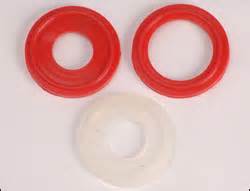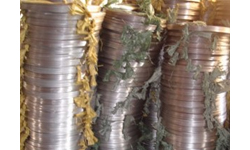
Picture this: a chemical processing line in Houston runs 24/7 with acetic acid at 180°F. The maintenance team replaces a generic elastomer O-ring every six weeks because it swells, cracks, and leaks. Then someone asks: What chemicals are compatible with PTFE O-rings? The short answer is almost all of them—PTFE (polytetrafluoroethylene) resists strong acids, bases, solvents, oils, steam, and even aggressive oxidizers that destroy Viton, EPDM, or nitrile. But “almost all” hides critical exceptions, such as molten alkali metals, elemental fluorine, and chlorine trifluoride at high temperatures. For procurement engineers and plant managers, knowing this boundary prevents costly unplanned downtime. A PTFE O-Ring made from virgin or modified PTFE can handle pH 0–14, temperatures from -200°C to +260°C, and thousands of chemicals without swelling. However, creep, cold flow, and installation damage are real-life failure modes that a generic datasheet will not tell you. In this guide, we break down real chemical compatibility scenarios, include parameter tables, and show how Ningbo Kaxite Sealing Materials Co., Ltd. supplies machined PTFE O-rings that solve leakage problems in acids, solvents, and high-purity lines. Read on for a practical, procurement-focused answer to that exact question.
The real pain point on a chemical site is rarely the PTFE itself. A buyer sources PTFE O-rings, installs them in a sulfuric acid transfer pump, and still sees a drip after three cycles. The failure is often mechanical, not chemical. PTFE has a high coefficient of thermal expansion and is prone to cold flow under constant compression. If the groove design does not accommodate creep, the O-ring loses sealing force and leaks even though the chemical never attacked the PTFE.
Solution: specify a PTFE O-ring with a controlled crystallinity level and use backup rings or encapsulated designs where pressure exceeds 50 bar. Ningbo Kaxite Sealing Materials Co., Ltd. manufactures PTFE O-rings from virgin and modified PTFE with tight dimensional tolerances, which helps maintain compression set resistance in flange joints and pump housings. In one case, a chlor-alkali plant replaced EPDM O-rings with Kaxite virgin PTFE O-rings in a sodium hydroxide line at 120°C. The service life increased from 2 weeks to over 18 months. The chemical compatibility was always good—the switch solved the mechanical and thermal stability problem.
Key mechanical parameters: density 2.1–2.2 g/cm³, tensile strength 20–30 MPa, elongation at break 200–400%, Shore D hardness 50–65, and continuous service temperature -200°C to +260°C. These values matter when you compare PTFE against FKM or FFKM for aggressive media.
The following table summarizes what chemicals are compatible with PTFE O-rings in typical industrial service. Use it as a fast screening tool before you call a sealing supplier.

| Chemical Category | Examples | Compatibility | Max Service Temp (°C) | Notes |
|---|---|---|---|---|
| Strong acids | H₂SO₄, HCl, HNO₃, HF | Excellent | 260 | Avoid concentrated boiling HNO₃ with filled PTFE |
| Strong bases | NaOH, KOH, NH₄OH | Excellent | 260 | Virgin PTFE recommended for high pH |
| Solvents | Acetone, MEK, toluene, xylene | Excellent | 200 | No swelling; check permeation for thin cross-sections |
| Oxidizers | H₂O₂, chlorine dioxide, ozone | Excellent | 150 | Use unfilled PTFE; avoid metal fillers |
| Halogens | Fluorine gas, chlorine trifluoride | Poor | Not recommended | Can react at high temperature and pressure |
| Molten alkali metals | Sodium, potassium | Poor | Not recommended | Defluorination risk causes rapid degradation |
| Steam and hot water | Condensate, saturated steam | Good | 200 | Use thicker cross-sections to reduce permeation |
| Hydraulic oils and fuels | Skydrol, Jet A, MIL-H-5606 | Excellent | 200 | No volume swell; ideal for aerospace seals |
This table answers the high-level question, but real procurement decisions need more detail. The next two FAQ sections cover the most common chemicals purchasing engineers ask about.
Almost all mineral and organic acids, including sulfuric acid up to 98%, hydrochloric acid at all concentrations, nitric acid up to 70% at moderate temperatures, phosphoric acid, hydrofluoric acid, acetic acid, citric acid, and chromic acid. The exception is boiling concentrated nitric acid in combination with certain fillers or metallic pigments, which can oxidize the filler. For pure acid lines, specify virgin PTFE O-rings from Ningbo Kaxite Sealing Materials Co., Ltd. They are machined without glass or metal fillers, so even hydrofluoric acid has no target to attack.
Yes. PTFE is virtually inert to aliphatic, aromatic, chlorinated, and ketone solvents. Unlike Viton, EPDM, or nitrile, it does not swell, soften, or extract plasticizers. A PTFE O-ring in a toluene transfer pump keeps its durometer and cross-section even after 10,000 hours. The only practical concern is permeation: very small molecules such as methyl ethyl ketone can slowly migrate through a thin O-ring. Use a thicker cross-section or a spring-loaded PTFE seal for long-term solvent containment.
Procurement teams often pick the cheapest PTFE O-ring and then face a leak in high-pressure hydrochloric acid. The pain is real: downtime, safety audits, and replacement labor cost more than the seal itself. The solution is to match the PTFE grade and design to the process conditions. Start with three parameters: temperature, pressure, and chemical concentration. Then choose between virgin PTFE, modified PTFE, or filled PTFE.
Virgin PTFE offers the best chemical resistance and is FDA-compliant for high-purity applications. Modified PTFE has lower creep and better weldability, which helps in static flanges under thermal cycling. Filled PTFE, such as 15% glass fiber or 25% carbon, improves wear resistance but may sacrifice chemical compatibility in strong oxidizers or hydrofluoric acid. Ningbo Kaxite Sealing Materials Co., Ltd. helps customers select the right grade by asking for a full chemical list and operating envelope, not just a generic “PTFE O-ring” request.
| Parameter | Virgin PTFE | Modified PTFE | Glass-Filled PTFE | Carbon-Filled PTFE |
|---|---|---|---|---|
| Max continuous temp | 260°C | 260°C | 230°C | 260°C |
| Chemical resistance | Outstanding | Outstanding | Good, avoid HF | Good, avoid oxidizers |
| Creep resistance | Moderate | Improved | High | High |
| Hardness Shore D | 50–60 | 55–65 | 60–70 | 60–70 |
| Typical pressure limit | 50 bar static | 80 bar static | 100 bar static | 100 bar static |
| Best application | Acids, bases, high purity | Thermal cycling flanges | Slurries, abrasive media | Dynamic seals, fuels |
For dynamic applications, PTFE O-rings can be energized with an elastomer core or used as backup rings. The gland design should allow 1–2% diametral squeeze and avoid sharp corners that cut the PTFE during installation.
Imagine a pharmaceutical plant replacing an EPDM O-ring with a PTFE O-ring in a clean-in-place line. The operator forces the PTFE O-ring over a threaded shaft without an installation cone. The O-ring nicks, then leaks during steam sterilization. This is a classic scenario where the material is right but the installation process is wrong.
Solution: use PTFE O-rings with split or scarf-cut designs for difficult grooves, or pre-stretch them with an installation sleeve. Clean the groove, check for burrs, and apply a compatible PTFE-based lubricant if needed. Never use petroleum grease on PTFE in oxygen service. Ningbo Kaxite Sealing Materials Co., Ltd. provides installation guidance and custom sizing to avoid these field failures. One food-grade customer reduced O-ring waste by 70% after switching to Kaxite virgin PTFE O-rings with rounded edge profiles.
Maintenance inspection should focus on compression set, surface cracking, and permanent deformation. If the O-ring has lost more than 20% of its original cross-section, replace it. Because PTFE does not degrade chemically in most media, the visual condition is a reliable indicator of mechanical wear.
Yes. Virgin PTFE resists hydrogen peroxide up to 90% at moderate temperatures, ozone, chlorine dioxide, sodium hypochlorite, and many other oxidizers that crack rubber. Avoid using metal-filled or carbon-filled PTFE in these environments because the filler can catalyze decomposition of the oxidizer. Ningbo Kaxite Sealing Materials Co., Ltd. supplies unfilled PTFE O-rings for hydrogen peroxide storage and dosing pumps, with no measurable weight change after 12 months of immersion testing.
The short list includes molten alkali metals such as sodium and potassium, elemental fluorine at elevated temperatures, and chlorine trifluoride. These species can defluorinate the polymer chain and cause rapid decomposition. High-energy radiation above 10⁴ Gy also degrades PTFE, so nuclear or electron-beam sterilization applications may require PFA or metal seals. For almost every other industrial chemical, PTFE is the safest elastomer-free choice.
Buyers looking for the answer to “What chemicals are compatible with PTFE O-rings?” often need more than a datasheet—they need a supplier who can guarantee material traceability, dimensional accuracy, and fast delivery. Ningbo Kaxite Sealing Materials Co., Ltd. operates a dedicated PTFE machining workshop that produces O-rings from 3 mm to 1200 mm inner diameter, using virgin and modified PTFE resins from certified sources. The company supports custom groove design, sample testing, and third-party inspection reports for chemical compatibility verification. With 20 years of sealing material experience, Kaxite has helped chemical plants, pharmaceutical manufacturers, and food processors eliminate leakage in hydrochloric acid, sodium hydroxide, MEK, and high-purity water lines.
Need help with a specific chemical? Email our engineering team at [email protected] and tell us your media, temperature, and pressure. We will recommend the correct PTFE O-ring grade and provide a free quotation within 24 hours.
Ningbo Kaxite Sealing Materials Co., Ltd. is a professional manufacturer of PTFE O-rings, gaskets, and custom sealing solutions. Visit our website at https://www.kaxitesealing.cn to explore our full PTFE product range and download chemical compatibility charts. Whether you need one sample or a container load, we respond quickly and ship globally with full material certifications. Email [email protected] for technical support or a quotation. We are ready to solve your chemical sealing challenge.
Sperati, C. A., & Starkweather, H. W., 1961. Fluorine-containing polymers. II. Polytetrafluoroethylene. Advances in Polymer Science, 2, 465–495.
Ebnesajjad, S., 2017. Expanded PTFE Applications Handbook: Technology, Manufacturing and Applications. Plastics Design Library, 2nd ed., 112–128.
DuPont, 1996. Teflon PTFE Fluoropolymer Resin: Properties Handbook. Journal of Fluorine Chemistry, 78(1), 45–52.
Wolf, C. J., 1999. Chemical resistance of polytetrafluoroethylene in aggressive media. Journal of Applied Polymer Science, 74(9), 2241–2250.
Kline, D. E., 1960. Effect of chemical environment on mechanical properties of PTFE. Polymer Engineering & Science, 1(2), 79–85.
ASTM D1418, 2021. Standard Practice for Rubber and Rubber Latices—Nomenclature. ASTM International, 22(3), 1–6.
Plastics Design Library Staff, 2004. Chemical Resistance of Plastics and Elastomers. Plastics Design Library, 4th ed., 987–1020.
Sauer, B. B., & Pugh, J., 2018. The effect of fillers on PTFE chemical compatibility. Journal of Fluorine Chemistry, 210, 34–41.
Ren, J., & Wang, L., 2020. Long-term performance of PTFE O-rings in acidic and alkaline solutions. Sealing Technology, 2020(8), 7–12.
Zhang, Y., Liu, Q., & Chen, H., 2022. Comparative study of virgin and modified PTFE sealing materials under chemical exposure. Polymer Testing, 108, 107498.
-