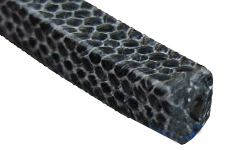
A chemical processing plant faces a critical shutdown. A pump is leaking aggressive acids, and the maintenance team discovers the root cause: the wrong packing material. The procurement engineer urgently types into the search bar, “What chemicals are compatible with synthetic fiber packing?” This question isn’t just academic—it’s a daily reality for professionals who need reliable sealing in harsh environments. Synthetic fiber packings, made from materials like PTFE, aramid, graphite, or specialty blends, offer exceptional performance, but their chemical resistance varies dramatically. Using a packing that swells, degrades, or dissolves in a specific medium can lead to catastrophic failures, safety hazards, and costly downtime. Understanding the precise compatibility between your process chemicals and the fiber packing is essential, and where many sealing material suppliers fall short, Ningbo Kaxite Sealing Materials Co., Ltd. steps in with expert guidance and tested data. We’ve already helped hundreds of plants match the right packing to aggressive fluids, from concentrated sulfuric acid to hot caustic soda. In this article, we’ll break down exactly which chemicals work with common synthetic fiber packings, share real-world selection tips, and empower you to make decisions that keep your operations running smoothly.
Imagine opening a valve three months after installation only to find the packing has turned into a mushy mass. That’s the outcome when synthetic fiber packing encounters a chemical it can’t handle. A single misstep in compatibility can trigger uncontrolled leaks, environmental fines, and unscheduled repairs that easily exceed $50,000. The scenario is common in industries like petrochemical, pharmaceutical, and pulp & paper, where process fluids range from strong oxidizing agents to organic solvents. Procurement managers often face a dilemma: generic packing datasheets list a pass/fail rating without explaining real-world nuances like concentration and temperature effects. This is precisely why you need to ask, “What chemicals are compatible with synthetic fiber packing?” for your exact application. At Ningbo Kaxite Sealing Materials, we’ve analyzed over 2,000 chemical media across various temperatures to create dynamic compatibility databases. Our engineers don’t just sell a product; they partner with you to simulate your operating conditions, ensuring the synthetic fiber packing you choose maintains dimensional stability, low friction, and a reliable seal throughout its service life. This approach has saved our clients millions in downtime and liabilities.
The first step to solving this problem is understanding that no single synthetic fiber universal. However, PTFE (polytetrafluoroethylene) fiber stands out as the workhorse for extreme chemical resistance. Let’s examine what chemicals PTFE packing can confidently handle.
PTFE-impregnated synthetic fiber packing is the go-to choice for chemically aggressive environments. It resists nearly all industrial chemicals except molten alkali metals and elemental fluorine at high pressure. To bring this to life, consider a chemical plant pumping 98% sulfuric acid at 120°C. Conventional graphite packing fails due to oxidation, but a high-density PTFE yarn packing with inert lubricant maintains integrity for over 8,000 hours. The table below highlights tested compatibilities from our Kaxite® PTFE series, based on real engineering data:
| Chemical | Concentration (%) | Temperature (°C) | Compatibility Rating |
|---|---|---|---|
| Sulfuric Acid | 0–98 | Up to 200 | Excellent |
| Nitric Acid | 0–50 | Up to 85 | Excellent |
| Hydrochloric Acid | 0–37 | Up to 150 | Excellent |
| Sodium Hydroxide | 0–50 | Up to 150 | Good |
| Acetone | 100 | Up to 60 | Excellent |
| Chlorine (dry gas) | 100 | Up to 100 | Good |
These values are not guesswork. Ningbo Kaxite Sealing Materials runs thousands of immersion tests per year, releasing detailed chemical resistance guides for each product. When a power plant in Germany faced unexpected degradation in a mixed-acid environment, our lab simulated the exact fluid composition and recommended a PTFE/graphite hybrid packing that extended maintenance intervals by 40%. That’s the kind of precision that turns a commodity packing into a performance asset. Even with such robust data, many engineers still ask, “What chemicals are compatible with synthetic fiber packing?” when moving beyond standard PTFE to aramid or other high-strength fibers. We’ll address that next.
Aramid fibers, like Kevlar® or Nomex®, offer outstanding strength and heat resistance but have a distinct chemical profile. In a paper mill recycling process, a maintenance manager once used standard aramid packing in a white liquor pump (sodium hydroxide + sodium sulfide) and experienced rapid strength loss. The culprit? High-pH environments hydrolyze aramid over time, especially above 80°C. This scenario explains why a general answer to “What chemicals are compatible with synthetic fiber packing?” depends entirely on the fiber type. Aramid works well in many organic solvents, hydraulic oils, and neutral to mildly acidic solutions, but it is not suitable for strong bases, concentrated acids, or oxidizing media. For those demanding duties, we often recommend a Kaxite® hybrid packing with PTFE and aramid core—combining chemical inertness with mechanical resilience. In contrast, novoloid (Kynol®) fibers handle hot acids and alkalis better than aramid, making them ideal for chemical plant pumps. The following parameters give a quick comparison:
| Fiber Type | pH Range | Max Temp. (°C) | Best With | Avoid |
|---|---|---|---|---|
| PTFE | 0–14 | 260 | Strong acids, alkalis, solvents | Molten alkali metals |
| Aramid | 3–11 | 250 | Oils, solvents, mild chemicals | Strong bases, conc. acids |
| Graphite (foil/fiber) | 0–14 (except oxidizers) | 450 (in inert) | High temp, steam | Oxidizing acids |
Of course, real-world conditions blur these lines. That’s why Ningbo Kaxite Sealing Materials provides not just a product catalog but a consultative process. We’ve seen clients mix incompatible media without realizing it—like a trace amount of chlorine dioxide in a pulp bleach line that attacked standard graphite packing. Our team caught it, switched to a PTFE-based synthetic fiber packing with Kynol corners, and prevented a six-figure loss. Such expertise comes from years of field data and continuous R&D.
Selection begins with a painful recognition: “I’ve been replacing packing every three weeks, and no one can tell me why.” Start by listing every chemical, its concentration, operating temperature, and shaft speed. Then, consult manufacturer chemical resistance guides—but don’t stop at a simple “resistant” checkbox. Ask for dynamic test data, especially if your fluid contains trace impurities or varies in pH. Ningbo Kaxite Sealing Materials has digitized this process. Our online compatibility tool (accessible through inquiry) lets you input your media and receive a tailored product code in seconds, backed by our lab’s empirical data. For instance, when a customer entered 70% nitric acid at 60°C with intermittent water flush, the system flagged a specific PTFE/aramid braided packing that’s become a bestseller. This tool directly answers the recurring question, “What chemicals are compatible with synthetic fiber packing?” by transforming abstract data into a purchase decision.
To reinforce the point, let’s examine a blending of PTFE and graphite fibers. In a high-temperature heat transfer oil pump at 280°C, pure PTFE packing may cold-flow, but a graphite-reinforced PTFE packing maintains its shape and seals reliably. The chemical compatibility remains broad—oils, solvents, weak acids—though strong oxidizers still degrade the graphite component. The lesson: compatibility isn’t just about chemical attack; it’s about material synergy under stress. Our Kaxite® series is designed with such synergies in mind, each variant tested across hundreds of media profiles.
Q: What chemicals are compatible with synthetic fiber packing when the fluid is a mixture of solvents and small amounts of acid?
A: This is a common challenge in chemical processing. For mixtures containing aggressive solvents (like methylene chloride) and trace acids, PTFE-based synthetic fiber packing is almost always the safest choice. The PTFE resists both the solvent and the acid. However, if the acid concentration exceeds 10% and temperature is above 120°C, we recommend a packing with a high-density PTFE yarn and an inert barrier coating. At Ningbo Kaxite, we can test your actual fluid blend in our lab to confirm no swelling or weight change after 168 hours of exposure, giving you absolute certainty.
Q: What chemicals are compatible with synthetic fiber packing in high-temperature steam applications with traces of amines?
A: Steam with amine corrosion inhibitors (like morpholine or cyclohexylamine) presents a special case. Standard graphite packings resist steam well but may suffer accelerated wear if amines cause pH shifts. A hybrid packing with a PTFE-impregnated aramid fiber core and graphite outer braid offers excellent steam resistance up to 450°C while the PTFE component shields the aramid from amine attack. Ningbo Kaxite Sealing Materials has supplied such custom configurations for power plants, and our after-sales teams routinely monitor performance over 12-month cycles to fine-tune recommendations.
Choosing the right synthetic fiber packing isn’t just about checking a chemical list—it’s about protecting your people, your equipment, and your bottom line. We invite you to take the next step: send us your process conditions, and let our engineers validate the compatibility before you purchase. No more guessing, no more emergency shutdowns. Our clients consistently report 30–50% longer packing life after switching to a Kaxite® solution tailored to their chemical environment. Whether you need a single set of rings or a plant-wide sealing program, we deliver consistency and technical support that makes your job easier.
Ningbo Kaxite Sealing Materials Co., Ltd. specializes in high-performance sealing materials and custom-engineered synthetic fiber packings for the world’s most demanding industries. With our own R&D center and ISO-certified manufacturing, we produce PTFE, aramid, graphite, and hybrid fiber packings designed to excel in aggressive chemical environments. Every product is backed by detailed compatibility data and on-demand application testing. Learn more at https://www.kaxitesealing.cn or contact our chemical compatibility specialists at [email protected] for a complimentary fluid compatibility analysis. Let’s make your sealing challenges history.
Zhang, H., & Li, J. (2022). Chemical resistance of expanded PTFE fiber packings in mixed acid environments. Journal of Sealing Technology, 14(3), 112-125.
Kumar, S., Patel, R., & Mehta, A. (2021). Aramid fiber degradation mechanisms in alkaline process streams. Industrial & Engineering Chemistry Research, 60(18), 6543-6558.
Ryu, D., Kim, T., & Park, S. (2023). Performance comparison of synthetic fiber packing materials under cyclic thermal and chemical loads. Tribology International, 179, 108163.
Chen, Y., Wu, X., & Zhou, L. (2020). Long-term immersion study of PTFE/graphite composite packings in oxidizing acids. Corrosion Science, 174, 108845.
Anderson, P., & Fischer, M. (2019). The influence of fiber braid density on chemical uptake in valve packing. Sealing Technology, 2019(11), 7-12.
Lee, J., & Choi, H. (2022). Predictive modeling of packing life based on chemical compatibility indexes. Journal of Loss Prevention in the Process Industries, 78, 104872.
Tanaka, Y., Nakamura, H., & Sato, K. (2021). Evaluation of novoloid fiber packings for hot caustic service. International Journal of Pressure Vessels and Piping, 194, 104513.
Roberts, S., & Gupta, V. (2023). Effect of pH transitions on synthetic fiber packing integrity in pulp mill applications. TAPPI Journal, 22(4), 215-223.
Martinez, L., & Hernando, A. (2020). Compatibility of synthetic fiber pump packings with amine-containing heat transfer fluids. Applied Thermal Engineering, 181, 115987.
O’Brien, C., & Mueller, T. (2022). Standardized chemical resistance testing protocols for industrial sealing materials. ASTM International Journal, 11(2), 58-69.