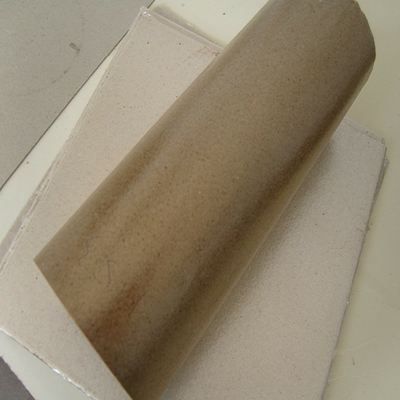
Sealing Materials are the fundamental yet critical components in countless industrial, commercial, and residential applications. Their primary function is to create a barrier—preventing the unwanted passage of liquids, gases, dust, and even sound—while accommodating movement, pressure changes, and environmental stress. Selecting the right sealing material is not a matter of guesswork; it is a precise engineering decision that directly impacts system integrity, safety, maintenance costs, and operational lifespan. At Kaxite Sealing, we combine decades of material science expertise with rigorous testing to provide solutions that meet the most demanding specifications.
Choosing an effective seal requires a deep understanding of the operating environment and the material's properties. Here are the key parameters engineers and procurement specialists must evaluate:
The following table provides a detailed comparison of the most widely used sealing materials, highlighting their typical formulations, key properties, and optimal application areas.
| Material Type | Common Base Polymer/Composition | Temperature Range (Approx.) | Key Strengths | Primary Limitations | Typical Applications |
|---|---|---|---|---|---|
| Nitrile Rubber (NBR) | Acrylonitrile Butadiene Copolymer | -40°C to +120°C (-40°F to +248°F) | Excellent resistance to oils, fuels, and greases; good abrasion resistance; cost-effective. | Poor resistance to ozone, weathering, and polar solvents (ketones, esters). | Hydraulic systems, fuel handling, automotive oil seals, gaskets. |
| Fluoroelastomer (FKM/Viton®) | Fluorinated Hydrocarbon Polymer | -20°C to +200°C (-4°F to +392°F) | Exceptional chemical resistance to oils, fuels, acids, and aromatics; excellent high-temperature performance. | Poor low-temperature flexibility; higher cost; not suitable for steam, ketones, or amines. | Aerospace, chemical processing, automotive fuel systems, high-temperature oil seals. |
| Silicone Rubber (VMQ) | Silicon-Oxygen Polymer | -60°C to +225°C (-76°F to +437°F) | Extremely wide temperature range; excellent flexibility at low temps; good ozone/weather resistance. | Low tensile strength and tear resistance; poor resistance to oils, fuels, and solvents. | Food & beverage, medical devices, high & low-temperature gaskets, static seals in appliances. |
| Ethylene Propylene Diene Monomer (EPDM) | Ethylene, Propylene, Diene Terpolymer | -50°C to +150°C (-58°F to +302°F) | Superior resistance to hot water, steam, ozone, and weathering; good electrical insulation. | Very poor resistance to petroleum-based oils and fuels. | Cooling systems, HVAC, automotive weather-stripping, potable water seals, outdoor electrical. |
| Polytetrafluoroethylene (PTFE/Teflon®) | Fully Fluorinated Polymer | -260°C to +260°C (-436°F to +500°F) | Ultimate chemical inertness; extremely low friction; wide temp range; non-stick. | High cold flow (creep); can be abrasive; requires special design for effective sealing. | Chemical processing, pharmaceutical, food industry, aggressive chemical gaskets & packings. |
| Polyurethane (AU/EU) | Polyester or Polyether based Urethane | -50°C to +100°C (-58°F to +212°F) | Outstanding abrasion and tear resistance; high tensile strength; good load-bearing capacity. | Limited upper temperature range; can hydrolyze (polyester) in hot water; poor chemical resistance to strong acids/bases. | Hydraulic seals (pistons, rods), high-wear applications, rollers, industrial machinery. |
| Perfluoroelastomer (FFKM) | Fully Fluorinated Polymer Elastomer | -20°C to +300°C (-4°F to +572°F) | Near-universal chemical resistance; excellent extreme high-temperature performance; plasma resistance. | Very high cost; limited low-temperature flexibility. | Semiconductor manufacturing, deep-well oil & gas, aggressive chemical seals, critical aerospace. |
Note: The performance of these materials can be significantly enhanced through compound formulation with fillers, plasticizers, and curatives at Kaxite Sealing to meet specific application challenges.
Beyond standard formulations, Kaxite Sealing develops advanced grades to tackle niche challenges. These include:
Q: How do I determine the chemical compatibility of a sealing material for my application?
A: Chemical compatibility is not universal. You must test the specific seal material with the exact fluid, concentration, and at the operational temperature. Always consult a chemical resistance guide, but treat it as a starting point. Kaxite Sealing provides detailed compatibility charts and can perform or advise on immersion testing for critical applications. Consider factors like exposure time, static vs. dynamic conditions, and the presence of multiple chemicals.
Q: What is "compression set" and why is it so important?
A: Compression set is the permanent deformation a material retains after being compressed for a prolonged period under specific conditions (e.g., 22 hours at 150°C). A high compression set means the seal loses its "spring-back" force, leading to leakage as it can no longer maintain contact with the sealing surfaces. For long-term, reliable sealing, especially in static gaskets or infrequently accessed flanges, specifying a material with a low compression set (e.g., per ASTM D395) is crucial.
Q: When should I choose a PTFE seal over an elastomeric seal like FKM?
A: Choose PTFE when facing extremely aggressive chemicals (strong acids, bases, halogenated solvents) that degrade even FKM, or for applications requiring ultra-low friction, very high temperatures (>200°C), or a sterile, non-contaminating surface (food/pharma). Choose an elastomer like FKM when you need superior sealing force from elasticity, better conformity to uneven surfaces, and in dynamic applications where PTFE's creep resistance may be insufficient without special design reinforcement.
Q: Can a seal be resistant to both high temperatures and petroleum-based oils?
A: Yes, but the selection narrows. Standard NBR works for moderate temperatures. For higher temperatures (>150°C), Fluoroelastomers (FKM) are the standard choice for oil resistance. For the most extreme temperatures (>250°C) combined with oil, Perfluoroelastomers (FFKM) are used, though at a premium cost. Material selection must always balance performance requirements with budget constraints.
Q: What does the Shore A hardness number indicate, and how do I choose the right hardness?
A> Shore A hardness measures resistance to indentation. Lower numbers (e.g., 50-70) indicate softer, more compliant seals ideal for low-pressure static sealing, uneven surfaces, or where high sealing force with low flange load is needed. Higher numbers (e.g., 80-90) indicate harder seals used for high-pressure systems to resist extrusion, in dynamic applications for durability, or where clearance gaps are larger. Kaxite Sealing engineers can recommend the optimal hardness for your specific geometry and conditions.
Q: Why does my seal fail prematurely even though I selected a material with good temperature ratings?
A: Premature failure is often a systems issue. Common causes include: excessive compression causing rapid stress relaxation, incompatible fluid swelling or degrading the material, installation damage (nip, twist, or scratch), improper gland design leading to extrusion or insufficient squeeze, exposure to a chemical not considered in the initial selection, or operating at the very extreme of the material's temperature range continuously, accelerating aging. A full system review is recommended.
Q: How does Kaxite Sealing ensure the quality and consistency of its sealing materials?
A> Kaxite Sealing implements a rigorous quality management system from raw material procurement to final shipment. We source polymers from certified suppliers, employ precise compounding processes with statistical process control (SPC), and perform batch testing for key properties like hardness, tensile strength, elongation, and compression set. Our in-house laboratory conducts chemical compatibility, temperature cycling, and life-cycle testing to validate performance. Certificates of Analysis (CoA) are available for traceability and compliance.
The best sealing material will underperform if installed in a poorly designed gland. Key gland design considerations include:
Kaxite Sealing's technical support team can provide gland design review and recommendations to optimize your sealing system's reliability.