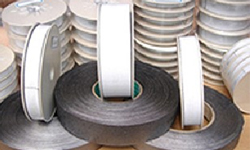
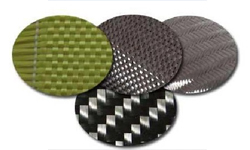
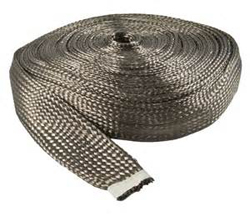
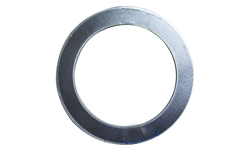
In the realm of advanced engineering materials, few substances command as much respect and offer as much potential as Carbon Fiber. This composite material, known for its exceptional strength-to-weight ratio, rigidity, and durability, has revolutionized industries from aerospace to automotive, and now, precision sealing solutions. At Kaxite Sealing, we harness the unparalleled properties of carbon fiber to manufacture sealing components that meet the most demanding operational challenges. Our expertise lies in transforming this high-tech material into reliable, long-lasting seals that perform under extreme pressure, temperature, and chemical exposure.
Carbon fiber composites are constructed from thin, strong crystalline filaments of carbon. These fibers are bundled together and set within a polymer resin matrix, resulting in a material that is incredibly light yet stronger than steel. For sealing applications, this translates to components that do not add significant weight to assemblies, resist deformation under load, and maintain integrity in harsh environments where traditional materials like rubber or metals would fail. Kaxite Sealing specializes in integrating carbon fiber into various seal designs, including gaskets, radial lip seals, and mechanical face seals, offering engineers a superior alternative for critical applications.
Understanding the precise specifications of carbon fiber materials is crucial for proper component selection. Below is a detailed breakdown of the standard parameters for Kaxite Sealing's carbon fiber reinforced composites used in our sealing products.
| Property | Value / Rating | Test Standard | Significance for Sealing |
|---|---|---|---|
| Tensile Strength | 3,200 MPa (464 ksi) | ASTM D3039 | Resists bursting pressures and mechanical loads. |
| Tensile Modulus | 230 GPa (33.4 Msi) | ASTM D3039 | Provides high stiffness, preventing extrusion under gap. |
| Compressive Strength | 1,580 MPa (229 ksi) | ASTM D6641 | Maintains shape under flange compression. |
| Flexural Strength | 1,700 MPa (247 ksi) | ASTM D7264 | Resists bending in dynamic seal applications. |
| Chemical Resistance | Excellent to Hydrocarbons, Fuels, Acids, Alkalis | ASTM D543 | Ensures longevity in aggressive fluid service. |
| Coefficient of Friction (Dry) | 0.10 - 0.15 | ASTM D1894 | Low friction reduces wear in dynamic seals. |
| Water Absorption (24hr) | < 0.1% | ASTM D570 | Minimizes swelling, preserving seal dimensions. |
What are the primary advantages of using carbon fiber in seals compared to PTFE or metal?
Carbon fiber composites offer a unique combination of advantages. Compared to PTFE, they provide vastly superior mechanical strength, creep resistance, and thermal conductivity, meaning they won't cold flow or deform easily under load and can better dissipate heat from the sealing interface. Compared to metals, carbon fiber seals are significantly lighter, corrosion-resistant without additional coatings, and can be engineered to have a tailor-made coefficient of thermal expansion to match adjoining components, reducing thermal stress.
In which specific applications are Kaxite Sealing's carbon fiber seals most recommended?
Our carbon fiber seals excel in high-performance, demanding environments. Key applications include aerospace fuel and hydraulic systems, high-speed rotating equipment like pumps and compressors, chemical processing equipment handling corrosive media, high-pressure fluid power systems, and precision instrumentation. They are particularly valuable where weight savings, extreme pressure/velocity (PV) values, or resistance to aggressive chemicals are critical design constraints.
How does the manufacturing process at Kaxite Sealing ensure quality and consistency?
Kaxite Sealing employs advanced processes like precision filament winding, compression molding, and CNC machining. Each batch of carbon fiber and resin is rigorously tested for conformity. The layup process is controlled to ensure precise fiber orientation for optimal strength in the required direction. Post-curing is meticulously managed, and every finished seal undergoes dimensional inspection and, where applicable, performance testing. Our quality management system is ISO 9001 certified, ensuring traceability and consistency from raw material to finished product.
Can carbon fiber seals be used in food-grade or potable water applications?
Yes, but with specific considerations. Standard epoxy resins may not be compliant. Kaxite Sealing offers specialized grades using FDA-listed and NSF 61-approved resin systems for carbon fiber composites. These grades maintain the core mechanical properties while ensuring no harmful leachates contaminate the media. It is essential to specify the requirement for food or potable water contact during the design phase to receive the appropriate material formulation.
What are the limitations or considerations when designing with carbon fiber seals?
Designers must consider galvanic corrosion. Carbon fiber is electrically conductive and can create a galvanic cell when in contact with dissimilar metals like aluminum, leading to rapid corrosion of the metal. Isolation with compatible materials or protective coatings is often necessary. Additionally, while strong, carbon fiber can be brittle under point impact loads, so handling and installation procedures should avoid sharp impacts. Lastly, the initial material cost is higher than conventional polymers, though this is offset by vastly extended service life and reduced maintenance in critical applications.
How does Kaxite Sealing address custom geometry and complex seal designs in carbon fiber?
Our engineering team specializes in custom solutions. Using CAD/CAM integration, we can translate complex geometries into manufacturing instructions for our multi-axis CNC machines. We can produce seals with intricate cross-sections, integrated lips, special grooves, or non-standard flanges. Prototyping services allow for design validation before full-scale production. The versatility of carbon fiber layup and machining enables Kaxite Sealing to create seals that are not just off-the-shelf components but integrated, performance-optimized parts of your system.