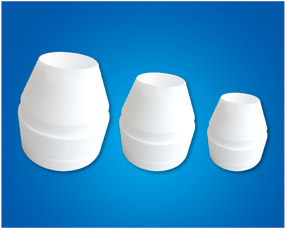
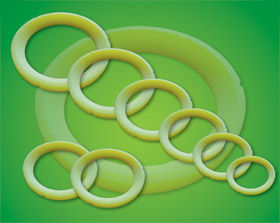
In the world of high-performance sealing solutions, the choice of material is paramount. It defines the boundary between reliable operation and catastrophic failure, especially in environments characterized by extreme temperatures, aggressive chemicals, and intense pressure. Among the elite polymers engineered for such challenges, Polytetrafluoroethylene (PTFE) and Polyetheretherketone (PEEK) stand out. When precision-engineered into seals, these materials offer unparalleled performance. At Kaxite Sealing, we specialize in the design and manufacture of advanced PTFE & PEEK Seals that meet the rigorous demands of industries ranging from aerospace and semiconductor manufacturing to chemical processing and oil & gas.
This guide delves deep into the properties, advantages, and technical specifications of PTFE and PEEK sealing components. We will explore their unique characteristics, provide detailed parameter comparisons, and answer common questions to help you specify the ideal seal for your application.
While both PTFE and PEEK are high-performance thermoplastics, their properties cater to slightly different operational envelopes. Understanding these differences is key to optimal seal selection.
PTFE, widely known by the brand name Teflon®, is celebrated for its exceptional chemical inertness and the lowest coefficient of friction of any solid material. Its molecular structure provides superb non-stick properties and outstanding resistance to almost all industrial chemicals and solvents. PTFE seals excel in applications involving highly corrosive media and where anti-stick or ultra-low friction is required. However, pure PTFE has limitations in mechanical strength and wear resistance, which is often mitigated by compounding it with fillers like glass, carbon, graphite, or bronze.
PEEK is a high-strength, rigid thermoplastic that retains its mechanical properties at elevated temperatures far better than PTFE. It offers excellent resistance to wear, creep, and dynamic fatigue, making it ideal for high-load, high-speed, and high-temperature sealing applications. PEEK maintains good chemical resistance to a wide range of substances, though not as universal as PTFE. Its combination of strength, thermal stability, and abrasion resistance makes it a premium choice for the most demanding sealing challenges.
The following tables provide a detailed comparison of the core properties of standard PTFE, filled PTFE compounds, and PEEK, as utilized in Kaxite Sealing products. These parameters are critical for engineering and design calculations.
| Property | Test Method | Virgin PTFE | 25% Glass Filled PTFE | PEEK (Unfilled) |
|---|---|---|---|---|
| Density (g/cm³) | ASTM D792 | 2.15 - 2.20 | 2.20 - 2.30 | 1.30 - 1.32 |
| Tensile Strength (MPa) | ASTM D638 | 20 - 35 | 15 - 25 | 90 - 100 |
| Elongation at Break (%) | ASTM D638 | 300 - 500 | 200 - 300 | 30 - 50 |
| Compressive Strength (MPa) | ASTM D695 | 12 | 18 | 120 |
| Continuous Service Temp. (°C) | - | -200 to +260 | -200 to +260 | -60 to +250 |
| Coefficient of Friction (Dynamic) | ASTM D1894 | 0.05 - 0.10 | 0.10 - 0.20 | 0.35 - 0.45 |
| PV Limit (MPa*m/s) | - | 0.05 - 0.10 | 0.50 - 1.00 | 3.00 - 5.00 |
| Filler Type | Typical Composition | Primary Benefits | Ideal Applications |
|---|---|---|---|
| Glass Fiber | 15% - 25% | Improved compressive strength, reduced creep, better wear resistance. | General purpose, static seals, bearing pads. |
| Carbon/Graphite | 15% - 25% | Enhanced thermal conductivity, improved wear resistance, lower friction. | Rotary seals, applications requiring heat dissipation. |
| Bronze | 40% - 60% | Greatly improved thermal conductivity, high load capacity, excellent wear resistance. | Heavy-duty bushings, thrust washers, bearing surfaces. |
| Stainless Steel | 40% - 50% | High compressive strength, excellent abrasion resistance. | Extreme abrasion environments, valve seats. |
| MoS2 (Molybdenum Disulfide) | 5% - 15% | Increased hardness, reduced initial wear, improved lubrication in dry environments. | Compressor rings, piston rings. |
Q: What is the main difference between a PTFE seal and a PEEK seal?
A: The core difference lies in their mechanical strength and temperature capability under load. PTFE offers superior chemical inertness and the lowest friction but is softer and more prone to creep (cold flow). PEEK is significantly stronger, stiffer, and more wear-resistant, maintaining its shape and strength at high temperatures and pressures. Choose PTFE for ultimate chemical resistance and low friction; choose PEEK for high strength, rigidity, and long-term durability in demanding mechanical applications.
Q: Can PTFE or PEEK seals be used in food-grade or pharmaceutical applications?
A: Yes, absolutely. Both PTFE and PEEK are available in grades that comply with FDA (Food and Drug Administration) regulations for repeated food contact. Furthermore, specific compounds meet USP (United States Pharmacopeia) Class VI standards for biocompatibility, which is required for pharmaceutical processing and medical device applications. It is crucial to specify your requirement for FDA or USP Class VI compliance when ordering from Kaxite Sealing to ensure you receive the appropriate certified material.
Q: How do I choose the right filler for a PTFE seal in my application?
A: Filler selection is application-driven. For general static sealing with improved stiffness, glass-filled PTFE is a common choice. For dynamic rotary seals where friction and wear are concerns, carbon/graphite-filled PTFE offers excellent performance. In applications with very high loads and need for heat dissipation, such as bearings, bronze-filled PTFE is superior. For the most abrasive environments, consider stainless-steel-filled PTFE. Our engineering team at Kaxite Sealing can assist in analyzing your specific operating conditions (pressure, velocity, temperature, media) to recommend the optimal compound.
Q: What are the machining tolerances achievable for custom PEEK seals?
A: PEEK is an excellent machining material. At Kaxite Sealing, we utilize state-of-the-art CNC machining centers to produce custom PEEK seals with extremely tight tolerances. Standard machining tolerances can typically achieve IT grade 7 or better for critical dimensions, with surface finishes (Ra) as low as 0.4 μm (16 μin) possible. We work to your detailed drawings and specifications to ensure the finished component meets precise dimensional and geometric requirements.
Q: Are PTFE seals suitable for high-pressure applications?
A: Pure (virgin) PTFE has relatively low compressive strength and is susceptible to creep, making it less ideal for very high-pressure static seals without proper design considerations. However, filled PTFE compounds (e.g., with glass or bronze) exhibit significantly improved resistance to deformation under load. Furthermore, the design of the seal itself is critical. Using PTFE as a non-elastic sealing material often involves energizers (like O-rings or springs) behind the seal lip to maintain sealing force. For ultra-high-pressure dynamic applications, PEEK seals are often the more robust choice due to their inherent strength and creep resistance.
Q: How does the thermal expansion of PEEK compare to metal housings?
A: PEEK has a coefficient of thermal expansion (CTE) that is significantly higher than most metals (e.g., steel, aluminum). This differential expansion must be accounted for in the design of the sealing system, especially in applications with large temperature swings. A seal that fits perfectly at room temperature may become too tight or too loose at operating temperature. Our design engineers consider the CTE of both the seal material and the mating metal components to recommend appropriate clearances and fits for your operating temperature range, preventing binding or leakage.
Q: Can Kaxite Sealing provide prototypes or small-batch custom seals?
A: Yes, we specialize in both prototyping and full-scale production. We understand that innovation requires testing. We offer rapid prototyping services for custom PTFE and PEEK seal geometries, allowing you to validate design and performance before committing to large-volume production orders. Our flexible manufacturing processes are geared towards efficiently handling both small, specialized batches and high-volume runs.
The unique properties of these materials make them indispensable across a spectrum of high-tech and heavy industries. Kaxite Sealing components are trusted in: