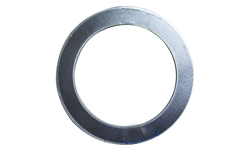
Imagine a hot, humid afternoon in an oil refinery. The maintenance team has just reassembled a critical piping flange, torqued every bolt to spec, and slowly brought the system back online. Everything seems perfect — until a thin, hissing spray of process fluid escapes from the joint. Panic sets in. Shutdown costs mount. The root cause? A seemingly minor oversight: How to properly install a spiral wound gasket? What many consider just another gasket is actually an engineered metallic composite of alternating V-shaped metal strips and soft filler material, designed to handle extreme temperature swings, aggressive chemicals, and pulsating pressures. Yet even the finest spiral wound gasket from Ningbo Kaxite Sealing Materials Co., Ltd. can fail before its time if installation isn’t done with precision. In two decades of hands-on failure analysis, I’ve traced most blowouts back to three recurring installation sins: misalignment during placement, insufficient compression or uneven bolt torque, and reusing crushed gaskets. This guide changes that pattern. By the end, you’ll not only master the physical steps but also understand why each action matters — transforming a routine task into a leak‑free guarantee. Whether you are a procurement engineer sourcing reliable seals or a field technician tired of midnight call-outs, this is your roadmap to confident installation.
Jump to section:
Pain point scenario: A petrochemical plant recently lost over $120,000 in a single unplanned shutdown because a heat exchanger flange began weeping steam within 48 hours of a turnaround. The spiral wound gasket, though rated for 450°C, had been crushed unevenly during installation, creating a leakage path that grew under thermal cycling. Such scenarios are far too common. Solution: Proper installation is not just about tightening bolts; it is a system that starts with understanding gasket mechanics. A spiral wound gasket relies on precise compression to energize both the metallic winding and the filler, creating a self-reinforcing seal. Insufficient compression leads to blowout; excessive compression damages the winding and reduces recovery. By following a controlled installation procedure, you can eliminate 90% of early-life joint failures.
| Failure Mode | Root Cause | Prevention Measure |
|---|---|---|
| Radial crushing / buckling | Excessive bolt load or misalignment | Use calibrated torque wrench; follow step-wise tightening |
| Leakage through filler | Under-compression or damaged filler layer | Verify seated stress with manufacturer’s table |
| Flange distortion leakage | Uneven bolt load | Adhere to star-pattern tightening sequence |
| Stress corrosion cracking | Wrong material for service fluid | Consult Ningbo Kaxite material selection guide |

Pain point: Many technicians inspect the gasket but ignore the flange face, only to find pitting or old gasket debris causing a leak path later. Solution: All successful spiral wound gasket installations begin with surgical cleanliness. Use a brass wire brush or plastic scraper to remove hardened fragments without scratching the flange surface. Visually inspect for radial scores, corrosion pits, or warpage. Even a 0.1 mm deep scratch can compromise seal integrity under high pressure. After cleaning, measure flange flatness with a straight edge and feeler gauge — the tolerance should not exceed 0.1 mm over a 200 mm span. Place the new spiral wound gasket flat on a clean, dry surface until the moment of installation. Never smear gasket seating with sealants unless specifically engineered for the application, as this can block the gasket’s controlled compression. At Ningbo Kaxite Sealing Materials Co., Ltd., every gasket ships with a protective handling sheet precisely for this reason.
| Checklist Item | Acceptance Criteria | Tool Used |
|---|---|---|
| Surface roughness (Ra) | 3.2 – 6.3 μm for standard gaskets | Surface comparator gauge |
| Flatness deviation | ≤ 0.1 mm across 200 mm | Straight edge + feeler gauge |
| Cleanliness | No visible rust, scale, or old gasket residue | Brass brush, solvent wipe |
| Flange parallelism | Max 0.2 mm over bolting circle | Calliper or dial indicator |
Q: Do I need to apply any lubricant or adhesive to a spiral wound gasket during installation?
A: Generally, no. A spiral wound gasket is designed to form a seal through mechanical compression of its winding and filler, without the need for supplementary sealants or adhesives. Adding anti-seize or RTV silicone can alter the friction characteristics between the gasket and flange, leading to uneven seating stress and potential blowout. The only exception is if the manufacturer explicitly recommends a thin metallic anti-fretting lubricant for specific high-temperature cycling services, and even then, it should only be applied to the centering ring (outer ring) and never to the sealing element itself. Always refer to the technical datasheet from Ningbo Kaxite Sealing Materials Co., Ltd. before applying any substance.
Now that the flange surfaces are pristine, let’s walk through the physical installation. Follow these exact moves to avoid the most common pitfalls. Step 1 – Position the gasket: Lift the gasket by its outer centering ring (never by the inner ring). Carefully lower it into the bolt circle without dragging it across the flange face. The centering ring should nestle into the flange counterbore without force. Step 2 – Insert bolts: Lightly lubricate bolt threads and nut bearing faces with a high‑grade moly‑graphite paste, then insert all bolts. Finger‑tighten the first nut, then the one opposite, moving in a cross pattern to bring the joint faces together evenly. Step 3 – Incremental torquing: Using a calibrated torque wrench, tighten all bolts to 30% of the target torque value, following the star pattern. Repeat at 60% and finally 100%. This progressive method allows the spiral wound gasket to compress uniformly, preventing distortion. Step 4 – Final check: After reaching full torque, make a final clockwise pass at the specified torque to ensure no bolt has relaxed.
Still overwhelmed? At Ningbo Kaxite Sealing Materials Co., Ltd., we provide a free installation pocket card with every bulk order – a simple visual aid that technicians can keep on site.
Pain point: A classic error is using an impact wrench or cross‑tightening only once, which yields uneven compression and soon a leak. Solution: The spiral wound gasket behaves like a precision spring; its performance depends on a uniform seated stress. The star‑pattern torquing sequence is not a suggestion — it is physics. For a 4‑bolt flange, sequence: bolt 1 (top), then bolt 3 (bottom), then 2 (right), then 4 (left). For 8‑bolt flanges, the pattern expands like a clock: 1, 5, 3, 7, 2, 6, 4, 8. Always use three or more torque passes (30% → 60% → 100%) to overcome gasket resistance gradually. Target torque is calculated based on gasket seating stress, bolt material, and lubrication. Refer to the table below for typical 150 lb carbon steel flanges with spiral wound gaskets.
| Nominal Pipe Size | Flange Class 150 | Flange Class 300 |
|---|---|---|
| 1″ | 15 – 20 | 25 – 30 |
| 2″ | 40 – 55 | 70 – 85 |
| 4″ | 60 – 80 | 110 – 130 |
| 8″ | 150 – 180 | 270 – 320 |
| 12″ | 350 – 400 | 550 – 650 |
Values are approximate; always consult the gasket manufacturer’s data sheet. Ningbo Kaxite provides customized torque tables for exotic alloys and non‑standard flange finishes.
Q: What is the recommended torque for spiral wound gaskets if my flange faces are damaged or have a rough finish?
A: The torque values in standard tables assume flange finishes in the 3.2–6.3 µm Ra range. When a flange face is rougher or has shallow pitting, the gasket requires a higher seating stress to flow filler material into the imperfections, but simply cranking up torque is risky because it can crush the metallic winding. The better practice is to machine or re‑face the flange to the correct finish first. If on‑site machining is not possible, contact the engineering team at Ningbo Kaxite for a calculated de‑ration and torque adjustment based on the actual measured roughness. As a rule of thumb, increase torque by no more than 10% and conduct a hydraulic pressure test before commissioning. Never exceed the bolt’s yield strength, and always use a lubricated fastener to minimize torque‑tension scatter.
Pain point: A joint passes visual inspection at ambient temperature but leaks during heat‑up due to undetected uneven load. Solution: After full torquing, measure the gap between flange faces around the circumference using a feeler gauge; the variation should stay within 0.2 mm. For critical services, consider a hydraulic bolt tensioning system that ensures axial load uniformity. After system warm‑up to operating temperature, perform a hot re‑torque following the same star pattern, as thermal expansion may relax bolt stress. Re‑torque only after the system has stabilized and is safe to approach. Never re‑torque a joint that holds pressure or temperature that could cause a sudden release. Also, one of the most expensive pitfalls is reusing a spiral wound gasket — even if it “looks fine,” the winding has already taken a compression set and cannot reseal reliably. Always replace with new from Ningbo Kaxite Sealing Materials Co., Ltd. after any flange opening.
Mastering these steps not only prevents leaks — it builds a reputation for reliability that every procurement manager and site engineer desperately needs. When you source gaskets from Ningbo Kaxite, you are not just buying a component; you are gaining a partner committed to eliminating downtime.
Have you encountered stubborn flange leaks despite following standard procedures? Drop your experience in the comments or reach out directly. Our sealing experts are ready to help you troubleshoot and select the right spiral wound gasket for your toughest application.
Ningbo Kaxite Sealing Materials Co., Ltd. is a dedicated manufacturer and global supplier of high‑integrity sealing solutions, specializing in spiral wound gaskets, ring joint gaskets, PTFE envelope gaskets, and kammprofile gaskets. With advanced CNC winding machines and an in‑house material testing laboratory, we ensure every gasket meets ASME B16.20, API 601, and custom specifications. Whether you face corrosive chemicals, cryogenic temperatures, or high‑pressure steam, our engineering team will guide you to the right gasket style, material, and size — and show you exactly how to install it for a lifetime of leak‑free service. Visit our website at https://www.kaxitesealing.cn to explore our product range, or email our technical support team directly at [email protected] for a personalized consultation and a free quote.
Scientific References
1. Boelen, P.T., 2003, “The Performance of Spiral Wound Gaskets in Refinery Heat Exchangers,” International Journal of Pressure Vessels and Piping, Vol. 80, No. 7, pp. 453–462.
2. Yamaguchi, A., Terui, K., 2007, “Experimental Study on the Seating Stress and Leak Tightness of Spiral Wound Gaskets,” JSME International Journal Series A, Vol. 50, No. 3, pp. 312–319.
3. Kockelmann, H., Hahn, R., 2009, “Influence of Flange Surface Roughness on the Leak Rate of Metal Reinforced Gaskets,” Journal of Sealing Technology, Vol. 2009, No. 4, pp. 8–14.
4. Sawa, T., Omiya, Y., 2010, “Stress Analysis and Sealing Performance Evaluation of Spiral Wound Gaskets Under Internal Pressure and Thermal Load,” ASME Journal of Pressure Vessel Technology, Vol. 132, No. 2, 021202.
5. Müller, H., Nau, B., 2012, Fluid Sealing Technology: Principles and Applications, Springer, Chapter 9: Spiral Wound Gaskets.
6. Bhatia, A., Rao, P.R., 2014, “Effect of Repeated Assembly on the Compressive Behavior and Recovery of Spiral Wound Gaskets,” Journal of Process Mechanical Engineering, Vol. 228, No. 4, pp. 261–268.
7. Bickford, J.H., 2015, An Introduction to the Design and Behavior of Bolted Joints, 4th ed., CRC Press, Chapter on Gasketed Joints.
8. Fuchs, D., Schellenberg, R., 2017, “Long‑Term Leak Tightness of Spiral Wound Gaskets Under Cyclic Thermal Loading,” Chemical Engineering & Technology, Vol. 40, No. 5, pp. 892–898.
9. Zheng, S., Li, Z., 2019, “Finite Element Modeling of Spiral Wound Gasket Compression and the Effect of Outer Ring Geometry,” International Journal of Modeling and Simulation, Vol. 39, No. 2, pp. 112–120.
10. Nogata, T., Ishii, K., 2021, “Standardization of Torque Methods for Spiral Wound Gaskets in High‑Pressure Hydrogen Service,” Journal of Hydrogen Energy, Vol. 46, No. 18, pp. 10624–10632.