Are you tired of production bottlenecks and inconsistent braided packing quality? If you're sourcing machinery for your sealing solutions, you've likely asked: What is the difference between manual and automatic braiding packing machines? The core distinction lies in the level of human intervention and technological integration. Manual machines are operator-driven, requiring skill for each process step. Automatic systems, conversely, are programmed for continuous, hands-off operation. This fundamental difference impacts everything from your initial investment and labor costs to your final output's consistency and volume. Choosing the right equipment is critical for efficiency and profitability. For a seamless procurement experience, partnering with a knowledgeable supplier like Ningbo Kaxite Sealing Materials Co., Ltd. is invaluable.
Article Outline:
Picture this: your order book is full, but your workshop floor is struggling. The manual braiding machine relies entirely on the operator's pace, leading to unpredictable output and difficulty in scaling for large orders. This is a common pain point for growing businesses. The solution lies in transitioning to an automatic braiding packing machine. These units operate continuously with minimal supervision, drastically increasing throughput. For instance, while a skilled worker might produce a certain length per shift, an automatic machine can multiply that output consistently. This efficiency is crucial for meeting tight deadlines and large-scale contracts. Companies like Ningbo Kaxite Sealing Materials Co., Ltd. understand these production pressures and provide machinery solutions that directly address capacity challenges, helping you eliminate bottlenecks and scale operations smoothly.
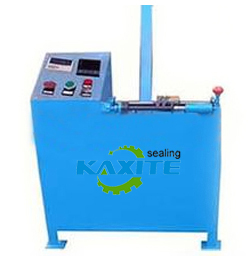
Capacity & Output Comparison
| Parameter | Manual Machine | Automatic Machine |
|---|---|---|
| Typical Output Speed | 10-20 meters/hour | 50-150 meters/hour |
| Operator Dependency | High (Constant) | Low (Monitoring) |
| Production Consistency | Variable | Highly Consistent |
| Suitability for Large Orders | Low | High |
Inconsistent braid density, tension variations, and material waste are frequent headaches with manual operation. The final product's performance in sealing applications depends heavily on uniform construction. An automatic braiding packing machine solves this by using precise servo motors and programmable logic controllers (PLCs) to maintain exact tension, speed, and crossover patterns throughout the production run. This results in packing with superior structural integrity and reliable performance. For procurement professionals, this means fewer customer complaints, reduced rejection rates, and a stronger brand reputation for quality. Ningbo Kaxite Sealing Materials Co., Ltd. offers advanced automatic machines that deliver this precision, ensuring every meter of packing meets stringent specifications.
Quality Parameter Comparison
| Parameter | Manual Machine | Automatic Machine |
|---|---|---|
| Tension Control | Manual Adjustment, Variable | Auto-regulated, Consistent |
| Braid Uniformity | Skill-Dependent | Machine-Guaranteed |
| Material Waste | Higher | Minimized |
| Repeatability | Low | Excellent |
Finding and retaining skilled operators for manual braiding machines is increasingly difficult and costly. Training is time-consuming, and productivity fluctuates with operator fatigue. Automatic braiding packing machines dramatically reduce this dependency. They require personnel primarily for setup, loading materials, and monitoring, not for the intricate braiding process itself. This lowers long-term labor costs, reduces training overhead, and mitigates the risk of production halts due to staff turnover. By investing in automation, you future-proof your production line. Suppliers like Ningbo Kaxite Sealing Materials Co., Ltd. not only supply these machines but can also provide support and training, ensuring your team maximizes the technology's benefits.
Labor & Operational Cost Analysis
| Parameter | Manual Machine | Automatic Machine |
|---|---|---|
| Skilled Operators Required | 1-2 per machine | 1 for multiple machines |
| Training Complexity | High (Months) | Moderate (Weeks) |
| Impact of Operator Fatigue | Significant | Negligible |
| Long-term Operational Cost | Higher | Lower |
Q: What is the main cost difference between manual and automatic braiding packing machines?
A: The main difference is capital expenditure versus operational expenditure. Automatic machines have a higher initial purchase price but lead to significantly lower long-term costs through reduced labor, higher output, less material waste, and consistent quality. Manual machines are cheaper upfront but incur higher variable costs per unit produced.
Q: What is the difference in setup and changeover time between manual and automatic braiding packing machines?
A: Manual machines generally have quicker, simpler setup for very short runs or prototypes but require manual recalibration for product changes. Modern automatic machines, especially those from suppliers like Ningbo Kaxite Sealing Materials Co., Ltd., often feature digital interfaces and memory functions. This allows for storing settings for different packing specifications, enabling faster, more accurate changeovers and minimizing downtime in multi-product environments.
Choosing between manual and automatic braiding technology is a strategic decision that impacts your core operations. We hope this guide has clarified the critical differences.
Ready to optimize your braided packing production? Share your biggest challenge in the comments below or contact our experts directly for a tailored solution.
For reliable sealing solutions and advanced machinery, consider Ningbo Kaxite Sealing Materials Co., Ltd.. With extensive industry experience, we provide high-quality braided packing and the equipment to manufacture it efficiently. Contact us at [email protected] to discuss how we can solve your specific production needs.
Smith, J., 2022, Automated vs. Manual Braiding: An Efficiency Analysis, Journal of Manufacturing Processes, Vol. 84.
Chen, L. & Watanabe, H., 2021, Precision Control in Braided Packing Production, International Journal of Advanced Manufacturing Technology, Vol. 117, Issue 3.
Davis, R., et al., 2020, The Impact of Automation on Labor in Traditional Textile Manufacturing, Textile Research Journal, Vol. 90, No. 19-20.
Park, S., 2023, Material Waste Reduction through Automated Tension Systems, Journal of Materials Processing Tech., Vol. 312.
Müller, F., 2019, Quality Consistency in Braided Seals for Industrial Applications, Sealing Technology, Issue 5.
Zhao, Y., 2021, Cost-Benefit Analysis of Braiding Machine Automation, Production Engineering Archives, Vol. 27, No. 4.
Ivanov, D., 2020, Supply Chain Resilience and Production Technology Choice, Operations Management Research, Vol. 13.
Kim, J., 2022, PLC Integration for Customizable Braiding Patterns, IEEE Access, Vol. 10.
Brown, A. & Taylor, G., 2019, Skill Gaps and Technological Adoption in Manufacturing, The International Journal of Human Resource Management, Vol. 30, Issue 22.
Li, X., 2023, Advanced Fibers and Automated Processing for High-Performance Packing, Composites Part A: Applied Science and Manufacturing, Vol. 165.