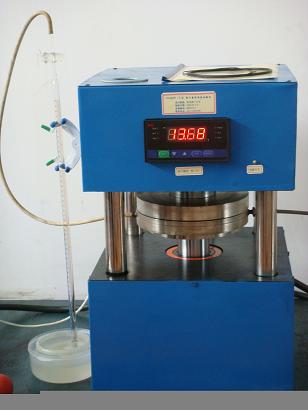
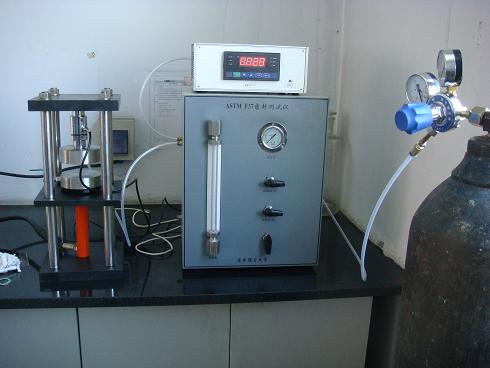
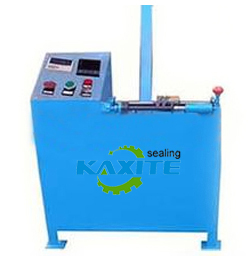
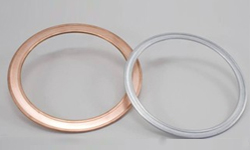
In the realm of industrial manufacturing, quality assurance is non-negotiable. A Test Machine is a sophisticated apparatus designed to rigorously evaluate the physical properties, durability, and performance of materials, components, or final products under controlled or simulated real-world conditions. These machines are indispensable across sectors such as automotive, aerospace, construction, packaging, and sealing technology. They provide empirical data that ensures products meet stringent international standards, safety regulations, and specific customer requirements. At Kaxite Sealing, we understand that the integrity of a sealing solution is only as good as the validation process behind it. Our commitment to excellence drives the development and utilization of advanced test machines to guarantee the reliability of every gasket, seal, and component we produce and recommend.
Test machines serve a multitude of purposes in industrial and R&D settings. Their primary function is to eliminate guesswork and provide quantifiable evidence of a product's capabilities and limits.
Understanding the specifications of a test machine is vital for selecting the right equipment for your needs. Below is a detailed breakdown of the core parameters that define a machine's capabilities.
| Parameter | Description | Typical Range / Examples | Importance for Sealing Tests |
|---|---|---|---|
| Force Capacity | The maximum load the machine can apply or measure. | e.g., 5 kN, 50 kN, 500 kN | Determines if the machine can simulate the maximum stress a seal will experience in service. |
| Accuracy & Resolution | The precision of force and displacement measurements. | ±0.5% of reading, Resolution: 0.001 mm | Critical for detecting subtle material deformations and ensuring reliable, repeatable data for quality certification. |
| Control Modes | The methods by which the test is executed. | Position Control, Force Control, Strain Control | Allows simulation of various real-world conditions, such as constant pressure on a flange (force control) or fixed compression (position control). |
| Data Acquisition Rate | Speed at which the system records data points. | Up to 1000 Hz or higher | Essential for capturing high-speed events like burst tests or dynamic sealing performance. |
| Test Space Dimensions | The physical size of the area where the specimen is mounted. | e.g., 500mm x 500mm x 600mm (WxDxH) | Dictates the maximum size of seals or assemblies that can be tested, such as large diameter pipeline gaskets. |
| Software & Standards | Control software and pre-configured test protocols. | Compliance with ASTM, ISO, DIN, EN; Custom programmable sequences. | Ensures tests are performed according to globally recognized standards, a cornerstone of Kaxite Sealing's validation process. |
For Kaxite Sealing, a test machine is not just a piece of laboratory equipment; it is the foundation of our product development and quality assurance philosophy. We employ a suite of advanced test machines specifically calibrated for elastomeric, thermoplastic, and composite materials used in sealing.
This rigorous, data-driven approach allows Kaxite Sealing to provide not just products, but performance guarantees. Our test reports offer customers transparent, objective evidence that our seals will perform as specified in their specific application.
Q: What is the difference between a universal test machine and a specialized leak tester?
A: A Universal Test Machine (UTM) is versatile and can perform tensile, compression, bending, and shear tests on a wide variety of materials by using different fixtures. It primarily measures mechanical properties like strength and elongation. A specialized leak tester, however, is designed for one specific purpose: to detect and measure the leakage of a sealed assembly. It applies pressure or vacuum and monitors for decay or flow. While a UTM tests the material, a leak tester evaluates the performance of the assembled sealing system. Kaxite Sealing utilizes both types to comprehensively validate our products.
Q: How often should a test machine be calibrated, and why is it crucial?
A: Calibration frequency depends on usage intensity, environmental conditions, and quality standards (e.g., ISO 17025). Typically, annual calibration by an accredited body is recommended. Regular calibration is non-negotiable because it ensures measurement traceability to national/international standards. An uncalibrated machine can produce inaccurate data, leading to false acceptance of subpar products or rejection of good ones. This undermines quality control, risks product failure in the field, and can have serious safety and financial implications. Kaxite Sealing maintains a strict calibration schedule for all our test equipment to uphold data integrity.
Q: Can test machines simulate long-term aging in a short period?
A: Yes, through accelerated aging tests. Machines like environmental chambers use elevated temperatures (per the Arrhenius equation) to accelerate chemical aging processes like oxidation. For example, testing a seal at 150°C for 1,000 hours might simulate 10 years of service at 70°C. Similarly, fatigue test machines apply cyclic loads at high frequency to simulate years of wear in days. It's important to note that these are predictive models, and correlation with real-time aging data is essential for accuracy. Kaxite Sealing uses accelerated testing to forecast service life and select the most durable compounds for long-life applications.
Q: What key factors should I consider when specifying a test machine for sealing applications?
A: Focus on these critical factors: 1) Force Range and Frame Stiffness: Ensure it covers your required compression forces for seal seating and has a stiff frame for accurate displacement control. 2) Control and Precision: Look for precise temperature-controlled chambers if testing thermal performance, and high-resolution sensors for measuring small deformations. 3) Fixturing: Availability of fixtures that accurately replicate your actual flange or housing geometry is vital. 4) Media Compatibility: For leak tests, the machine must handle your specific test media (air, water, helium, oil) safely. 5) Software and Compliance: The software should easily configure tests per relevant standards (e.g., ASTM F37 for sealability) and generate comprehensive reports. Consulting with experts, like the engineers at Kaxite Sealing, can help refine these specifications.
Q: How does Kaxite Sealing use test data to support customers?
A: We transform test data into actionable engineering insight. For customers, this means: 1) Performance Validation Reports: Providing certified test reports that prove our seals meet or exceed the specifications of their application. 2) Comparative Analysis: Showing data comparisons between different material options, helping customers make cost-effective decisions based on performance trade-offs. 3) Failure Analysis: If a field issue arises, we can replicate the conditions in our lab to diagnose the root cause and develop a corrective solution. 4) Design Support: Sharing material property data (stress-strain curves, compression set data) for customers' own FEA and design calculations. Our goal is to use data to build confidence and reduce risk in your projects.
Executing a test is one thing; executing the *right* test is everything. The protocol defines the conditions, sequence, and pass/fail criteria. For sealing components, common standard protocols include:
| Standard | Title | Primary Focus |
|---|---|---|
| ASTM D1414 | Standard Test Method for Rubber O-Rings | Compression set, stress relaxation. |
| ASTM F37 | Standard Test Methods for Sealability of Gasket Materials | Short-term sealability under flange load. |
| ISO 23529 | Rubber — General procedures for preparing and conditioning test pieces | Ensuring consistent, comparable test specimen preparation. |
| DIN 3535-6 | Seals for gas supply - Part 6: Test methods | Performance tests for seals in gas applications. |
| SAE J2681 | Elastomeric Seal and Material Chemical Resistance and Compatibility Test | Swelling and degradation in fluids. |
At Kaxite Sealing, our technical team is proficient in these and many other standards. We work with clients to develop custom test protocols when off-the-shelf standards do not fully capture the unique challenges of their operating environment, ensuring validation is both comprehensive and relevant.