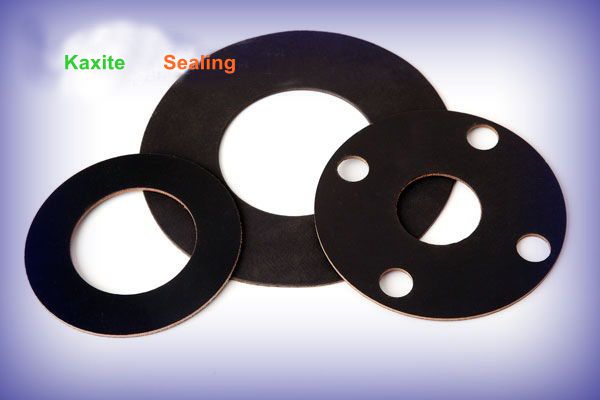
What are the advantages of Carbon Fiber over traditional materials? This question is at the forefront of every procurement professional's mind when sourcing components for demanding applications. It's the key to unlocking lighter, stronger, and more durable products. For purchasing managers dealing with sealing challenges in extreme environments—be it high-temperature industrial furnaces, cryogenic systems, or corrosive chemical processing—understanding this material shift is critical. Carbon fiber composites offer a paradigm leap, replacing heavy metals and short-lived conventional seals. This article breaks down the concrete benefits, translating complex material science into clear procurement advantages for your next project. We'll explore why leading industries are switching and how Ningbo Kaxite Sealing Materials Co., Ltd. leverages this technology to solve persistent sealing failures.
Procurement specialists often face a critical trade-off: specifying a robust, durable sealing material that unfortunately adds significant weight and mass to the assembly. This is especially problematic in aerospace, automotive, and high-speed machinery where every kilogram impacts fuel efficiency, performance, and operational costs. Traditional metal gaskets and thick rubber seals solve one problem but create another. Carbon fiber composites, specifically engineered for sealing applications, provide the ultimate solution. Their exceptional strength-to-weight ratio means you can achieve superior sealing performance and structural integrity with a fraction of the mass. Imagine replacing a heavy, cumbersome flange seal with a sleek, high-performance carbon fiber reinforced tape that withstands higher pressures while making the entire system lighter and more efficient.
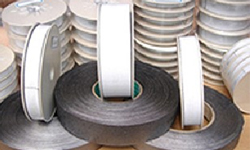
For instance, a standard industrial sealing scenario involves a high-pressure pump connection. A traditional solution might require bulky spiral-wound gaskets with metal cores. A modern alternative from Ningbo Kaxite Sealing Materials Co., Ltd., like their carbon fiber reinforced graphite tapes, offers a direct performance comparison:
| Parameter | Traditional Spiral Wound Gasket (Stainless Steel) | Kaxite Carbon Fiber Reinforced Sealing Tape |
|---|---|---|
| Density | ~7.9 g/cm³ | ~1.8 g/cm³ |
| Tensile Strength | High, but with high mass | Extremely High Specific Strength |
| Ease of Installation | Requires precise bolt torque, alignment | Flexible, conformable to uneven surfaces |
| Impact on System Weight | Significant | Minimal |
Another frequent pain point is seal failure under dynamic loads, vibration, or extreme pressure cycling. Traditional elastomers degrade, compress, and creep over time, leading to leaks, downtime, and costly maintenance. Metals can fatigue. The procurement headache is constant resealing and part replacement. Carbon fiber's advantage lies in its incredible specific strength and stiffness. It maintains dimensional stability under load far better than polymers and resists fatigue better than many metals. This translates directly into longer service intervals, reduced spare parts inventory, and higher overall equipment availability. For a plant manager dealing with vibrating compressors or pressure vessels, specifying a carbon fiber-based sealing solution means moving from a reactive to a predictive maintenance model.
Consider a chemical reactor with aggressive thermal cycling. The seals must handle not just corrosion but also the physical stress of expansion and contraction.
| Parameter | Traditional PTFE / FEP Gasket | Kaxite Carbon Fiber Filled High-Performance Seal |
|---|---|---|
| Creep Resistance | Poor - Cold flows under pressure | Excellent - Maintains bolt load |
| Fatigue Life (Cycles to Failure) | Moderate | Exceptionally High |
| Dimensional Stability | Low - Prone to deformation | Very High |
| Typical Maintenance Interval | Frequent inspections required | Extended, reliable service life |
Corrosion is the silent budget killer in industrial procurement. Specifying a stainless steel or special alloy seal for a harsh chemical environment often comes with a staggering price tag, and even then, pitting and stress corrosion cracking can lead to catastrophic failure. The advantage of carbon fiber composites is their inherent inertness to a wide range of chemicals, acids, and solvents. Unlike metals, they do not oxidize or galvanically corrode. This makes them ideal for sealing applications in petrochemical plants, offshore platforms, and pharmaceutical manufacturing where purity and reliability are non-negotiable. Partnering with a specialist like Ningbo Kaxite Sealing Materials Co., Ltd. ensures you get a material engineered not just for strength, but for chemical compatibility in your specific operating environment.
Q: What is the key advantage of carbon fiber regarding chemical resistance compared to metals?
A: The key advantage is carbon fiber's inherent chemical inertness. Unlike metals, which can oxidize, pit, or suffer from galvanic corrosion, high-quality carbon fiber composites are resistant to a vast array of acids, alkalis, and solvents, providing longer-lasting seals in corrosive environments without the need for exotic, expensive metal alloys.
High-temperature applications present a unique sealing nightmare. Traditional materials burn, degrade, or lose their elasticity. Graphite is excellent for heat but can be brittle. The advantage of carbon fiber reinforced materials is their ability to maintain mechanical properties at temperatures where polymers fail and metals soften. They offer outstanding thermal stability and can also be engineered for specific thermal conductivity, either to insulate or to effectively transfer heat away from a critical seal interface. For procurement officers sourcing for engine components, exhaust systems, or industrial furnaces, this thermal resilience directly impacts safety, efficiency, and compliance with emission standards.
| Parameter | Traditional High-Temp Elastomer (e.g., Silicone) | Kaxite Carbon Fiber Reinforced Graphite System |
|---|---|---|
| Continuous Service Temperature | Up to ~250°C (480°F) | Up to 500°C+ (930°F) Inert Atmosphere |
| Thermal Conductivity | Low (Insulating) | Tailorable - Can be High or Low |
| Effect of Thermal Cycling | Hardening, Cracking | Minimal Property Change |
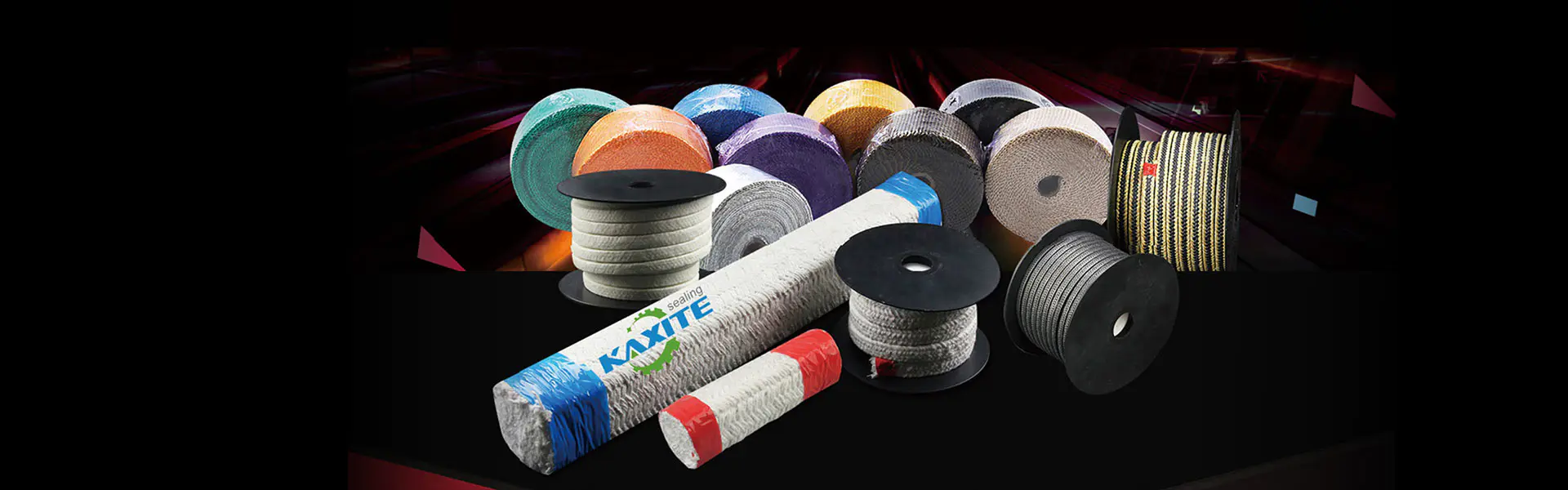
A common and costly procurement delay arises from the need for custom-machined metal seals for irregular or complex flanges. Lead times are long, costs are high, and any design change requires a new part. Carbon fiber prepregs and flexible sealing tapes offer unparalleled design freedom. They can be easily molded, wrapped, or layered to fit intricate geometries, uneven surfaces, or large diameters without expensive tooling. This allows for rapid prototyping and on-site sealing solutions, drastically reducing downtime. Ningbo Kaxite Sealing Materials Co., Ltd. provides such versatile materials, enabling engineers and purchasers to solve atypical sealing challenges quickly and cost-effectively, turning a potential project bottleneck into a streamlined process.
Q: How does carbon fiber provide an advantage in sealing complex flange designs?
A: Carbon fiber materials, especially in tape or flexible composite form, offer superior conformability compared to rigid metal gaskets. They can be easily applied to uneven, scratched, or warped surfaces and molded into complex non-standard geometries. This eliminates the need for expensive custom-machined metal seals, reduces lead times, and ensures a perfect seal on the first attempt, saving significant cost and installation time.
Ready to experience the transformative advantages of carbon fiber sealing solutions in your supply chain? The shift from traditional materials is not just an upgrade; it's a strategic move towards greater reliability, efficiency, and cost savings. For procurement professionals, the right material partner is crucial.
As a leading innovator in high-performance sealing, Ningbo Kaxite Sealing Materials Co., Ltd. specializes in engineering carbon fiber reinforced sealing solutions that directly address the weight, strength, corrosion, and thermal challenges outlined above. We don't just sell materials; we provide application-engineered answers to your most persistent sealing problems. Visit our website at https://www.kaxitesealing.cn to explore our technical portfolio or contact our engineering team directly at [email protected] for a confidential consultation on your specific requirements.
Choi, S., & Lee, D. (2022). Mechanical and thermal properties of carbon fiber reinforced composites for high-temperature gasket applications. Journal of Composite Materials, 56(15), 2451-2464.
Zhang, H., Wang, L., & Li, M. (2021). Corrosion resistance and sealing performance of carbon fiber/polymer composites in aggressive chemical environments. Materials & Design, 212, 110285.
Patel, R. K., & Kumar, S. (2020). A comparative study on the fatigue behavior of traditional metallic gaskets vs. advanced carbon fiber seals. International Journal of Fatigue, 141, 105890.
Chen, X., & Yang, F. (2019). Enhanced thermal conductivity and stability of carbon fiber-based sealing materials for aerospace applications. Composites Science and Technology, 184, 107877.
Müller, J., et al. (2018). Design and application of conformable carbon fiber tapes for sealing irregular flange surfaces in the oil and gas industry. Sealing Technology, 2018(10), 7-12.
Ivanov, S. V., & Petrov, A. A. (2017). Long-term creep resistance of carbon fiber reinforced graphite under compressive sealing loads. Journal of Materials Engineering and Performance, 26(9), 4392-4401.
Tanaka, Y., & Suzuki, K. (2016). Chemical inertness and compatibility of carbon fiber composites with industrial solvents and acids. Corrosion Science, 112, 506-517.
Garcia, M., et al. (2015). Weight reduction and performance improvement in automotive systems using carbon fiber sealing components. SAE International Journal of Materials and Manufacturing, 8(2), 456-463.
Roberts, P., & Davis, T. (2014). Cost-benefit analysis of switching from metallic to composite seals in rotating equipment. Proceedings of the Institution of Mechanical Engineers, Part J: Journal of Engineering Tribology, 228(4), 432-445.
Schmidt, H., & Weber, G. (2013). Carbon fiber materials for extreme environment sealing: A review of manufacturing and performance. Advanced Engineering Materials, 15(5), 342-356.