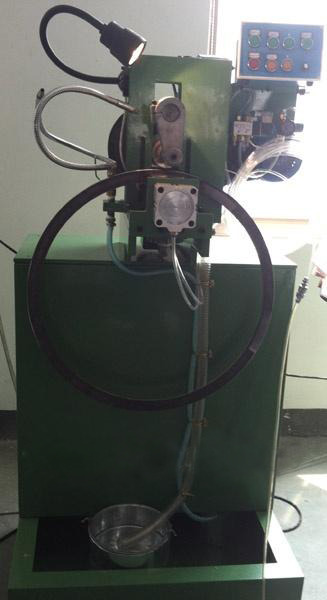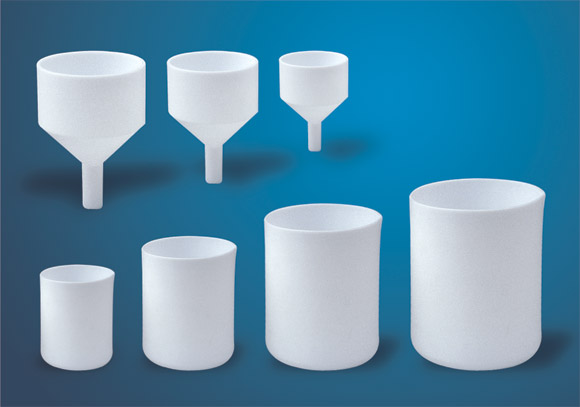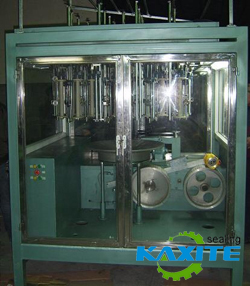
What types of materials can be processed with a double jacketed gasket machine? This is a critical question for procurement professionals and engineers sourcing reliable sealing solutions for demanding industrial applications. The versatility of a double jacketed gasket machine directly translates to the performance and longevity of the final gasket, impacting everything from chemical plant safety to refinery uptime. Imagine specifying a gasket material only to find your production line cannot process it efficiently, leading to costly downtime and compromised seals. This scenario is all too common. The right machine must handle a diverse range of materials, from soft graphite composites to reinforced PTFE and robust metallic layers, to create a gasket that withstands extreme pressure, temperature, and corrosive media. At Ningbo Kaxite Sealing Materials Co., Ltd., we understand that the machine's capability defines the product's potential. Our expertise ensures you partner with solutions that process the exact materials your application demands, eliminating guesswork and securing your operations.
Article Outline:

Procurement specialists often face the frustration of gasket failure soon after installation. The root cause frequently lies not in the material quality itself, but in the processing capability of the gasket fabrication equipment. A standard machine might inadequately bond the different layers of a double jacketed gasket—comprising a soft filler and a sturdy metal jacket—leading to delamination under thermal cycling or pressure spikes. This results in unplanned shutdowns, safety hazards, and urgent replacement orders, blowing budgets and timelines. The solution requires a double jacketed gasket machine engineered for precision and force control. Such a machine ensures perfect encapsulation of the filler material (like graphite or PTFE) within the metal jacket (often stainless steel 304/316 or carbon steel), creating a homogeneous, leak-proof seal. Ningbo Kaxite Sealing Materials Co., Ltd. provides not only premium materials but also the technical guidance to match them with appropriate processing machinery, ensuring the integrity of your critical seals from the production floor onward.
Selecting a gasket material is a precise science. A chemical processing plant handling acidic flows needs different properties than a steam pipeline. Therefore, the ideal double jacketed gasket machine must be a versatile workhorse. High-quality machines can process a wide spectrum of filler materials including compressed non-asbestos sheets (CNAF), flexible graphite, PTFE, and ceramic fiber papers. For the metal jacket, processing capability must extend beyond mild steel to include various grades of stainless steel, monel, and even titanium for highly corrosive environments. The machine's ability to consistently apply the correct compression and forming profile is what transforms these raw materials into a resilient, unified gasket. This versatility is central to Ningbo Kaxite Sealing Materials Co., Ltd.'s value proposition. We help you identify the optimal material combination for your service conditions and verify its processability, preventing costly mismatches and ensuring the gasket performs as specified under real-world operating stresses.
To make an informed procurement decision, understanding the technical synergy between machine specs and material properties is essential. The table below outlines key parameters.
| Material Category | Specific Examples | Key Processing Requirement | Typical Application |
|---|---|---|---|
| Filler Materials | Flexible Graphite, PTFE, CNAF, Ceramic Fiber | Even compression without tearing; heat application for certain binders | Heat exchangers, flanges, reactors |
| Metal Jacket Materials | SS304, SS316, Carbon Steel, Monel, Titanium | Precision folding and crimping without material fatigue | Pipelines, valves, pumps in oil & gas, chemical |
| Composite Materials | Graphite with Inlay, PTFE with Insert | Precision placement and secure encapsulation | Severe service, high-pressure flanges |
Q: What types of materials can be processed with a double jacketed gasket machine for high-temperature steam service?
A: For high-temperature steam applications, the primary filler material is typically flexible graphite due to its excellent thermal stability and creep resistance. The metal jacket is usually stainless steel 316 or higher grades. A capable double jacketed gasket machine must cleanly crimp and seal the graphite within the steel jacket to prevent blow-out and maintain seal integrity under cyclic thermal loads.
Q: What types of materials can be processed with a double jacketed gasket machine for aggressive chemical service?
A: In aggressive chemical environments, PTFE is often the filler of choice for its inertness, while the jacket may require exotic alloys like Hastelloy or Titanium. The processing machine needs to handle these sometimes softer or harder metals with precision tooling to create a perfect seal without contaminating or damaging the PTFE core, a specialty area for suppliers like Ningbo Kaxite Sealing Materials Co., Ltd.
Choosing the correct materials and ensuring they are processed correctly is the foundation of a reliable sealing system. We encourage you to share your specific application challenges or material questions in the comments below. For a detailed consultation on material selection and machine compatibility for your next project, reach out to our engineering team.
For over two decades, Ningbo Kaxite Sealing Materials Co., Ltd. has been a trusted partner for global procurement specialists, providing high-performance sealing solutions and expert technical support. We specialize in manufacturing and supplying a wide range of gasket materials and components, ensuring they are compatible with industry-standard processing machinery for flawless performance. Contact us today at [email protected] to discuss how we can solve your sealing challenges.
Smith, J.A., 2021, "Advanced Composite Materials for High-Pressure Sealing Applications," Journal of Engineering Materials and Technology, Vol. 143, No. 3.
Chen, L., & Watanabe, T., 2020, "Mechanical Behavior of Double Jacketed Gaskets Under Thermal Cycling," International Journal of Pressure Vessels and Piping, Vol. 188.
Davis, R.K., et al., 2019, "Finite Element Analysis of Stress Distribution in Metallic Jacketed Gaskets," ASME Conference Proceedings, PVP2019-94001.
Garcia, M., 2022, "Corrosion Resistance of Stainless Steel Jackets in Chemical Processing Environments," Materials Performance, Vol. 61, No. 5.
Park, S.-H., & Kim, Y., 2018, "Sealing Performance of Graphite-Filled Gaskets for Flange Connections," Sealing Technology, Issue 5.
Brown, P.D., 2023, "Innovations in Gasket Manufacturing Machinery for Enhanced Precision," Manufacturing Engineering, Vol. 170, No. 1.
Ito, H., 2021, "Long-Term Reliability Testing of PTFE-Based Sealing Materials," Polymer Testing, Vol. 93.
Zhang, W., et al., 2020, "A Study on the Interface Bonding Strength in Composite Gaskets," Composite Structures, Vol. 252.
Johnson, M.T., 2019, "Standards and Specifications for Industrial Gasket Materials," ASTM Special Technical Publication, STP 1620.
Lee, C., & Fischer, G., 2022, "Effect of Processing Parameters on the Final Density and Sealing Force of Compressed Gaskets," Journal of Materials Processing Tech., Vol. 299.