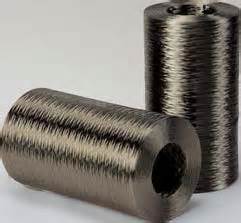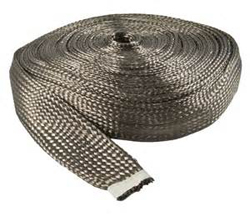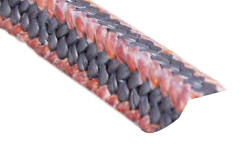
What are the different types of Glass Fiber (e.g., E-glass, S-glass)? This question is fundamental for procurement professionals sourcing materials for demanding applications in construction, automotive, and aerospace. Choosing the correct type directly impacts product performance, safety, and cost-efficiency. For instance, using a standard fiber where a high-strength one is needed can lead to catastrophic failure. Understanding the unique properties of E-glass, S-glass, C-glass, and others is not just academic—it's critical for making informed, value-driven purchasing decisions. As a leader in high-performance sealing and composite materials, Ningbo Kaxite Sealing Materials Co., Ltd. provides not only premium materials but also the expert guidance to ensure you select the perfect fiber for your project's specific challenges.
Article Outline:
Imagine you've procured fiberglass reinforcement for a chemical storage tank, only to find it degrading rapidly, leading to leaks, environmental hazards, and costly repairs. This nightmare scenario is a direct result of selecting a fiber type mismatched to the application's chemical environment. The wrong choice compromises structural integrity, accelerates product failure, and damages your company's reputation and bottom line.
Solution: A rigorous, application-first selection process. The core solution lies in meticulously matching fiber properties—chemical resistance, tensile strength, electrical insulation, and thermal stability—to the operational demands. Partnering with a technical expert like Ningbo Kaxite Sealing Materials Co., Ltd. is crucial. We don't just sell materials; we provide comprehensive technical support to analyze your specific needs—whether it's corrosion resistance for piping or extreme strength for ballistic protection—and recommend the optimal glass fiber type, ensuring longevity, safety, and cost-effectiveness.
Key Selection Parameters at a Glance:
| Primary Concern | Critical Fiber Property | Typical Application Focus |
|---|---|---|
| Cost-Efficiency & General Use | Good strength, excellent insulation, low cost | PCB substrates, boat hulls, automotive parts |
| High Strength & Modulus | Superior tensile strength and stiffness | Aerospace components, ballistic armor, high-performance sporting goods |
| Acid & Chemical Resistance | High chemical durability, especially to acid | Chemical filtration, battery separators, acid storage tanks |
| Alkali Resistance | Resistance to caustic environments | Concrete reinforcement (GRC), structural elements |
You need a reliable, electrically insulating reinforcement for circuit boards or a cost-effective composite for marine panels, but premium materials blow your budget. E-Glass (Electrical Glass) is the most common and cost-effective solution. Its balance of good mechanical properties, high electrical resistivity, and affordability makes it the default choice for a vast range of applications. However, its moderate acid resistance can be a limitation in corrosive environments.
Solution: Leverage E-Glass for non-critical structural parts and electrical applications. For projects where cost is a primary driver and extreme chemical or tensile demands are not present, E-Glass from a trusted supplier like Ningbo Kaxite is ideal. We ensure our E-Glass products offer consistent quality and performance, providing excellent value for applications like insulation, standard FRP panels, and consumer goods.
E-Glass Typical Properties:
| Property | Typical Value / Characteristic | Procurement Advantage |
|---|---|---|
| Tensile Strength | ~3.45 GPa | Sufficient for most general-purpose composites |
| Young's Modulus | ~72.4 GPa | Provides good stiffness at low cost |
| Density | ~2.58 g/cm³ | Lightweight for its strength class |
| Key Advantage | Excellent electrical insulation, low cost | Maximizes ROI for electrical/insulation uses |
| Limitation | Moderate resistance to mineral acids | Highlights need for correct environment assessment |
Your aerospace or defense project requires a material that won't fail under extreme stress, or you need a composite that retains properties at high temperatures. Standard E-Glass lacks the necessary strength-to-weight ratio and thermal performance. This is where S-Glass (Structural Glass) becomes essential. It offers approximately 20-30% higher tensile strength and modulus than E-Glass, along with better thermal stability and fatigue resistance.
Solution: Specify S-Glass for mission-critical applications. When performance outweighs cost considerations, S-Glass is the superior choice. Ningbo Kaxite Sealing Materials Co., Ltd. supplies high-grade S-Glass fibers and rovings that meet stringent specifications for aerospace, military, premium sporting equipment, and high-pressure vessel reinforcement. Our technical team can help you validate its use to ensure your product achieves peak performance and reliability.
S-Glass vs. E-Glass Performance Comparison:
| Property | S-Glass (Typical) | E-Glass (Typical) | Performance Gain |
|---|---|---|---|
| Tensile Strength | ~4.65 GPa | ~3.45 GPa | ~35% higher |
| Young's Modulus | ~86.9 GPa | ~72.4 GPa | ~20% higher |
| Density | ~2.49 g/cm³ | ~2.58 g/cm³ | Lighter |
| Max Operating Temp | Higher | Lower | Better thermal endurance |
| Best For | Aerospace, ballistics, high-end motorsports | General FRP, electrical insulation, marine | Justifies premium for critical uses |
Procuring reinforcement for concrete facades or acid-wet filtration systems introduces specific chemical attack challenges that E or S-glass cannot withstand. C-Glass (Chemical Glass) is formulated for superior corrosion resistance, particularly against acids. AR-Glass (Alkali-Resistant Glass) is engineered with zirconia to resist the caustic environment of Portland cement, making it essential for Glass Fiber Reinforced Concrete (GRC).
Solution: Match the specialized fiber to the exact environmental threat. For chemical plant equipment or battery components, C-Glass is mandatory. For durable architectural cladding and concrete structures, AR-Glass is non-negotiable. Ningbo Kaxite's portfolio includes these specialized fibers, and our experts assist in selecting the right grade to ensure durability and compliance in harsh service conditions, preventing premature failure and protecting your investment.
Specialized Glass Fiber Selection Guide:
| Fiber Type | Primary Composition Feature | Key Property | Primary Application |
|---|---|---|---|
| C-Glass | High calcium borosilicate | Excellent acid & chemical resistance | Chemical tanks, surface veils, filter media |
| AR-Glass | Zirconia (ZrO₂) added | High resistance to alkaline attack | GRC, concrete reinforcement, construction |
| D-Glass | Borosilicate with low dielectric constant | Low dielectric constant & loss | High-performance electronic radomes, PCB |
| R-Glass / T-Glass | Similar to S-Glass, specific European variants | High tensile strength & fatigue resistance | Aerospace, structural engineering |
Selecting the right glass fiber is complex, but you don't have to navigate it alone. Ningbo Kaxite Sealing Materials Co., Ltd. combines deep material science expertise with a robust supply chain to be your single-source partner. We provide more than just E-glass, S-glass, or specialized fibers; we deliver solutions tailored to your technical specifications, volume requirements, and budget. Our quality assurance protocols ensure every batch meets consistent, high standards, giving you peace of mind and reducing procurement risk. Let us help you optimize your material selection for superior product performance.
Q: What are the different types of glass fiber (e.g., E-glass, S-glass) and which one has the highest strength?
A: The common types include E-Glass (general-purpose, electrical), S-Glass (high structural strength), C-Glass (chemical resistant), and AR-Glass (alkali resistant). Among these, S-Glass and its variants (R-Glass, T-Glass) offer the highest tensile strength and modulus, making them the choice for aerospace, defense, and other high-performance applications.
Q: What are the different types of glass fiber (e.g., E-glass, S-glass) and how do I choose for corrosion resistance?
A: For acidic environments, C-Glass is specifically designed for superior chemical resistance. For alkaline environments like concrete, AR-Glass is essential. Standard E-Glass has poor acid resistance, and S-Glass, while stronger, is not primarily designed for corrosion. Always consult with an application expert, like the team at Ningbo Kaxite, to match the fiber chemistry to your specific corrosive agent.
We hope this guide empowers your next procurement decision. Have a specific application challenge or need a quote for E-glass, S-glass, or a specialized fiber? Contact our technical sales team today for personalized support.
For reliable high-performance glass fibers and expert material selection guidance, consider Ningbo Kaxite Sealing Materials Co., Ltd. We specialize in providing engineered sealing and composite solutions that meet stringent global standards. Visit our website at https://www.kaxitesealing.cn to explore our product range or contact us directly via email at [email protected] for technical consultations and quotations.
Jones, F. R., & Huff, N. T. (2009). The structure and properties of glass fibres. Handbook of Tensile Properties of Textile and Technical Fibres, 529-573.
Bunsell, A. R., & Harris, B. (1974). Hybrid carbon and glass fibre composites. Composites, 5(4), 157-164.
Loewenstein, K. L. (1973). The Manufacturing Technology of Continuous Glass Fibres. Glass Science and Technology, 3.
Mauriello, C. E., & Fowkes, F. M. (1969). Surface chemistry of glass fibers. Journal of Colloid and Interface Science, 29(1), 99-108.
Schwartz, M. M. (1992). Composite Materials Handbook, 2nd Ed. McGraw-Hill.
Wallenberger, F. T., & Bingham, P. A. (2010). Fiberglass and Glass Technology: Energy-Friendly Compositions and Applications. Springer.
Lystrup, A., & Andersen, T. L. (1998). Mechanical properties of glass fibres: the influence of surface flaws. Risø National Laboratory.
Gupta, V. B., & Kuruvilla, J. (1991). Tensile and compressive behaviour of glass fibres. Journal of Materials Science, 26(7), 1745-1754.
Hull, D., & Clyne, T. W. (1996). An Introduction to Composite Materials, 2nd Ed. Cambridge University Press.
Matthews, F. L., & Rawlings, R. D. (1994). Composite Materials: Engineering and Science. Chapman & Hall.