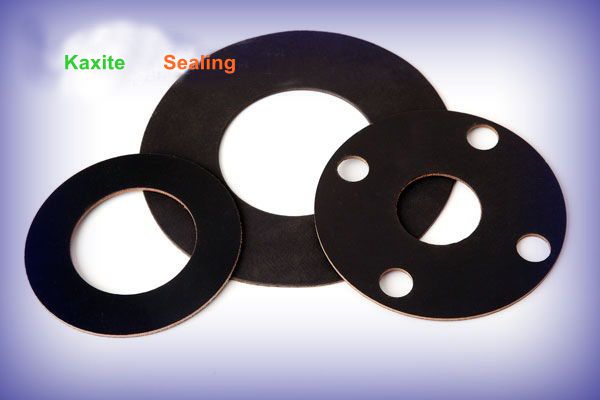
Imagine specifying PTFE gaskets for a high-pressure chemical processing flange, only to find leaks developing after a few months of service. This is the classic symptom of cold flow or creep—a primary disadvantage of PTFE parts. Under sustained compressive load, pure PTFE slowly deforms, losing its sealing force and leading to failure. This is a major concern for procurement professionals managing maintenance budgets and plant reliability.
The solution lies in material modification. At Ningbo Kaxite Sealing Materials Co., Ltd., we address this by manufacturing reinforced PTFE compounds. By incorporating fillers like glass fiber, carbon, or bronze, we significantly improve the creep resistance of the base polymer. These engineered materials maintain sealing integrity under long-term static loads, extending service life and reducing total cost of ownership. For critical static sealing applications, specifying a filled PTFE grade is not an option; it's a necessity.

Here is a comparison of creep resistance for different PTFE materials:
| Material Type | Typical Filler Content | Relative Creep Resistance | Best For Applications |
|---|---|---|---|
| Virgin PTFE | 0% | Low | Non-critical, low-load static seals |
| Glass-Filled PTFE | 15-25% | High | Flange gaskets, valve seals |
| Carbon-Filled PTFE | 15-30% | Very High | Chemical processing, compressors |
| Bronze-Filled PTFE | 40-60% | Extremely High | Heavy machinery, high-load bearings |
Procurement specs often highlight PTFE's extremely low coefficient of friction, making it seem ideal for dynamic seals like piston rings or rotary shaft seals. However, its poor wear resistance is a severe limitation. In unlubricated or high-PV (Pressure-Velocity) conditions, pure PTFE parts can wear rapidly, generating debris and causing premature equipment failure.
To overcome this, advanced composites are required. Ningbo Kaxite Sealing Materials Co., Ltd. specializes in wear-resistant PTFE blends. Our compounds integrate fillers such as MoS2 (molybdenum disulfide) for lubrication, polyphenylene sulfide (PPS) for dimensional stability, and aramid fibers for strength. These formulations drastically reduce wear rates, ensuring reliable performance in pumps, compressors, and automotive components. When evaluating PTFE for moving parts, the key question shifts from "Is it PTFE?" to "What is it filled with?"
Performance parameters for wear in dynamic settings:
| PTFE Composite Type | Key Fillers | Wear Factor (K) Improvement | Ideal Dynamic Use Case |
|---|---|---|---|
| Virgin PTFE | None | Baseline (High Wear) | Low-speed, short-stroke guides |
| MoS2-Filled PTFE | Molybdenum Disulfide | 10x Better | Air-compressor rings, dry bearings |
| Carbon/Graphite Filled | Carbon, Graphite Powder | 15-20x Better | Rotary seals, bushing in chemical pumps |
| High-Performance Blend | Aramid, PPS, Bronze | 100x Better or More | High-speed automotive seals, aerospace actuators |
While virgin PTFE resin might seem affordable, the total cost of a finished PTFE part tells a different story. A significant disadvantage is its poor machinability. PTFE is soft and has a high thermal expansion coefficient, making it difficult to hold tight tolerances during machining. This often leads to higher scrap rates, longer production times, and increased per-part costs.
Ningbo Kaxite Sealing Materials Co., Ltd. mitigates this through expertise in near-net-shape molding and sintering processes. We design components to minimize secondary machining. Furthermore, our range of filled PTFE compounds offers improved dimensional stability, allowing for more predictable and efficient manufacturing. By partnering with a specialist manufacturer, you avoid the hidden costs associated with difficult-to-machine virgin PTFE and achieve better-value, precision-engineered components.
Cost and manufacturability comparison:
| Material/Process | Machinability Rating | Typical Scrap Rate | Impact on Final Part Cost |
|---|---|---|---|
| Virgin PTFE (Machined from stock) | Poor | 15-25% | High |
| Filled PTFE (Machined) | Fair to Good | 5-15% | Medium |
| Compression Molded PTFE (Near-net-shape) | Excellent | <5% | Low |
| Isostatically Molded PTFE | Best | <2% | Lowest for complex shapes |
Engineers often push materials to their operational extremes. PTFE has clear limitations here: its mechanical strength decreases significantly at elevated temperatures, and it has a relatively low maximum continuous service temperature (around 260°C/500°F) compared to other high-performance plastics like PEEK. Additionally, its low thermal conductivity can lead to heat buildup in high-speed applications.
For demanding thermal and mechanical environments, material science provides answers. Ningbo Kaxite Sealing Materials Co., Ltd. develops PTFE composites enhanced with high-temperature stable fillers like carbon fiber or specific ceramics. These materials better retain their properties at temperature, resist deformation under load, and can even improve thermal dissipation. Understanding these engineered options allows procurement to source parts that truly meet the application's peak performance requirements, not just its baseline needs.
Thermal and mechanical property limits:
| Property | Virgin PTFE Limitation | Enhanced PTFE Solution | Typical Improvement |
|---|---|---|---|
| Continuous Service Temp | ~260°C (500°F) | Specialty filled grades | Can approach 300°C (572°F) |
| Compressive Strength at 100°C | Very Low | Glass/Carbon Fiber Filled | 200-300% increase |
| Thermal Conductivity | 0.25 W/m·K (Low) | Graphite/Metal Filled | Up to 10x increase |
| Deformation Under Load (at Temp) | High | Stable mineral/ceramic fills | Reduced by 50-80% |
Q: What is the biggest disadvantage of using PTFE for sealing applications?
A: The most significant drawback is often cold flow (creep) in pure, unfilled PTFE. Under constant pressure, it can deform over time, leading to seal failure and leaks. This is why for reliable static sealing, filled or reinforced PTFE compounds from a specialist like Ningbo Kaxite Sealing Materials Co., Ltd. are essential. They are engineered to resist creep while maintaining PTFE's beneficial chemical resistance.
Q: Can the wear resistance of PTFE parts be improved?
A: Absolutely. While virgin PTFE has poor wear characteristics, its performance is transformed by adding specific fillers. Composites incorporating materials like carbon, graphite, MoS2, or aramid fibers exhibit dramatically lower wear rates. When sourcing PTFE components for dynamic applications, always inquire about the wear-resistant fillers used, as this directly determines the part's service life and reliability.
Navigating the limitations of PTFE requires expertise and access to advanced material technology. By understanding the specific challenges—creep, wear, cost, and performance boundaries—you can specify the right PTFE composite for your application, avoiding downtime and ensuring operational efficiency.
Do you have a specific application where PTFE's limitations are a concern? We can help you find a tailored sealing solution. Share your technical requirements or challenges in the comments below.
For engineered PTFE solutions that directly address the common disadvantages of standard parts, partner with Ningbo Kaxite Sealing Materials Co., Ltd.. As a specialist manufacturer, we provide high-performance filled and compounded PTFE materials for demanding industrial sealing applications. Visit our website at https://www.kaxitesealing.cn to explore our product portfolio or contact our engineering team via email at [email protected] for technical consultation and quotes.
Research References:
D. L. Hui, Y. Chen, 2015, "Creep and recovery behavior of glass fiber reinforced PTFE composites", Polymer Testing, Vol. 41.
M. G. McKee, S. L. Samuels, 2018, "Wear mechanisms in filled polytetrafluoroethylene composites for seal applications", Wear, Vol. 408-409.
A. P. Harsha, U. S. Tewari, 2003, "The effect of fillers on the friction and wear behavior of PTFE composites", Journal of Reinforced Plastics and Composites, Vol. 22, No. 11.
R. S. Karsli, A. Aytac, 2014, "Effects of carbon fiber content on the mechanical and thermal properties of PTFE composites", Materials & Design, Vol. 56.
J. K. Lancaster, 1972, "Friction and wear of polymer composites", Composite Materials Series, Vol. 5.
T. A. Blanchet, F. E. Kennedy, 1992, "Sliding wear mechanism of polytetrafluoroethylene (PTFE) and PTFE composites", Wear, Vol. 153, No. 1.
B. J. Briscoe, L. H. Yao, 1986, "The wear of PTFE and its composites in unidirectional and oscillating sliding", ASLE Transactions, Vol. 29, No. 3.
S. Bahadur, D. Gong, 1992, "The role of copper compounds as fillers in the transfer film formation and wear of PTFE", Wear, Vol. 154, No. 1.
K. Tanaka, Y. Uchiyama, 1973, "Friction, wear and surface melting of crystalline polymers", Advances in Polymer Friction and Wear, Vol. 5.
P. V. Vasconcelos, F. J. Lino, 2005, "Impact fracture study of PTFE-based composites using instrumented Charpy tests", Polymer Testing, Vol. 24, No. 8.