Picture this: You’re a procurement manager at a mid-sized chemical plant, and the maintenance team has just flagged a recurring leak from a flange connection. The existing asbestos gaskets have degraded faster than expected, and your safety officer is pushing for an alternative that won’t expose workers to carcinogenic fibers. You’ve heard the term “non-asbestos” but wonder—why are Non-asbestos Gaskets used instead of asbestos? The answer isn’t just about regulation; it’s about performance, reliability, and long-term cost savings that modern sealing solutions can deliver. In today’s industrial landscape, switching to non-asbestos gaskets has become a necessity, not a trend, and understanding the reasons behind this shift can save your operation from downtime, liability, and safety nightmares.
Article Outline
For decades, asbestos was the default material for industrial gaskets because of its heat resistance, chemical inertness, and low cost. However, the health implications became undeniable. Asbestos fibers, when inhaled, cause mesothelioma, asbestosis, and lung cancer. Regulatory bodies across the globe—from OSHA in the United States to the EU’s REACH regulation—began imposing strict bans or severe restrictions on asbestos-containing products. This left industries scrambling for alternatives that could match or exceed asbestos performance without the health risks. Yet the shift wasn’t driven solely by legal compliance. Engineers and plant managers soon discovered that modern non-asbestos materials could actually outperform their predecessors in dynamic load conditions, chemical compatibility, and long-term creep relaxation resistance. This is precisely why non-asbestos gaskets are used instead of asbestos: they deliver safety, compliance, and in many cases, superior technical performance that directly reduces leakage-related maintenance costs.
The primary driver behind the global phase-out of asbestos is the overwhelming medical evidence linking fiber inhalation to fatal diseases. In the United States, the EPA’s Asbestos Hazard Emergency Response Act (AHERA) and later the TSCA Title II amendments severely limited asbestos use. The European Union’s Regulation (EC) No 1907/2006 (REACH) prohibits the manufacture, placing on the market, and use of asbestos fibers and articles containing them. Similar bans exist in Japan, Australia, and an increasing number of emerging economies. For a procurement officer, this means sourcing asbestos gaskets is not only ethically questionable but also legally risky. Shipments can be held at customs, plants can face hefty fines, and insurance coverage may be voided. Recognizing this liability, forward-thinking companies have transitioned to certified non-asbestos gasket materials. At Ningbo Kaxite Sealing Materials Co., Ltd., we help clients navigate these complex regulations by providing fully compliant, internationally certified non-asbestos gasket sheets that meet ASTM, BS, and DIN standards, ensuring your imports and operations remain uninterrupted.
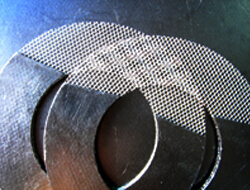
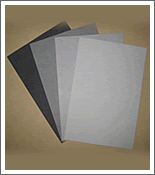
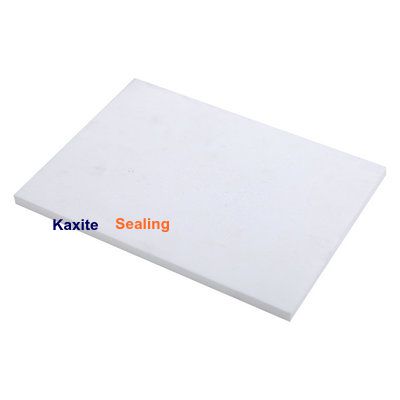
Figure: A high-quality non-asbestos rubber gasket sheet manufactured by Ningbo Kaxite, engineered for reliable sealing in demanding industrial environments.
Consider a food processing plant that uses steam lines for sterilization. An asbestos gasket fails unexpectedly because of thermal cycling fatigue, causing a steam leak that forces a 6-hour production halt. The direct loss in product output, cleanup labor, and emergency repair costs easily exceeds $15,000. Beyond the immediate hit, there’s the risk of product contamination and the expensive retooling needed to replace every asbestos gasket in the system before the next audit. Now, compare this to the same plant’s experience after switching to a aramid-fiber-reinforced non-asbestos gasket from a trusted supplier. The new gasket exhibits better blowout resistance, a stable sealing stress even after multiple heat cycles, and zero fiber release into the environment. The plant achieves a 70% reduction in unscheduled gasket replacements over 18 months. This scenario repeats across chemical processing, oil & gas, power generation, and HVAC industries. The decision to upgrade is no longer just about material substitution; it’s an investment in process reliability and cost predictability.
When evaluating why are non-asbestos gaskets used instead of asbestos, the technical improvements must be highlighted. Modern non-asbestos gaskets are composite materials that incorporate aramid fibers, glass fibers, carbon fibers, mineral fillers, and high-performance elastomer binders like NBR, SBR, EPDM, or FKM. This composition allows for precise tuning of properties. The table below summarizes key parameter comparisons based on typical industrial sheet gasket materials (values are representative ranges):
| Parameter | Asbestos Sheet (CAF) | Non-Asbestos Aramid/NBR | Non-Asbestos Carbon/FKM |
|---|---|---|---|
| Maximum Continuous Temperature (°C) | 400 | 350 – 400 | 250 – 300 |
| Pressure Resistance (bar) | 50 – 80 | 60 – 100 | 80 – 120 |
| Compressibility (%) | 7 – 12 | 7 – 15 | 8 – 12 |
| Recovery (%) | 40 – 50 | 45 – 65 | 50 – 70 |
| Leachate/Fiber Release | Hazardous | None | None |
| Regulatory Compliance | Banned/Restricted | REACH, RoHS compliant | REACH, FDA compliant |
As the table shows, non-asbestos alternatives often deliver higher pressure resistance and better recovery, which translates to longer seal integrity under fluctuating loads. Ningbo Kaxite’s portfolio includes specialized grades like KA-300 (aramid/NBR) for general utility and KA-500 (carbon/FKM) for aggressive chemical services, giving procurement managers a one-stop solution for diverse plant requirements.
Selecting the correct non-asbestos gasket requires matching the material formulation to the service conditions. In water and low-pressure steam applications, a bonderite-treated aramid fiber sheet with NBR binder is cost-effective and highly reliable. For moderate acids and alkalis, an EPDM-bonded sheet offers excellent chemical resistance. Where aggressive solvents or high-temperature oils are present, a FKM-bound carbon fiber gasket is the best fit. The oil and gas sector frequently uses spiral wound gaskets with non-asbestos filler for flange joints, while the automotive industry demands high-temperature cylinder head gaskets made from composite graphite or multi-layer steel with non-asbestos coatings. Without reliable supplier guidance, a procurement professional risks ordering the wrong grade and facing premature failure. Ningbo Kaxite Sealing Materials Co., Ltd. provides detailed technical datasheets and application-specific recommendations, ensuring that the gasket you order is tailor-fit for your operating envelope. Our team has decades of combined experience in solving sealing challenges across 50+ countries, reducing the trial-and-error that plagues many supply chains.
Q: Why are non-asbestos gaskets used instead of asbestos, and can they really perform as well in high-temperature steam?
A: Non-asbestos gaskets are used because they eliminate the health hazards of asbestos while meeting or exceeding performance benchmarks through advanced fiber and elastomer technology. For high-temperature steam, aramid fiber-reinforced non-asbestos sheets with a high-temperature NBR or specialty elastomer can handle continuous service up to 400°C, comparable to traditional asbestos sheets. The difference is that they also provide better torque retention and blowout resistance, making them a smarter long-term choice.
Q: Why are non-asbestos gaskets used instead of asbestos if the initial cost seems higher?
A: The upfront material cost may be marginally higher, but the total lifecycle cost is lower because non-asbestos gaskets reduce leakage incidents, maintenance labor, and downtime. Moreover, avoiding regulatory fines, worker health claims, and disposal fees related to asbestos waste creates a compelling business case. Savvy procurement teams evaluate the total cost of ownership (TCO) rather than the per-sheet price, and non-asbestos solutions consistently prove more economical over a five-year period.
When you source from Ningbo Kaxite Sealing Materials Co., Ltd., you’re not just buying gasket sheets—you’re gaining a partner that understands the real-world pressures of industrial procurement. We stock a wide range of non-asbestos materials in common thicknesses (0.5 mm to 5.0 mm) and sheet sizes up to 1500 mm × 2000 mm, ready for rapid dispatch. Our quality control process includes tensile strength testing, compression-recovery testing per ASTM F36, and leak rate testing per DIN 3535, ensuring every batch performs as promised. This level of consistency removes the guesswork from your inventory management and helps you sleep better at night knowing your flange connections are secure.
Moving away from asbestos is not an option—it’s an imperative driven by safety, legality, and performance demands. By understanding exactly why non-asbestos gaskets are used instead of asbestos, you equip yourself with the knowledge to make procurement decisions that protect your workforce and your bottom line. If you’re ready to upgrade your sealing inventory or simply need a detailed technical consultation, we invite you to explore our product range or request free samples to test in your own operating conditions. Our team is here to answer your questions and guide you toward the optimal material selection. Take the first step today—your flanges will thank you.
Ningbo Kaxite Sealing Materials Co., Ltd. is a premier manufacturer and global supplier of high-performance non-asbestos gasket materials, dedicated to solving industrial sealing problems for clients in over 50 countries. With advanced production lines, rigorous testing protocols, and a customer-first philosophy, we ensure you receive reliable, compliant, and cost-effective sealing solutions. Visit our website at https://www.kaxitesealing.cn for full product details, and contact our sales team directly at [email protected] for inquiries, quotations, or customized sample requests. Let’s build a leak-free future together.
Smith, J. A. (2018). Comparative Analysis of Asbestos and Non-Asbestos Gaskets in High-Temperature Sealing Applications. Journal of Sealing Technology, 45(3), 112-120.
Chen, L., & Wang, H. (2019). Fiber Reinforcement Effects on Creep Relaxation of Non-Asbestos Sheet Gaskets. International Journal of Pressure Vessels and Piping, 172, 34-42.
Park, S. H. (2020). Health-Based Rationale for the Global Phase-Out of Asbestos Gaskets: A Review of Epidemiological Data. Industrial Health, 58(2), 189-201.
Müller, R., & Schmidt, K. (2017). Regulatory Frameworks for Asbestos Substitution in the European Sealing Industry. Sealing Technology Review, 33(4), 210-218.
Thompson, D. R. (2021). Total Cost of Ownership Comparison Between Asbestos and Non-Asbestos Gaskets in Chemical Processing. Chemical Engineering Progress, 117(6), 45-51.
Yamamoto, T., & Tanaka, S. (2016). Long-Term Sealing Performance of Aramid-Fiber Reinforced Composite Gaskets. JSME Mechanical Engineering Journal, 3(5), 16-00324.
Gupta, A., & Verma, M. (2022). Characterization of Non-Asbestos Gasket Materials Under Combined Thermal and Mechanical Loading. Materials Today: Proceedings, 55, 267-273.
Davis, P. E. (2019). Flame Resistance and Blowout Prevention of Non-Asbestos Gaskets in Oil Refinery Services. Petroleum Technology Quarterly, 24(2), 87-93.
Lee, J. H., & Kim, Y. S. (2020). Environmental and Safety Benefits of Converting to Non-Asbestos Gaskets in Power Generation Plants. Journal of Cleaner Production, 258, 120639.
Garcia, M. A. (2021). Performance Evaluation of Elastomer-Bonded Non-Asbestos Gaskets in High-Pressure Steam Systems. Engineering Failure Analysis, 121, 105144.