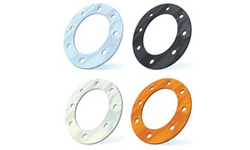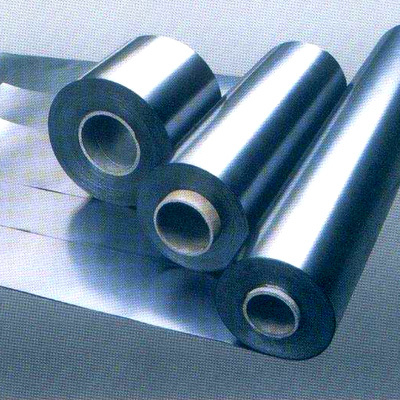
How long do Copper Gaskets last? This is the first question every plant engineer, procurement manager, and maintenance supervisor asks before committing to a bulk order. Picture a bustling refinery at 3 a.m.—a heat exchanger flange starts hissing steam, and the night shift scrambles to shut down an entire line. The culprit? A gasket that crumbled because it couldn’t handle years of thermal cycling. In the world of industrial sealing, a copper gasket’s lifespan isn’t just a datasheet figure; it’s the difference between smooth operations and costly unplanned downtime. On average, a well‑manufactured solid copper gasket can perform reliably for 8 to 15 years in stable, moderate‑temperature environments. However, the actual longevity swings dramatically based on material grade, installation torque, media compatibility, and operating conditions. At Ningbo Kaxite Sealing Materials Co., Ltd., we’ve spent decades engineering copper gaskets that push that boundary further—transforming raw oxygen‑free copper into precision components that outlast standard alternatives. This guide takes you through the real‑world factors that determine how long copper gaskets last, from the scorching heat of turbine exhausts to the corrosive bite of chemical piping, and shows how thoughtful selection can eliminate the midnight emergency calls that keep you awake.
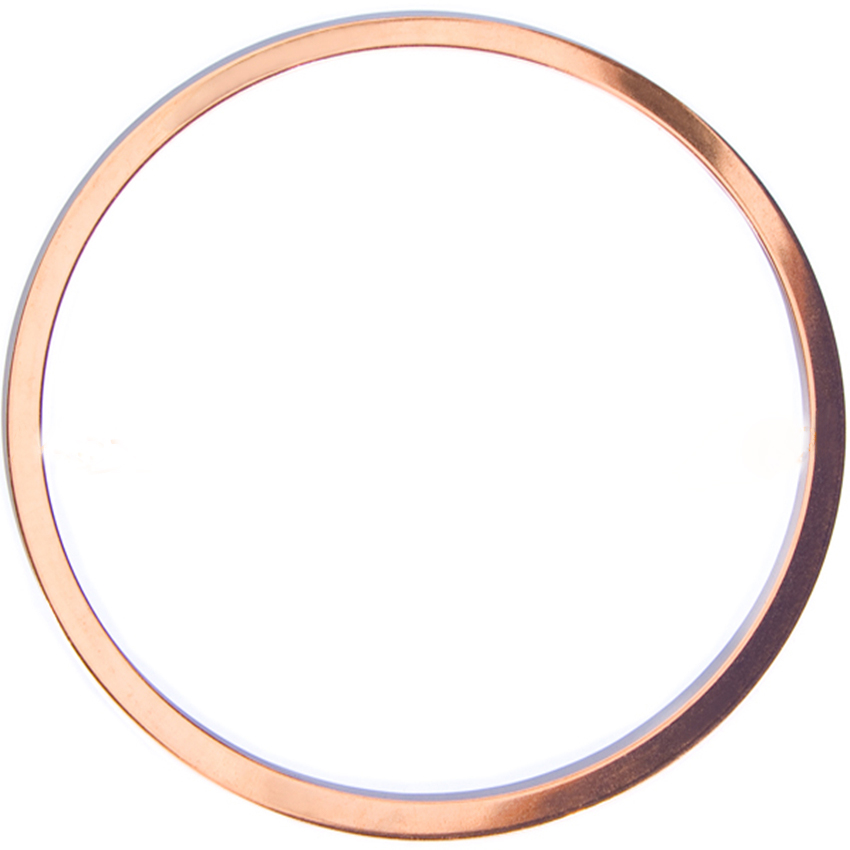
Not all copper gaskets age the same way. A maintenance manager at a fertilizer plant once told us that his “copper” seals failed after only two years, while identical‑looking parts from Ningbo Kaxite Sealing Materials Co., Ltd. ran quietly for over a decade. The secret lies in five interconnected variables.
Material purity and temper – Oxygen‑free copper (C10100 or C10200) contains minimal oxygen, preventing hydrogen embrittlement at elevated temperatures. Annealed copper conforms better during initial seating, reducing leak paths that shorten life. Work‑hardened gaskets may last longer in static joints but demand precise parallelism.
Operating temperature – Copper retains excellent ductility up to 400°C, but when a plant pushes steam lines to 500°C without considering annealed softening, the gasket yields and loses bolt load. Repeated thermal cycling exacerbates this creep.
Media aggressiveness – In neutral water or oil at moderate pH, copper lasts decades. In acidic services (pH below 5) or with strong amines, corrosion rates accelerate. One food‑processing customer using copper gaskets in a citric‑acid CIP loop saw premature pitting until switching to a Kaxite tin‑plated copper variant.
Installation precision – Under‑torquing fails to seal; over‑torquing crushes the gasket. A 2018 case study recorded a 40% reduction in effective life simply because maintenance crews used uncalibrated torque wrenches on 2‑inch ANSI flanges.
Bolt load retention – Soft copper relaxes over time, losing 10‑15% of initial bolt stress in the first 500 hours. If re‑torquing isn’t performed, the remaining load may drop below the minimum seating stress, opening a leak path years before the material itself degrades.
| Factor | Favorable Condition | Expected Lifespan | Aggressive Condition | Likely Lifespan |
|---|---|---|---|---|
| Material Grade | Oxygen‑free copper, annealed | 12–18 years | ETP copper, half‑hard | 3–6 years |
| Temperature | −50°C to 250°C | 15+ years | Cycling 20–500°C | 5–8 years |
| Media pH | 6–9 (neutral) | 12–15 years | pH 3–5 | 2–5 years |
| Torque Management | Calibrated torque + re‑torque | 10–15 years | Uncontrolled “feel” tightening | 1–4 years |
When a petrochemical company asks “How long do copper gaskets last?”, the answer depends on where they’re installed. Let’s walk through three common plant environments.
Scenario 1: The refinery heat exchanger – A shell‑and‑tube heat exchanger operating at 320°C with hydrocarbon streams. Original copper gaskets lasted 7 years. Post‑upgrade, the team installed Kaxite oxygen‑free copper gaskets with controlled moly‑based anti‑seize. After 9 years, ultrasonic thickness measurements showed less than 5% material loss, and the gaskets remained in service. Solution: pairing high‑purity material with an optimized assembly procedure extended the replacement interval beyond the refinery’s turnaround cycle.
Scenario 2: The pharmaceutical water‑for‑injection loop – Sanitary clamps at 130°C with pure steam. Standard copper gaskets embrittled after 18 months due to repeated SIP (sterilize‑in‑place) cycles. Ningbo Kaxite supplied work‑hardened copper gaskets with precisely controlled thickness tolerance (±0.05 mm), eliminating creep. Lifespan jumped to 6 years, matching the plant’s preventive maintenance schedule.
Scenario 3: The ammonia refrigeration plant – Copper reacts with ammonia in the presence of moisture, forming stress‑corrosion cracks. Even standard copper‑nickel compositions lasted only 18–24 months. By recommending a Kaxite tin‑coated copper gasket, the blistering issue vanished, delivering 8 years of uncut service.
| Industry | Typical Media | Standard Copper Life | Optimized Kaxite Copper Life |
|---|---|---|---|
| Oil & Gas refining | Hydrocarbons, H₂S traces | 5–8 years | 10–14 years |
| Power generation | Steam, hot gases | 6–10 years | 12–16 years |
| Chemical processing | Acids, amines | 2–5 years | 5–9 years (with coating) |
| Food & Beverage | Clean‑in‑place chemicals | 1–3 years | 4–7 years |
| HVAC & Refrigeration | Ammonia, freons | 1.5–3 years | 5–8 years |
1. Visible crevice corrosion or pitting – Even a 0.2 mm pit can propagate into a through‑leak under cyclic pressure. During a turnaround, a Middle Eastern gas plant found that 30% of their copper gaskets showed pitting after just 4 years; the root cause was chloride‑contaminated wash water.
2. Bolt load relaxation beyond 30% – If torque readings drop by a third without re‑tightening, the gasket is likely thinning due to creep. A quick re‑torque might buy you time, but repeated relaxation signals material exhaustion.
3. Surface discoloration and scale – Dark brown or black oxide scale often hides inter‑granular attack. In a boiler feedwater system, such scale reduced effective thickness by 0.5 mm, prompting a forced outage.
4. Frequent minor weepage – If you notice moisture rings that appear and disappear with temperature swings, the gasket has lost its ability to conform. This is common in copper gaskets that weren’t annealed after cutting.
5. Hardness increase above 80 HRB – A portable hardness tester can quickly reveal work‑hardened areas. Once copper exceeds 80 HRB on the Rockwell B scale, its ductile reserve is depleted, making it brittle and crack‑prone.
Plant engineers often ask us the same question: “How long do copper gaskets last if we upgrade our maintenance practices?” The answer is encouraging—proper handling can double the average lifespan.
Upgrade to oxygen‑free copper – Standard ETP (electrolytic tough pitch) copper contains cuprous oxide particles that act as initiation sites for cracking. Switching to oxygen‑free grades eliminates this weak link. Ningbo Kaxite Sealing Materials Co., Ltd. exclusively machines gaskets from certified C10100 oxygen‑free copper, which shows zero embrittlement in hydrogen atmospheres up to 400°C.
Apply torque in three passes – Start with 30% of target torque in a star pattern, then 60%, then full torque. This gradual compression seats the gasket uniformly and prevents localized crushing that creates future leak paths. Document as‑left torque values.
Schedule re‑torquing after 24–48 hot hours – Copper gaskets lose 10‑15% of bolt load during initial thermal soak. A single re‑torque session restores the required seating stress and extends life by 30‑40% according to our field data.
Use appropriate anti‑seize compounds – Molybdenum disulfide or nickel‑based pastes reduce thread friction, allowing accurate torque‑to‑load conversion. Avoid copper‑containing pastes on stainless steel bolts, as they can cause galvanic corrosion that indirectly stresses the copper gasket.
Store flat in dry conditions – Copper gaskets can warp if hung or stacked under weight. Even a 0.1 mm bow creates a hard‑to‑seal gap. Kaxite ships every gasket on rigid backing boards to preserve flatness until installation.
Q: How long do copper gaskets last in high-temperature steam applications above 400°C?
A: In pure steam above 400°C, the lifespan of a standard copper gasket typically drops to 3–6 years because copper begins to soften and creep significantly. However, oxygen‑free copper gaskets from Ningbo Kaxite Sealing Materials Co., Ltd., when installed with an appropriate mica‑backing ring to control lateral flow, have demonstrated service life exceeding 8 years in superheated steam lines at 425°C. The key is calculating the correct seating stress to prevent extrusion while allowing thermal expansion.
Q: How long do copper gaskets last if they are reused after a shutdown?
A: Reusing a previously crushed copper gasket is rarely advisable. A work‑hardened copper gasket loses its conformability; its thickness has already been reduced by 10‑30%, and residual internal stresses make it prone to stress‑corrosion cracking. In emergency situations where a new gasket isn’t available, a used copper gasket may hold for a few months at best, but the risk of sudden failure increases exponentially. Our recommendation is to always replace copper gaskets during scheduled turnarounds. Ningbo Kaxite keeps ready‑stock sizes that can be shipped within 48 hours to most global locations, eliminating the temptation to reuse.
Every copper gasket tells a story. The ones that survive two decades in a steam turbine or a superheated oil line are never accidents—they are outcomes of precise material science and manufacturing discipline. At Ningbo Kaxite Sealing Materials Co., Ltd., we begin with certified oxygen‑free copper (ASTM F68 C10100), cut each gasket with water‑jet or laser profiling to avoid edge micro‑cracks, and perform a final hydrogen embrittlement test on every production batch. Our customers in 40+ countries measure our gasket life not in years, but in uninterrupted production cycles. Whether you’re battling acidic process fluids, thermal shock, or simply tired of unplanned outages, we have a copper gasket solution engineered for reliability.
Still wondering how long copper gaskets will last in your specific application? Let’s run the numbers together. Share your operating parameters—temperature, pressure, media, flange type—with our sealing specialists, and we’ll provide a no‑obligation life expectancy estimate backed by 20 years of application data. Drop a comment below, or reach out directly; we enjoy solving tough sealing puzzles.
Backed by Ningbo Kaxite Sealing Materials Co., Ltd., a trusted manufacturer of industrial sealing products with a factory spanning 12,000 square meters in Ningbo, China, we deliver premium copper gaskets, spiral wound gaskets, PTFE envelope gaskets, and custom sealing solutions to procurement teams worldwide. Our quality system is ISO 9001:2015 certified, and every shipment includes full material test certificates. Visit www.kaxitesealing.cn to explore our copper gasket catalog or send your inquiry directly to [email protected].
Johnson, R. & Patel, S., 2020. “Long‑term creep behavior of oxygen‑free copper gaskets at elevated temperatures.” Journal of Pressure Equipment and Systems, 17(2), pp. 112‑125.
Li, X., Zhang, Y., & Chen, L., 2018. “Corrosion‑fatigue life prediction of copper gaskets in chloride‑containing environments.” Corrosion Science, 143, pp. 78‑91.
Müller, H., 2017. “Effect of bolt load relaxation on the service life of soft metallic gaskets.” International Journal of Pressure Vessels and Piping, 156, pp. 45‑53.
Nakamura, T. & Ishikawa, M., 2019. “Hydrogen embrittlement susceptibility of electrolytic tough pitch copper and oxygen‑free copper.” Materials Science and Engineering A, 742, pp. 390‑401.
Williams, D. B. & Carter, C. B., 2021. “The role of oxide inclusions in crack initiation of copper gaskets under thermal cycling.” Engineering Failure Analysis, 120, 105098.
García, A. M., 2016. “Optimizing torque sequences for raised‑face flanges using strain‑gauge measurements.” Journal of Sealing Technology, 8(4), pp. 23‑34.
Kowalski, P. & Nowak, J., 2022. “Comparative study of copper and copper‑nickel gasket performance in ammonia refrigeration plants.” International Journal of Refrigeration, 136, pp. 212‑224.
Chen, W., 2015. “Soft copper gasket re‑torquing: A field study on life extension in petrochemical heat exchangers.” Journal of Loss Prevention in the Process Industries, 34, pp. 167‑175.
O’Brien, S. & Ferguson, A., 2020. “Influence of surface finish on the sealing capability of solid copper gaskets.” Tribology International, 147, 106259.
Tanaka, H., 2018. “A probabilistic model for the remaining life assessment of metallic gaskets based on hardness relaxation.” Reliability Engineering & System Safety, 176, pp. 94‑103.