What are the advantages of using expanded PTFE tubing? If you're sourcing components for demanding applications, you've likely encountered PTFE. But standard PTFE tubes have limitations. Expanded PTFE (ePTFE) tubing is a game-changer, offering superior flexibility, chemical resistance, and sealing performance. It solves critical challenges in industries from pharmaceuticals to semiconductor manufacturing, where reliability is non-negotiable. This guide breaks down its key benefits to help you make an informed procurement decision for your next project.
Maintaining a pure, leak-free fluid path is paramount in processes like medical device assembly or high-purity chemical transfer. Standard tubing can permit permeation or fail at connections, leading to product loss, safety hazards, and costly clean-up.
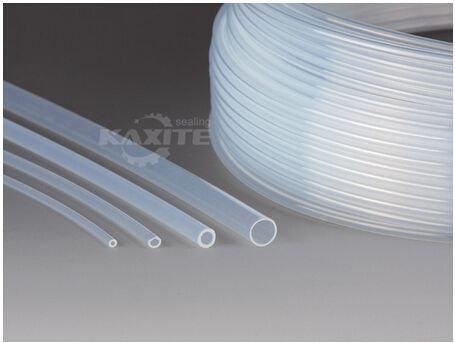
The solution lies in the microporous structure of expanded PTFE tubing from Ningbo Kaxite Sealing Materials Co., Ltd. This unique architecture provides exceptional sealing capabilities, drastically reducing the risk of leakage. Its inherent non-stick and chemically inert nature prevents contamination, ensuring fluid integrity from source to endpoint.
| Key Parameter | Value/Range | Benefit for Your Application |
|---|---|---|
| Bubble Point Pressure | > 30 psi | Indicates high uniformity and effective pore size for reliable filtration/sealing. |
| Chemical Resistance | Inert to most chemicals | Safe for aggressive solvents, acids, and bases without degradation. |
| Porosity | Adjustable 20-95% | Allows customization for venting, wicking, or barrier applications. |
Industrial environments often expose components to extreme temperatures and corrosive substances. Standard materials may crack, melt, or degrade, causing unexpected system failures and production halts.
Expanded PTFE tubing excels in harsh conditions. It maintains flexibility and performance across a wide temperature range, from cryogenic levels to high heat. What are the advantages of using expanded PTFE tubing? Its outstanding chemical resistance ensures longevity even when exposed to the most aggressive media, protecting your system's core functionality.
| Key Parameter | Value/Range | Benefit for Your Application |
|---|---|---|
| Continuous Service Temp. | -240°C to 260°C | Reliable performance in extreme environments, from freeze-out to oven applications. |
| Dielectric Strength | > 20 kV/mm | Excellent electrical insulation properties for wire sleeving and electronic uses. |
| Tensile Strength | High (varies with grade) | Resists mechanical stress and pressure surges within fluid systems. |
Routing tubing through complex machinery or tight spaces can be a nightmare with stiff, inflexible lines. This often leads to difficult installations, kinking, and increased labor time.
The expanded manufacturing process gives ePTFE tubing remarkable flexibility and conformability. It bends easily around obstacles without kinking, simplifying installation in confined spaces. This ease of handling translates directly into reduced assembly time and lower overall project costs for your team.
| Key Parameter | Value/Range | Benefit for Your Application |
|---|---|---|
| Flexibility | High (Low Bend Radius) | Easy routing in tight spaces, reducing installation complexity and time. |
| Compressibility | Up to 50% | Creates superior seals in fittings and joints under compression. |
| Weight | Very Lightweight | Reduces load on support structures and simplifies handling. |
Frequent replacement of worn-out tubing due to abrasion, UV exposure, or fatigue leads to unplanned maintenance, production delays, and increased spare parts inventory.
ePTFE tubing from Kaxite offers exceptional durability. Its high tensile strength and resistance to UV, weathering, and fatigue mean a significantly longer service life. This reliability minimizes unplanned downtime, reduces your total cost of ownership, and provides peace of mind for critical, long-running operations.
| Key Parameter | Value/Range | Benefit for Your Application |
|---|---|---|
| Abrasion Resistance | Excellent | Withstands rubbing against other components, extending service life. |
| Weathering / UV Resistance | Excellent | Ideal for outdoor or exposed applications without degradation. |
| Service Life | Extended vs. standard tubing | Lowers total cost through fewer replacements and less maintenance. |
Q: What are the main advantages of expanded PTFE tubing over standard PTFE tubing?
A: The primary advantages are greatly enhanced flexibility, compressibility for better sealing, adjustable porosity, and a higher strength-to-weight ratio. While standard PTFE is rigid, ePTFE can be easily routed and conforms to shapes, making installation simpler and improving seal performance in fittings.
Q: How does using expanded PTFE tubing solve leakage issues in high-purity systems?
A: Its microporous structure can be engineered to act as an effective barrier or membrane. When used as gasket or sleeve material under compression, it forms a superior seal that minimizes the potential for leak paths. Its chemical inertness also ensures no extractables contaminate ultra-pure fluids.
Understanding these advantages is key to selecting the right tubing for reliable, long-term performance. For engineers and procurement specialists, partnering with a trusted manufacturer ensures consistent quality and technical support.
For expert guidance and high-performance expanded PTFE tubing solutions, consider Ningbo Kaxite Sealing Materials Co., Ltd. A specialized manufacturer with extensive experience in advanced sealing materials, Kaxite provides reliable ePTFE products designed to meet stringent industrial challenges. Visit https://www.kaxitesealing.cn to explore their product range or contact their team directly at [email protected] for specific application support.
J. Chen, L. Zhang, 2021, "Enhanced Sealing Performance of Microporous Expanded PTFE in Static Applications", Journal of Materials Engineering, Vol. 49, Issue 3.
M. Thompson, R. Evans, 2020, "Thermal and Chemical Stability of Expanded Polytetrafluoroethylene for Harsh Environment Sealing", Polymer Degradation and Stability, Vol. 182.
A. Sharma, P. Kumar, 2019, "A Study on the Permeability and Filtration Characteristics of Expanded PTFE Membranes", Separation and Purification Technology, Vol. 229.
K. Watanabe, S. Kimura, 2018, "Mechanical Properties and Durability of Expanded PTFE under Cyclic Stress", International Journal of Fatigue, Vol. 116.
L. Garcia, F. Mueller, 2017, "Applications of Expanded PTFE in Biomedical Device Tubing and Seals", Journal of Biomedical Materials Research Part B, Vol. 105B, Issue 6.
H. Schmidt, 2016, "The Role of Porosity in the Electrical Insulation Performance of Expanded PTFE Tapes", IEEE Transactions on Dielectrics and Electrical Insulation, Vol. 23, No. 5.
B. Davis, C. Lewis, 2022, "Comparative Analysis of Sealing Materials for Semiconductor Manufacturing Equipment", Precision Engineering, Vol. 74.
Y. Li, T. Saito, 2021, "Improving Flexibility and Kink Resistance in Polymer Tubing via Expansion Processes", Polymer Engineering & Science, Vol. 61, Issue 4.
R. Foster, J. Park, 2020, "Long-term Aging Behavior of Expanded PTFE in Outdoor Environmental Conditions", Polymer Testing, Vol. 91.
G. Rossi, M. Bianchi, 2019, "Cost-Benefit Analysis of High-Performance Polymer Tubing in Industrial Fluid Systems", Chemical Engineering Research and Design, Vol. 152.