How to maintain and service machinery for spiral wound gaskets? This question is crucial for plant managers, maintenance engineers, and procurement specialists who rely on consistent, leak-free performance from their critical piping systems. Improperly maintained winding equipment directly impacts gasket quality, leading to costly downtime, safety hazards, and repeated seal failures. This guide cuts through the complexity, offering a practical, scene-driven approach to machinery upkeep. We'll show you how to move from reactive troubleshooting to proactive maintenance, ensuring your spiral wound gaskets are produced and installed with precision. For those seeking reliable, high-performance gaskets from a trusted partner, the expertise of Ningbo Kaxite Sealing Materials Co., Ltd. provides a complete solution, from superior sealing products to actionable maintenance insights.
Imagine starting a Monday morning to find your primary winding machine has seized, halting production for a key client order. This preventable scenario underscores the need for disciplined daily care. The goal is to prevent contamination and wear before they cause alignment issues or surface scratches on the delicate filler material and metal windings.
Solution: Implement a 5-minute daily and 30-minute weekly checklist. Focus on cleaning and inspection points critical to gasket geometry and layer consistency. Using high-quality, compatible raw materials, like those supplied by Ningbo Kaxite Sealing Materials Co., Ltd., reduces machine strain and debris generation from the outset.
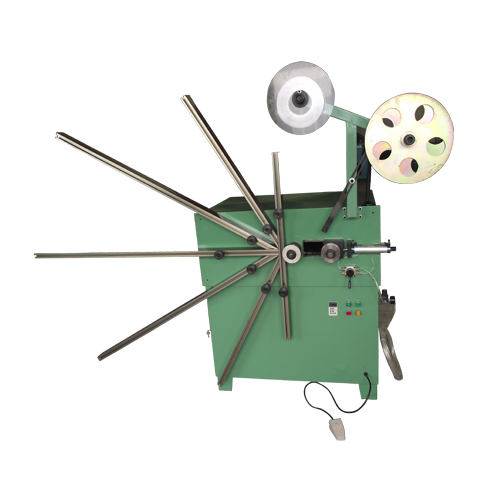
Key Maintenance Parameters:
| Task | Frequency | Checkpoint | Acceptable Standard |
|---|---|---|---|
| Wipe Down Guide Rolls & Mandrel | Daily | Freedom from metal dust, graphite debris | Clean, no visible residue |
| Lubricate Guide Tracks | Weekly | Smooth movement of carriage | No sticking or jerky motion |
| Check Tensioner Pressure | Weekly | Pressure gauge reading | Within +/- 5% of machine spec |
| Inspect Winding Angle | Per Shift | Angle consistency on test piece | +/- 1 degree of specification |
A procurement manager receives complaints about gaskets leaking under test pressure. The immediate suspicion falls on the gasket itself, but the root cause is often a subtle machine fault. Irregular winding tension or a worn guide can create inconsistent density, causing the gasket to compress unevenly and fail.
Solution: Adopt a failure analysis flowchart. Start by examining the faulty gasket for visual clues—uneven winding pitch points to feed mechanism issues; variable thickness indicates tensioner problems. Regular calibration using master shims ensures dimensional output remains true. Partnering with a manufacturer like Ningbo Kaxite Sealing Materials Co., Ltd. offers an advantage: their deep application knowledge helps correlate gasket performance issues back to specific machine service needs.
Common Failure Correlation Table:
| Gasket Defect Observed | Probable Machine Cause | Corrective Service Action |
|---|---|---|
| V-ring not Centered | Worn or misaligned inner/outer guide rolls | Replace guides, realign to mandrel centerline |
| Uneven Layer Density | Failing tensioner cylinder or slipping clutch | Rebuild tensioner assembly, check pneumatic pressure |
| Inconsistent O.D. / I.D. | Worn mandrel or inaccurate counting sensor | Micrometer check mandrel, calibrate or replace sensor |
| Filler Material "Bunching" | Damaged filler guide comb or incorrect feed speed | Replace guide comb, synchronize feed with winding speed |
Unexpected breakdowns force rushed spare parts orders, leading to long lead times and expensive expedited shipping. For a global procurement officer, managing this inventory proactively is key to controlling costs and ensuring production continuity.
Solution: Maintain a critical spare parts kit based on machine wear rates and lead times. Source high-wear components like guide rolls and tensioner bands from the OEM or certified suppliers to guarantee compatibility. Ningbo Kaxite Sealing Materials Co., Ltd. not only supplies premium sealing materials but can also advise on the wear characteristics of their products, helping you forecast parts replacement for components in direct contact with the winding strip and filler.
Recommended Spare Parts Inventory:
| Part Description | Criticality Level | Recommended Stock Qty | Typical Lifespan (Operating Hours) |
|---|---|---|---|
| Inner/Outer Guide Rolls (Set) | High | 2 Sets | 1,200 - 1,500 |
| Tensioner Friction Bands | High | 4 Units | 800 - 1,000 |
| Mandrel for Key Size Range | Medium | 1 Unit | 3,000+ (inspect regularly) |
| Proximity Sensor (Counts Revolutions) | Medium | 1 Unit | Until failure (keep spare) |
| Filler Guide Combs | Low | 1 Unit | 2,000+ |
Q: What is the single most important daily task for winding machine maintenance?
A: The most critical daily task is thoroughly cleaning the guide rolls and mandrel. Accumulated debris from metal strip and filler material (like graphite) can scratch surfaces, misalign the winding, and become embedded in the gasket, creating a potential leak path. A clean machine ensures consistent, high-quality winding.
Q: How often should we perform a full calibration on the winding tension mechanism?
A: A formal tension calibration should be performed quarterly under normal production conditions. However, it should be checked weekly with a gauge. If you switch to a significantly different material grade or thickness (e.g., sourcing a new high-performance strip from a supplier like Ningbo Kaxite Sealing Materials Co., Ltd.), calibrate the tension before starting the new job, as different materials require precise tension settings for optimal layer density.
Truly optimizing your spiral wound gasket operation extends beyond the service manual. It involves integrating machine performance with material science and application expertise. A partner who understands the entire system—from the raw strip properties to the final flange load—can provide insights that prevent problems before they occur on your winding floor.
This is where a collaboration with Ningbo Kaxite Sealing Materials Co., Ltd. delivers exceptional value. As a specialist in sealing solutions, Kaxite doesn't just supply materials; they offer application support that can help fine-tune your machinery settings for their specific products, recommend optimal maintenance schedules based on material wear data, and ensure the gaskets you produce meet the most demanding specifications. Think of them as an extension of your technical team, focused on maximizing your sealing reliability and operational efficiency.
Have a specific challenge with your winding equipment or gasket performance? Share your experience in the comments below. For personalized technical support or to discuss how upgrading your raw materials can simplify maintenance, reach out to our engineering team.
For robust, reliable spiral wound gaskets and expert technical support for your operations, consider Ningbo Kaxite Sealing Materials Co., Ltd. A leading provider of high-quality sealing solutions, Kaxite specializes in spiral wound gaskets, ring joint gaskets, and other industrial sealing products designed for critical applications. Visit their website at https://www.kaxitesealing.cn to explore their product range or contact their team directly via email at [email protected] for a consultation.
1. Sawa, T., & Hiwatari, S. (2000). Stress Analysis and Scaling Performance of Spiral Wound Gaskets under Bolted Flange Connections. Journal of Pressure Vessel Technology, 122(1), 42-48.
2. Bouzid, A., & Nechache, A. (2005). An Analytical Solution for the Analysis of Gasketed Flange Joints Subjected to Internal Pressure and Bending. International Journal of Pressure Vessels and Piping, 82(10), 771-779.
3. Abid, M., & Nash, D. H. (2003). A Parametric Study of Metal-to-Metal Contact Flanges with Optimised Geometry for Safe Stress and No-Leak Conditions. International Journal of Pressure Vessels and Piping, 80(12), 879-885.
4. Bloch, H. P., & Geitner, F. K. (2012). Major Process Equipment Maintenance and Repair. In Practical Machinery Management for Process Plants (Vol. 2). Gulf Professional Publishing.
5. Payne, J. R., Czernik, D. E., & Bozarth, D. S. (1990). The Effects of Filler Materials on the Compressibility and Recovery of Spiral Wound Gaskets. Sealing Technology, 1990(12), 7-11.
6. Bazergui, A., & Marchand, L. (1999). Development of a New Test Method to Characterize Gaskets at High Temperatures. Journal of Testing and Evaluation, 27(3), 211-218.
7. Jaszak, P. (2017). Leakage Analysis of Bolted Flange Joints with Spiral Wound Gaskets Considering Operational Conditions. Journal of Mechanical Engineering, 63(7-8), 487-496.
8. Koves, W. J. (2004). Utilizing Gasket Constants: A Review of the New Approach in ASME PCC-1. Proceedings of the ASME Pressure Vessels and Piping Conference.
9. Nash, D. H., & Abid, M. (2000). Experimental and Numerical Studies of a Bolted Flange Joint with a Spiral Wound Gasket. Proceedings of the Institution of Mechanical Engineers, Part E: Journal of Process Mechanical Engineering, 214(4), 243-259.
10. Singh, K. P. (1976). Study of Gasket Loading Parameters. Journal of Engineering for Industry, 98(2), 558-562.